

Twelve FBI agents fired years after kneeling at a 2020 protest are now suing to get their badges back, raising new questions about who really politicized federal law enforcement.
Story Snapshot
- Twelve former FBI agents fired in 2025 for kneeling at a June 2020 racial justice protest in Washington, D.C., are suing to regain their jobs, back pay, and clear records.
- The agents say the kneeling was a split-second de‑escalation tactic in a tense crowd, not a political statement or endorsement of a left‑wing agenda.
- The firings came under Director Kash Patel as part of a wider personnel purge that also swept up Trump investigators and a trainee who displayed a gay pride flag.
- The lawsuit tests how far federal leaders can go in re‑labeling past conduct as “political” and punishing rank‑and‑file agents years after the fact.
Fired Five Years After the Protest, the Agents Take Their Fight to Court
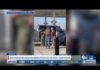
In June 2020, as racial justice protests swept Washington, D.C., twelve FBI agents ended up on their knees in front of an angry crowd, a moment captured in widely circulated photographs. According to their new lawsuit, those agents say they lacked proper crowd‑control gear and training, and collectively decided kneeling was the safest way to cool down a dangerous situation before it spiraled out of control. They now insist the move was tactical, not political, focused on preventing violence.
The FBI did not move immediately against them. Instead, the kneeling incident reportedly sat in personnel files through multiple leadership changes and shifting political winds in Washington. Only in September 2025, five years after the protest, were the twelve agents suddenly terminated. Their conduct, once treated as just another controversial moment from the chaotic summer of 2020, was reinterpreted as improper, on‑duty political expression that violated the Bureau’s strict neutrality rules.
Kneeling, Neutrality Rules, and the Battle Over What Counts as “Political”
FBI and Justice Department policies have long barred agents from political activity while on duty, a guardrail meant to keep federal law enforcement above partisan games. The heart of this case is whether kneeling that night was a form of protest or a last‑ditch tool to prevent confrontation from erupting into violence. The agents argue they faced a tense, potentially explosive crowd and used the only low‑force option they believed might work, especially without shields, gas, or riot training to fall back on.
Many Americans remember 2020 scenes of local police and National Guard members kneeling with protesters, images hailed by some as shared humanity and condemned by others as capitulation to an ideological movement. For these former FBI agents, those same optics have turned into a career‑ending allegation. Their lawsuit contends that context and intent were brushed aside, replaced by a simplistic narrative that kneeling equals activism, regardless of immediate safety concerns or the specific circumstances on the ground that night.
Patel’s Personnel Purge and Ideological Policing Inside the Bureau
The timing and framing of the firings place this case squarely inside a broader fight over politicization at the FBI. The terminations came under Director Kash Patel as part of a described personnel purge that did not stop with the kneeling agents. According to the reporting summarized in the research, that purge also targeted agents who had previously investigated Donald Trump, as well as a trainee disciplined for displaying a gay pride flag at work. Together, those actions signal leadership imposing a much sharper ideological filter on internal discipline.
For conservatives who watched the Bureau’s conduct during the Russia probe, the Mueller investigation, and other politically charged cases, accountability at the FBI can sound overdue. Yet this lawsuit highlights a different problem: when standards shift after the fact, rank‑and‑file agents can become pawns in leadership’s effort to send a message. Firing people years later over a contested interpretation of body language at a protest risks replacing one kind of bias with another and deepening public doubts about equal treatment inside federal law enforcement.
FBI agents fired for kneeling at racial justice protest sue to win jobs back https://t.co/Ui9JmqygsA
— Politomix (@PolitomixNews) December 9, 2025
The agents are now asking a court not only for reinstatement and back pay, but also for a formal name‑clearing hearing and expungement of their records. That last demand matters well beyond politics: once branded as fired for improper political conduct, their prospects in any future law‑enforcement or security role sharply diminish. The outcome will send a signal to thousands of federal employees about whether years‑old actions can be reclassified as partisan gestures whenever leadership or public narratives change.
What This Fight Means for Conservatives Watching the Deep State
For a conservative audience already wary of a politicized bureaucracy, this case cuts both ways. On one hand, strict, apolitical standards at the FBI are essential; federal agents cannot be allowed to grandstand for any movement, left or right, while in government gear and armed. On the other hand, retroactive purges based on disputed symbolism look less like neutral rule‑enforcement and more like top‑down ideological management, which threatens individual liberty, due process, and trust in equal justice.
Going forward, the key question for courts and Congress will be how to strike a balance: ensuring federal law enforcement stays out of partisan theatrics while also protecting agents from arbitrary, years‑later reinterpretations of their split‑second decisions in the field. However this lawsuit ends, it underscores why many Americans want fewer vague standards, more transparent rules, and genuine accountability applied evenly—whether the target is a Trump critic, a Pride‑flag carrier, or an agent who went to one knee in a chaotic Washington night.