America’s oldest bomber just proved that advanced U.S. firepower can hammer Iran’s missile network without giving Tehran the propaganda win of a shootdown.
Story Snapshot
- U.S. Central Command confirmed B-52 Stratofortress bombers have struck Iranian ballistic-missile and command-and-control targets using long-range standoff weapons without entering Iranian airspace.
- The strikes are part of Operation Epic Fury, an air campaign that officials say has hit more than 2,000 targets since late February 2026.
- Analysts and open-source reporting describe B-52s launching AGM-158 JASSM cruise missiles from long distances to reach hardened facilities in Iran’s mountainous terrain.
- European basing, including RAF Fairford in the United Kingdom, has enabled sustained bomber operations and rapid sortie generation.
How B-52s Hit Iran Without Crossing the Border
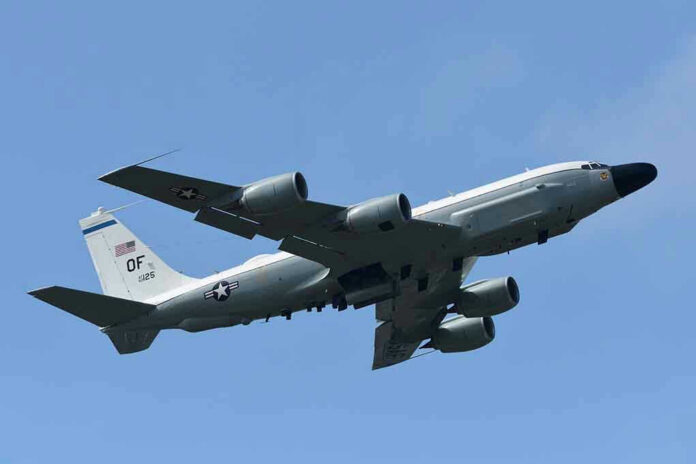
U.S. Central Command has highlighted B-52 missions that deliver precision effects while staying outside Iranian airspace, a tactical choice that reduces risk to American aircrews and limits opportunities for Iran to claim it repelled intrusions. Reporting describes the B-52 using long-range standoff munitions such as the AGM-158 JASSM to target missile facilities and command-and-control posts tied to Iran’s ballistic missile enterprise.
That standoff approach matters because Iran has invested heavily in air defenses, dispersal, and hardened infrastructure. Much of the country’s terrain is mountainous, a natural advantage for burying launch sites and command nodes. By launching cruise missiles from well outside defended corridors, the U.S. can pressure those hardened networks while avoiding the escalation dynamics that come from sending manned aircraft directly over Iranian territory.
Operation Epic Fury’s Timeline Shows a Sustained Air Campaign
Operation Epic Fury began with initial U.S. salvos on Feb. 28, 2026, and expanded in early March as bomber operations integrated into a broader tempo of strikes. Open-source reporting has pointed to satellite imagery showing damage at Iran’s Isfahan air base, including impacts involving Iranian F-14 aircraft. By mid-March, accounts described multiple bomber types—including B-2s and B-52s—executing long-range missions supporting the campaign.
The pace did not appear limited to isolated raids. Reports describe a large-scale strike around March 14 on Kharg Island that hit dozens of targets, including naval mines and missile bunkers, followed by B-52 activity from RAF Fairford. One account described two B-52s departing the U.K. base with significant JASSM loads for missions toward Iran, reinforcing the idea that allied basing and logistics are central to keeping pressure on Iranian capabilities over weeks.
Why the 70-Year-Old Platform Still Fits a Modern Fight
The B-52 first flew in 1952 and entered operational service in the 1950s, but its continued relevance comes down to payload, range, and weapons integration. Modern conflicts reward aircraft that can carry large numbers of precision weapons and deliver them from safer distances. Reporting continues to cite the B-52’s substantial payload capacity and ability to employ advanced standoff missiles, allowing a legacy airframe to function as a high-volume “missile truck” in contested regions.
That concept also helps explain why the U.S. can mix different aircraft roles in the same campaign. When bombers can push long-range munitions without penetrating airspace, other platforms can focus on suppression of air defenses, dynamic targeting, or maritime strike depending on conditions. The public reporting around Epic Fury frames the bomber force as one part of a layered approach designed to degrade missile launchers, drone infrastructure, and command nodes over time.
Strategic Stakes: Deterrence, Escalation Risk, and U.S. Priorities
Officials and reporting describe the campaign’s near-term purpose as reducing Iran’s ability to launch missiles and drones at U.S. forces and regional partners. At the same time, open-source accounts note Iranian retaliation attempts, including drone activity targeting sites around Baghdad. That back-and-forth underscores a central reality: degrading launch capacity can reduce attacks, but it does not automatically end a conflict where proxies and asymmetric responses remain available.
For Americans wary of global entanglements, the key question is whether objectives stay limited and clearly defined: protecting U.S. forces, deterring further attacks, and preventing Iran’s most dangerous capabilities from expanding. The available reporting supports the operational logic of standoff strikes—hit what matters, minimize U.S. losses, and keep escalation controlled—but it also leaves gaps, including incomplete public detail on sortie counts and independently verified damage assessments across all target sets.
B-52 Stratofortress in Iran: How 70-Year-Old Bombers Strike Without Entering Airspacehttps://t.co/iBDDmRD9ek
— Harry J. Kazianis (@GrecianFormula) March 17, 2026
European basing adds another dimension. Reports emphasize that U.S. forces in Europe play a major support role, enabling bomber surges and sustained logistics for Middle East operations. That posture can strengthen deterrence by signaling readiness and reach, but it also increases the need for transparency with the American public about goals, costs, and timelines. Limited, constitutional, and accountable use of force remains the standard voters will expect—especially after years of frustration with waste, endless missions, and Washington priorities that often felt disconnected from everyday Americans.
Sources:
The US Air Force just used its oldest bomber to attack Iran
B52 Stratofortress Iran war Boeing
American forces Europe key US war Iran