Four American airmen are confirmed dead and two more remain missing after a KC-135 Stratotanker crashed over Iraq during refueling operations, marking yet another devastating loss in Operation Epic Fury that exposes the deadly risks our troops face even when enemy fire isn’t the culprit.
Story Snapshot
- KC-135 refueling aircraft crashed in western Iraq on March 12, 2026, with four crew confirmed dead and two still under rescue efforts
- U.S. Central Command ruled out hostile or friendly fire, suspecting a mid-air collision during refueling operations supporting strikes against Iran
- The incident brings total U.S. military deaths in Operation Epic Fury to 11 since the campaign launched February 28
- This marks the fourth U.S. aircraft crash in the operation, highlighting operational hazards beyond direct combat with Iranian forces
Deadly Collision Over Contested Airspace
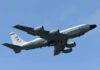
A U.S. Air Force KC-135 Stratotanker crashed near Turaibil along the Iraqi-Jordanian border at approximately 2 p.m. Eastern Time on March 12. The refueling aircraft carried six crew members when it went down during operations supporting U.S.-Israel strikes against Iranian targets. U.S. Central Command confirmed early March 13 that four airmen perished in the crash, while rescue operations continued for the remaining two crew members. A second KC-135 involved in the same incident sustained damage but successfully declared an emergency and landed safely in Tel Aviv that evening.
Not Enemy Action But No Less Tragic
CENTCOM officials explicitly stated the loss resulted neither from hostile fire nor friendly fire, a distinction that separates this tragedy from previous incidents in Operation Epic Fury. Investigators suspect a mid-air collision occurred during refueling procedures in what military officials described as friendly airspace. The crash represents the fourth U.S. aircraft loss since the Iran operation began, underscoring that even routine military aviation carries life-threatening risks in high-tempo combat zones. Defense officials withheld crew identities for 24 hours following family notification protocols, a small mercy for grieving loved ones.
Mounting Casualties in Operation Epic Fury
The KC-135 crash adds to a grim casualty toll since President Trump authorized Operation Epic Fury on February 28, 2026, targeting Iran’s missile capabilities, naval forces, nuclear program, and attack drones. Prior losses include six service members killed when Iranian projectiles struck a tactical operations center in Kuwait, despite advanced defense systems. Another incident saw three F-15E Strike Eagles shot down by Kuwaiti friendly fire, though all six crew members ejected safely. One additional U.S. death occurred in Saudi Arabia, bringing the total fatalities to 11 Americans killed in action or operational accidents within two weeks of combat operations.
Defense Secretary Pete Hegseth characterized the campaign as brutal warfare, acknowledging that some Iranian “squirter” attacks evaded U.S. defensive systems during major offensive strikes. Air Force General Dan Caine, Chairman of the Joint Chiefs of Staff, warned the American public to expect additional losses as combat operations continue, describing the conflict as gritty but necessary. Both officials emphasized U.S. military capacity remains adequate to sustain operations despite the casualties. This transparency contrasts sharply with previous administrations that downplayed risks to service members, giving Americans a clearer picture of the true costs of neutralizing Iranian threats to regional stability and U.S. interests.
Operational Risks Beyond Enemy Fire
The mid-air collision highlights dangers inherent in complex aerial refueling missions conducted in contested regions where airspace congestion intensifies during large-scale operations. KC-135 Stratotankers provide critical fuel to strike aircraft maintaining pressure on Iranian military infrastructure, requiring precise coordination between multiple aircraft in close proximity. The fact that this tragedy occurred in friendly airspace during a routine but essential mission underscores that war’s brutality extends beyond direct enemy engagement. Military aviation experts will scrutinize refueling protocols and airspace management as investigations proceed, potentially leading to enhanced safety measures for future operations in similarly challenging environments.
Six Troops Dead in Tragic Accident Over Iraqhttps://t.co/R14sMXPymY
— PJ Media Updates (@PJMediaUpdates) March 13, 2026
Operation Epic Fury achieved significant strategic objectives in its opening phase, including the elimination of Iran’s Supreme Leader Ayatollah Ali Khamenei and degradation of Iranian missile and naval capabilities. Yet these victories come at a price measured in American lives lost to enemy action, friendly fire, and now operational accidents. For families of the fallen and missing KC-135 crew members, the distinction between combat and accident offers little consolation. These airmen died executing their mission to protect American security interests against a regime that has threatened stability throughout the Middle East for decades, a mission this administration deemed necessary after years of appeasement failed.
Sources:
CBS News – Iran war: KC-135 US plane crash Iraq crew deaths confirmed
Military Times – Six dead, 18 service members injured in Iran operation
Stars and Stripes – 6 US service members killed in Iran attacks
Axios – 3 US fighter jets hit by friendly fire in Kuwait