

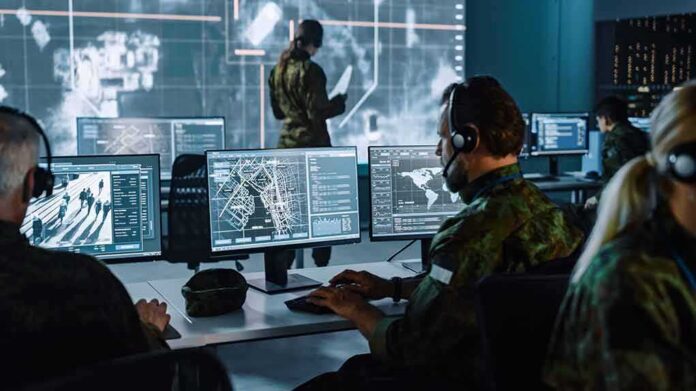
Gulf leaders approved a new joint command center in Kuwait, signaling a concrete push for regional defense coordination backed by pledged forces.
Story Highlights
- Gulf Cooperation Council defense ministers approved a forward command in Kuwait with allocated forces.
- The decision was taken jointly by all six Gulf states at a meeting in Bahrain.
- The Kuwait node links to the existing Unified Military Command structure led from Riyadh.
- Officials shared no dates, unit lists, or staffing details for the new command.
What Was Decided And Who Backed It
Gulf Cooperation Council defense ministers voted to open an advanced command in Kuwait and to assign what they called appropriate forces. The group made the announcement after the twenty-third session of the Joint Defense Council on November 10, 2026. The Gulf Cooperation Council Secretary-General, Jasem Mohamed Albudaiwi, said the step aims to widen joint military cooperation among the six member states. The decision reflects a formal, collective act rather than a single-nation pledge.
The meeting occurred in Manama and included defense ministers from Bahrain, Kuwait, Oman, Qatar, Saudi Arabia, and the United Arab Emirates. Bahrain’s Minister of Defense Affairs, Lieutenant General Abdullah bin Hassan Al Nuaimi, chaired the session. The ministers agreed to allocate forces to the new command, which moves the plan beyond a political statement toward an organizational change with people and equipment attached, at least on paper.
How The Kuwait Command Fits The Existing Structure
Officials described the Kuwait site as part of the Gulf Cooperation Council’s Unified Military Command. Reporting places the main headquarters in Riyadh, with Kuwait serving as a forward element to help daily coordination and planning across the six national militaries. This structure aims to make joint action faster and clearer during crises. The move signals a desire for deeper integration, especially after recent regional conflicts that stressed command-and-control needs.
The new node matters because earlier efforts often fell short of real-time coordination. A forward element can host liaison teams, share common operating pictures, and standardize alert procedures. Those simple steps can cut confusion when missiles fly or ships face threats in narrow sea lanes. Yet the exact relationship between the Kuwait site and the Riyadh headquarters was not disclosed, leaving questions about who commands what during an emergency.
What We Know And What Is Not Yet Public
Officials did not share when the command will open, what units will deploy, or how many personnel will staff it. The phrase appropriate forces leaves room for small liaison cells or larger quick-reaction assets. Without numbers, equipment lists, or rules for cross-border use, the announcement shows intent but not day-one combat power. One outlet said no opening date or assigned units were disclosed, marking a clear information gap that will shape early expectations.
'Bahrain, Kuwait, UAE, Saudi Arabia, Qatar and Oman approved the establishment of a forward military command center in Kuwait on Tuesday amid regional tensions stemming from the Iran war.' Some movement on the GCC front after internal criticism over inability to coordinate and…
— Kabir Taneja (@KabirTaneja) November 11, 2026
Past Gulf projects promised integration but struggled to merge different systems and national chains of command. This decision still marks a practical test. Leaders approved a place, linked it to an existing command, and pledged forces. If members publish staffing, run joint drills, and plug in shared communications, the command can grow from a paper step to muscle memory. Until then, the move is best read as a real but early stage in building faster, shared defense capacity.
Sources:
zerohedge.com, timeskuwait.com, kuwaittimes.com, aa.com.tr, tribune.com.pk
© patriotwise.com 2026. All rights reserved.