

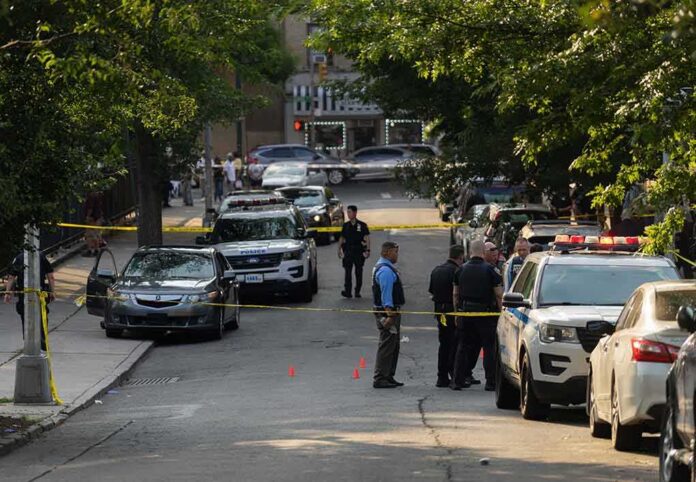
New York police say a 62-year-old woman was found dead with neck trauma in a Lower Manhattan apartment building, and a person of interest is in custody as detectives work the case.
Story Snapshot
- NYPD is investigating after a 62-year-old woman was found dead with neck trauma in Lower Manhattan.
- Police detained a person of interest for questioning; no charges were announced at the time of reporting.
- The Medical Examiner will determine the cause and manner of death, which guides next steps.
- “Person of interest” is not a formal charge and should not be read as proof of guilt.
What Police Reported So Far
New York City police said officers found a 62-year-old woman dead inside a Lower Manhattan apartment building. Police described injuries to her neck. Detectives detained a person of interest for questioning. Officials did not release the woman’s name or the exact address at the time of the first report. Police said the investigation remained active. No charging decision was announced. These steps reflect the early phase of a death investigation, when facts are still being gathered.
The Office of Chief Medical Examiner will make the final call on cause and manner of death. That review includes the body exam, scene details, and lab work when needed. The Medical Examiner’s findings help police decide whether the case is a homicide, an accident, or due to natural causes. That process can take days or weeks, depending on tests. Until then, officials often hold back details to protect the case and notify family members.
Why “Person of Interest” Does Not Mean “Guilty”
Police and reporters sometimes use “person of interest” to describe someone they want to question. The phrase has no fixed legal meaning. It is not the same as “suspect,” “arrested on charges,” or “defendant.” Past reviews show that people labeled this way are often released with no charges. This label helps investigators speak to the public without naming a suspect before they have evidence for an arrest and prosecution.
That distinction matters in a city where public trust feels thin. Many people on the right and the left worry that the system moves too slowly or shields insiders. Clear language can prevent a rush to judgment. It protects the rights of the person being questioned and the dignity of the victim. It also reduces the chance that rumors fill the gap while police do the careful work that courts demand.
How Cases Like This Move From Scene To Charges
Detectives build a timeline. They review building cameras, entry logs, and phone records. They interview neighbors, family, and anyone who saw or spoke with the victim. Forensic teams look for DNA, fingerprints, and trace evidence. The Medical Examiner studies injuries and runs tests. When evidence points to a person and a crime, police confer with prosecutors on charges. If the findings show an accident or natural death, police close the case without charges.
Across the country, police solve most murders, but not all. Clearance rates have hovered around the low to mid 60 percent range in recent decades, and they vary by place and year. Improvements come from stronger case work, better lab tools, and community help. But even solid cases can stall without witnesses who will talk or without usable evidence. That is why patience, precision, and public cooperation matter so much.
Safety, Justice, and Public Confidence
New York City has reported declines in murders and shootings in recent periods, even as high-profile crimes still draw headlines. Fewer killings do not erase the pain in each case. Families want answers fast. The public wants to feel safe in their own buildings. Police face pressure to move quickly but must also meet the legal standards that keep convictions in place. Rushing risks errors that courts later overturn, which helps no one.
A 62-year-old woman was found dead inside a building on Catherine Street in Lower Manhattan Friday afternoon. Police say officers answering a 911 call around 3:22 p.m. found her unresponsive with trauma to her neck. pic.twitter.com/pdo4UOgmj6
— Citizen NYC (@CitizenAppNYC) November 21, 2026
For residents, a few simple steps can help. Share tips if you saw or heard anything. Save building videos and doorbell clips. Report concerns to building staff and police. Ask for official updates from the New York Police Department rather than relying on vague online posts. For leaders, clear briefings and careful language build trust. They show respect for the victim and due process for anyone questioned.
What We Still Do Not Know
Police have not released the victim’s name, the exact location, or the time window of death. Officials have not described the specific nature of the neck trauma. The person of interest has not been publicly identified, and no charges were announced at the time of the first report. Those details often follow after next-of-kin notice and initial lab work. Until then, the Medical Examiner’s ruling will be the key to what comes next.
Sources:
nypost.com, nypdnews.com, nyc.gov, murderdata.org, ajrarchive.org, govinfo.gov
© patriotwise.com 2026. All rights reserved.