Park officials say a missing Piper Comanche was found as wreckage on the Grand Canyon’s North Rim with three people dead, underscoring how remote terrain can turn a crisis into a tragedy.
Story Snapshot
- National Park Service found a Piper Comanche wreck with no survivors near the North Rim.
- Searchers used infrared and night-vision gear to scan remote canyon terrain overnight.
- The National Transportation Safety Board will lead the crash investigation.
- Officials have not released the victims’ names or the crash cause.
What Authorities Confirmed About the Crash
National Park Service staff said a missing-aircraft call reached the Grand Canyon Regional Communications Center at about 11:30 p.m. on November 15. Rangers and partner agencies began a search in the Basin area near the North Rim. At about 10:15 a.m. on November 16, crews located the Piper Comanche wreckage and a debris field. Officials reported three people aboard and said there were no survivors. The agency withheld names while families were notified and supported.
Local and regional outlets described the aircraft as a Piper Comanche, a single-engine plane often used for personal trips. Reports matched the Park Service on the passenger count and the discovery site near the North Rim Basin. One outlet cited a Sunday evening crash time estimate, while others focused on the late-night missing-aircraft report and the morning discovery. Authorities did not provide a flight plan, destination, or tail number in initial releases, which narrowed what could be confirmed early.
How the Overnight Search Unfolded in Rugged Country
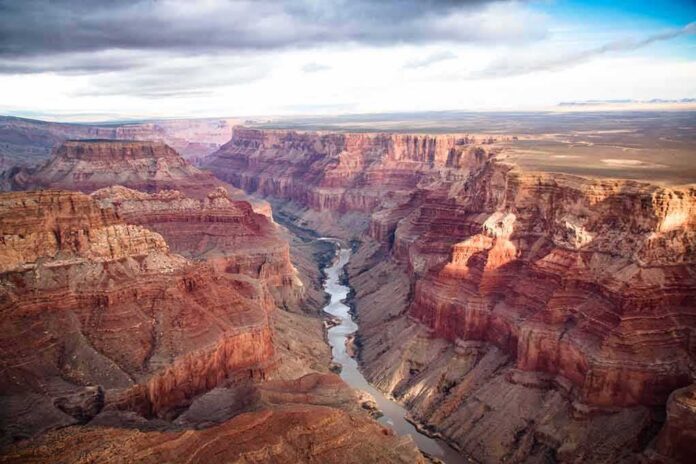
Arizona public safety pilots joined the effort with forward-looking infrared and night-vision tools to scan the steep, forested plateau north of the canyon. Those tools help spot heat or shapes in low light, which is vital where roads are few and sightlines are short. After the aerial sweep, Park Service teams located the wreckage and debris field late the next morning, consistent with how searches in vast, remote parks often proceed when terrain and darkness slow ground access.
Grand Canyon’s North Rim sits at higher elevation with colder conditions and fewer services for much of the year. Distance from paved roads and medical care raises risk once something goes wrong. That reality frustrates families who want fast answers and fuels a sense that government support often arrives too slowly, even when responders work through the night. The facts here show a swift, organized response, but the setting limited speed and visibility for any rescue chance.
Who Investigates and When Answers May Come
The National Transportation Safety Board will investigate the cause, with help from the Park Service and the Federal Aviation Administration. The National Transportation Safety Board posts a preliminary report that lists basic facts it confirms at the scene. The National Transportation Safety Board warns that preliminary reports do not explain the cause. Final reports, which can take many months, name likely causes and list the evidence behind them.
People across the political spectrum share a worry that government agencies hide the ball. Aviation probes do move slowly, but for a reason. Investigators must collect parts, study weather records, review pilot history, and test components in labs. They also compare findings with past cases to avoid guesswork. That process may feel like delay, yet it is designed to prevent quick but wrong answers that help no one and can mislead future safety work.
What We Do Not Know Yet
Officials have not released the victims’ identities, the aircraft’s registration, the route, or the reason for the trip. Authorities have not said whether weather, terrain, pilot action, or a mechanical problem played a role. Outlets differed on the estimated crash time, and no agency shared exact coordinates in early updates. These gaps are common during the first day of any aviation case, especially in a remote site where access and recovery take priority over public detail.
Three people killed in plane crash near North Rim of Grand Canyon National Park https://t.co/Ds9YACv9YB
— Heidi Hatch KUTV (@tvheidihatch) November 17, 2026
Families and citizens deserve clear facts and timelines, and they also deserve accuracy. The record supports several firm points: a Piper Comanche went down near the North Rim’s Basin area; three people died; searchers used advanced tools overnight; and the National Transportation Safety Board is in charge of the cause analysis. Everything beyond that awaits the investigation. When the preliminary report posts, it should add confirmed details without naming a cause.
Why This Matters Beyond One Crash
Small aircraft broaden access to America’s vast spaces but carry risk when flying over rugged land with little light, few landing options, and fast-changing weather. That risk is not partisan. It touches ranchers, small business owners, tourists, and park staff. Trust grows when agencies share concrete facts fast and keep the community updated. In this case, the next milestone will be the National Transportation Safety Board’s preliminary report and any Park Service updates on recovery and access.
Sources:
nypost.com, azdailysun.com, fox10phoenix.com, themirror.com, azcentral.com, knau.org, yahoo.com, ntsb.gov
© patriotwise.com 2026. All rights reserved.