
A federal appeals court cleared the Army to blow up nearly five tons of unstable lead-based explosive in Iowa after days of legal whiplash and public alarm.
Story Highlights
- A court allowed the Army to move forward with two controlled detonations at the Iowa Army Ammunition Plant
- The Environmental Protection Agency issued an emergency permit, citing an “imminent and substantial” threat
- The Army warned a coming temperature drop could further destabilize the material if action stalled
- Health officials prepared guidance while residents feared lead-dust fallout across communities and farms
What the Court Allowed and Why It Matters
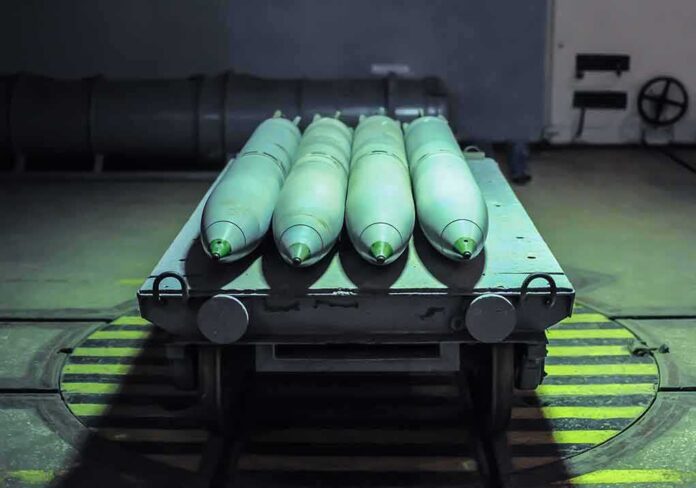
A federal court stay that paused the Environmental Protection Agency’s emergency permit was lifted, clearing the Army to proceed with an on-site detonation of degraded lead azide at the Iowa Army Ammunition Plant in Middletown. Government lawyers also identified a separate emergency pathway that allows action when there is an immediate threat to people, property, or the environment. The ruling matters because it shifts the balance toward explosive-safety urgency over a slower, fuller environmental review.
The Environmental Protection Agency’s emergency permit described an “imminent and substantial endangerment” and authorized storage and treatment by intentional detonation after the Army reviewed a range of alternatives. State health officials said the plan called for two controlled blasts of degraded lead azide stored in 68 drums, totaling about five tons. The operation would occur within the installation, with blast controls designed to limit spread, according to public health and agency materials.
The Army’s Safety Rationale and Timeline Pressure
The Army said the lead azide degraded over time and grew more sensitive, raising the chance of an accidental blast if left alone or moved. The Army also warned that a forecast temperature drop could further destabilize the compound, arguing that delay would increase danger and shrink safe-weather windows. That timing claim framed the decision to act quickly once the court allowed it. The safety framing emphasized risk reduction for workers and neighbors if the compound was destroyed in place.
Government filings described a legally recognized emergency route for handling hazardous waste in rare situations where delay could worsen harm. That argument does not erase the public’s core worry: what leaves the blast site and where it lands. Critics said emergency shortcuts can sidestep debate and data. Supporters countered that the greatest danger was a surprise explosion during storage or transport. The court’s action gave the Army latitude to prioritize immediate explosive safety over a longer permitting fight.
Public Health Fears and What Officials Prepared
The Iowa Department of Health and Human Services issued a fact sheet explaining the plan, the material, and steps residents could take if dust settled on surfaces. The agency described two detonations at the plant and encouraged vigilance on cleaning and surveillance if needed. The state’s broader lead program tracks exposure and helps local health workers respond, a sign that officials expected to test data and communicate with families if concerns rose after any operation.
News reporting amplified concerns about a toxic lead-dust plume and the unusual nature of an open-air detonation near towns and farms. Residents and local leaders said notice was short and details were thin, which fed distrust toward federal agencies. The mix of blasting unstable explosives and the potential for lead fallout struck a nerve because both risks are real, even if different in kind. Many people do not trust Washington to weigh those risks without public input.
What We Still Do Not Know
The Environmental Protection Agency said the Army evaluated alternatives before choosing detonation, but the public notice did not list the options, assumptions, or modeling used. The record available so far does not show plume projections, likely lead concentrations, or cleanup plans under different weather cases. Without that data, the tradeoff between accidental explosion risk and toxic release risk is hard for outsiders to judge with confidence.
President #Trump ordered the #USArmy to pause plans to detonate unstable lead azide explosives in #Iowa pending court approval and alignment with incoming Gov. Rob Sand, warning of severe consequences if halted amid rising cold-weather explosion risks. pic.twitter.com/QVCvmelIbj
— _S_l_e_e_p_y__C_a_t_ (@vnrudicdata) November 24, 2026
The core question spans left and right: did the government pick the lowest total risk, or the fastest path? The court’s green light, the Army’s temperature warning, and the emergency permit point to urgency. Yet the thin public record leaves room for doubt about alternatives and monitoring. Releasing the Army’s comparative analysis, deposition maps, and air-monitoring results would help rebuild trust and show whether leaders chose safety based on facts, not convenience.
Sources:
cbsnews.com, epa.gov, hhs.iowa.gov, cnn.com, iowapublicradio.org, apnews.com
© patriotwise.com 2026. All rights reserved.