
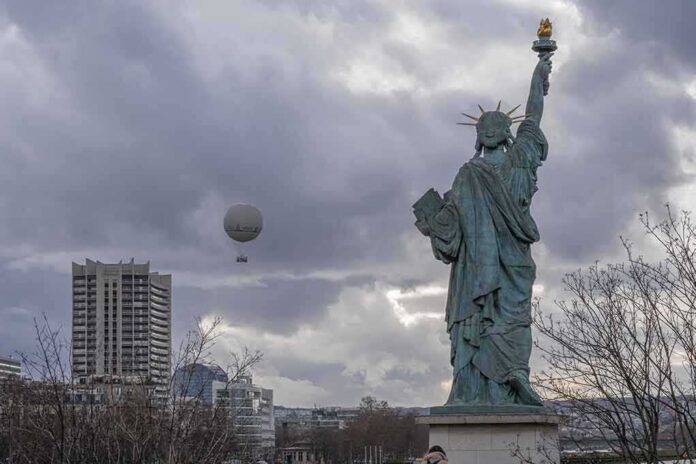
Facing dangerous wind warnings, New York City, Macy’s, and NBC pushed the iconic Thanksgiving parade to Saturday to keep people safe.
Story Snapshot
- City, Macy’s, and NBC jointly postponed the parade to Saturday for safety.
- Forecast gusts far exceeded city wind limits for giant balloons.
- National Weather Service issued high-wind and coastal-flood warnings.
- Rescheduling preserved the event at 8:30 a.m. Eastern on Saturday.
What Changed: A Joint Call to Beat the Wind
City officials, Macy’s, and NBC decided on Wednesday to move the Macy’s Thanksgiving Day Parade to Saturday. They said safety for participants and spectators drove the decision. They cited a strong storm forecast that would make it unsafe to fly the giant balloons and risky to gather large crowds. Organizers stressed the event is delayed, not scrapped, and will air Saturday morning. Macy’s said safety was the top priority after talks with city partners.
Published statements framed the move as a rare but necessary step for a beloved tradition. The shift keeps the broadcast and most logistics intact while avoiding peak storm hours. The Associated Press and Reuters reported the joint nature of the decision, rather than a single office acting alone. That matters because it signals a unified safety call that spreads risk and responsibility across public and private partners.
Why Safety Triggered a Delay, Not a Cancellation
Forecasts called for gusts up to about 58 miles per hour and sustained winds near 40 miles per hour on Thursday. City rules restrict balloons when sustained winds exceed 23 miles per hour or gusts top 34 miles per hour. Those numbers leave little room for debate. When wind crosses those lines, a several-story balloon can drag dozens of handlers and break loose. That is why big inflatables often drive the go or no-go choice.
The National Weather Service placed New York City under a high-wind warning and a coastal-flood warning from Thursday into Friday. Warnings like these tell officials that dangerous conditions are likely, not just possible. For crowd events that rely on street closures, cranes, and staging, warnings raise the bar for continuing as planned. Moving to Saturday gave planners time to reset with safer conditions and reduced wind risk for the balloons.
What Saturday Means for Viewers, Marchers, and the City
Macy’s and NBC said the parade will step off at 8:30 a.m. Eastern on Saturday. Marching bands, performers, and floats are expected to return. The goal is to deliver the familiar sights with better weather and standard safety margins. Saturday timing also keeps the national broadcast window, which matters to advertisers and to families who watch together every year. A delay protects the tradition while avoiding a patchwork, wind-limited show.
NEW YORK (AP) — The Macy’s Thanksgiving Day Parade has been postponed to Saturday as powerful winds are expected to bear down on New York during the annual event, NBC said Wednesday. In a statement, NBC said the parade would now be held on S… https://t.co/B2cH8ejXJ1
— Capital Gazette (@capgaznews) November 26, 2026
History shows how unusual this is. The parade skipped three years during World War II due to rubber and helium needs, not weather. In 1971, strong winds grounded all balloons, but the rest of the parade marched. Reporters note that a full weather postponement is new territory. That context helps explain why leaders opted for a clean reschedule rather than trying to run a partial event on Thanksgiving morning.
How Risk Management Guides Big Public Traditions
Large city events use preset safety thresholds to avoid guesswork on hectic days. Clear wind limits for balloons turn a gray area into a rule. When forecasts cross those lines, leaders must act before the danger looks obvious to bystanders. That approach can frustrate travelers and vendors, but it reduces the chance of injuries and costly emergencies. The Macy’s delay follows that playbook: protect people first, then deliver the show when it is safe.
Many readers across the political spectrum see government and big brands as slow or self-protective. This call offers a different lens. Partners made a specific, testable choice based on numeric wind rules and public weather warnings. They did not cancel the tradition or gamble with safety. They moved it two days and gave a firm time. In a season when trust feels scarce, a clear standard, a joint decision, and a kept promise may matter more than the date on the calendar.
Sources:
youtube.com, apnews.com, reuters.com, nytimes.com, variety.com, en.as.com, pbs.org
© patriotwise.com 2026. All rights reserved.