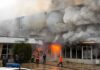


More than 836,000 customers lost power on Thanksgiving as fierce winds and flooding battered key East Coast states, stalling travel and daily life.
Story Highlights
- Power outages topped 836,000 customers nationwide at the reported peak.
- Heavy rain, strong winds, and coastal flooding hit from North Carolina to New Jersey.
- Wind gusts up to 70 miles per hour toppled trees and lines, cutting power.
- The Macy’s Thanksgiving Day Parade was postponed amid storm risks.
Severe Weather Cut Power Across Multiple States
Reporters tracking grid data said outages climbed above 836,000 customers at about 4:06 p.m. Eastern time. Virginia, Maryland, and Pennsylvania each saw well over 150,000 customers in the dark at that time. Those numbers came as utilities fought damage from wind and flooding along the Eastern Seaboard. Missouri and Illinois also logged notable outages tied to the same wide storm system, showing impacts beyond the coast in the Midwest snow belt.
Journalists described strong rain bands and coastal flooding from North Carolina through New Jersey. High water covered streets in low-lying areas and swamped drainage systems. Emergency managers warned of storm surge at high tide. The system also drove heavy snow in parts of the Midwest, where slick roads and downed lines added to service calls. The combined wind, rain, and snow created dangerous conditions for crews and slowed power restoration work.
High Winds Toppled Trees, Lines, and Holiday Plans
Forecasters and reporters documented wind gusts reaching up to 70 miles per hour along parts of the coast. Those speeds are strong enough to break limbs and push shallow-rooted trees onto lines and roads. Coverage cited widespread tree damage and scattered line strikes that explain many of the outages. The same wind risk, paired with rain and flooding, led officials to postpone the Macy’s Thanksgiving Day Parade for safety for the first time in its history.
Airport operations strained under the storm’s timing and size. Airlines canceled some flights and delayed many more as the system crossed key travel hubs. Travelers faced longer lines, crew and aircraft reassignments, and weather holds. East Coast airports were hit hardest, but ripple effects reached farther as connections slipped. The holiday rush magnified the pain because planes were already full, so rebooking options were limited for many passengers.
How This Fits a Larger Pattern of Weather-Driven Outages
Energy analysts have shown that most major United States outages in recent decades stem from weather, and those events are happening more often. A national review found about 80 percent of major outages from 2000 to 2023 were weather-related, with severe storms the largest share. That trend helps explain why one powerful system can darken hundreds of thousands of homes and businesses on a single day across several regions.
Here is the latest detailed infographic and storm summary from our Thanksgiving 2026 Coastal storm. #mawx #riwx #ctwx pic.twitter.com/lvXWoCpQXW
— SNE Amateur Radio Skywarn (@WX1BOX) November 27, 2026
Preliminary outage peaks can change as utilities restore power and clean their data. The 836,000 figure came from a private tracker at a specific time, and not every customer count uses the same method. Still, the broad facts are clear. A strong storm knocked down trees and lines, flooded coastal areas, snarled flights, and paused a major holiday event. Families across the spectrum felt the hit, from cold homes to missed gatherings and higher repair costs.
Sources:
facebook.com, nytimes.com, lbc.co.uk, amp.dw.com
© patriotwise.com 2026. All rights reserved.