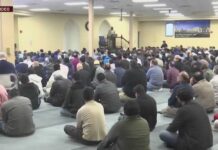
South Korea’s new push to dissolve “harmful” religious groups is quickly turning into a test of whether the state can decide which faith voices are allowed in public life.
Story Snapshot
- President Lee Jae-myung directed his government to review institutional measures that could dissolve religious foundations, citing political intervention and social harm.
- Leaders from seven major religious groups asked the government to act against organizations they labeled “pseudo-religious,” including proposals to use assets to compensate alleged victims.
- The review is unfolding amid investigations tied to the Unification Church and alleged improper political funding connections involving figures linked to the prior conservative government.
- Rights advocates warn that broad rhetoric against “religious involvement in public life” could expand the target list beyond specific controversial groups.
Lee’s Dissolution Review: What the Government Ordered and Why
President Lee Jae-myung instructed the Ministry of Government Legislation in early December 2025 to examine formal mechanisms for dissolving religious foundations, according to multiple reports. Lee framed the review around cases where religious organizations allegedly intervened in politics and caused social harm. The government’s position, as described in coverage of the Cabinet directive, is that dissolution should be available for legal entities that violate laws or the Constitution or face broad public condemnation.
That framework matters because it shifts the argument away from prosecuting specific alleged crimes and toward a more sweeping remedy: ending an organization’s legal existence. For American readers used to robust First Amendment protections, the core issue is not whether fraud or coercion should be punished; it is whether “public condemnation” or political participation becomes a workable trigger for state power. The research shows the review is ongoing, and no final legislation was confirmed as enacted.
Mainstream Religious Leaders Back Action Against “Pseudo-Religious” Groups
On January 12, 2026, Lee met with heads of seven major domestic religious groups at Cheong Wa Dae, where leaders formally proposed dissolution measures aimed at groups they described as pseudo-religious and socially damaging. Reports say the same leaders also requested steps to restore assets or provide compensation for victims by using the targeted organizations’ foundations. The government presented the meeting as part of a broader effort to protect citizens from harm attributed to certain groups.
The public-facing argument from these religious leaders draws a bright line between mainstream religions and organizations they believe exploit followers. That distinction may resonate with many citizens—especially if victims can show concrete harms. Still, the policy tool being discussed is unusually powerful: dissolution and asset-related remedies guided by government decision-making. Even when some major faith leaders support such steps, the precedent creates a future pathway for political leaders to pressure, penalize, or silence unpopular religious communities.
The Unification Church Scandal and South Korea’s Political Fallout
The dissolution debate is also tied to political scandal. Reporting describes investigations involving the Unification Church and alleged unlawful donations linked to former First Lady Kim Keon Hee, the wife of former President Yoon Suk Yeol. A South Korean minister resigned in December 2025 after accusations of receiving illegal funds connected to the church, which intensified public scrutiny. Those developments have fueled calls for tougher government action and amplified claims that religion and politics became dangerously intertwined.
The broader backdrop is South Korea’s recent political instability. Former President Yoon, a conservative, was ousted in 2025 after declaring martial law in December 2024, and Lee—aligned with the Democratic Party of Korea—won a snap election in June 2025. Research also notes that religious communities mobilized during the martial-law aftermath, with large numbers of clergy participating in resistance. In a polarized environment, any state power aimed at dissolving religious groups will be interpreted through partisan lenses.
From Targeted Crackdowns to Broader Limits on Religious Speech
Concerns about scope increased after Lee’s January 21, 2026 press conference, described as containing a sweeping condemnation of religious involvement in public life. Separate reporting also says the government directed agencies to crack down on hate speech and instructed the Justice Ministry to pursue criminal-code amendments connected to that goal. Taken together, those developments suggest the conversation is not limited to one organization, but to a wider effort to shape what the state considers acceptable public engagement.
Some criticism of Lee’s approach comes from explicitly ideological commentary, which should be weighed accordingly. At the same time, the factual timeline is clear: the administration ordered a formal review, met with mainstream religious leadership advocating dissolution and asset remedies, and then escalated rhetoric about religion in public life. For conservatives who prioritize limited government, the key question is whether legal standards will stay narrow and evidence-based, or widen into subjective judgments about politics and “social harm.”
South Korean Leftists Introduce Legislation to Dissolve Churches on Political Grounds https://t.co/vahKhzZbtI #gatewaypundit via @gatewaypundit
— dave999x2 (@dave999x2) January 28, 2026
For U.S. observers, the lesson is cautionary. When governments gain tools to dissolve organizations over disputed political involvement—or broad claims about public outrage—those tools rarely stay confined to today’s “approved” targets. South Korea’s system differs from America’s, but the principle is familiar: the state that can decide which religious voices may operate legally can also influence elections, civic activism, and cultural debates. The available reporting does not confirm final enactment yet, so the next steps in the review will be pivotal.
Sources:
South Korea’s Lee wants eliminate conservatives
South Korea president meets religious leaders amid calls to curb “pseudo-religions”
South Korea minister resigns over alleged improper ties to Unification Church
Korean Clergy and Monastics Resist Martial Law
South Korea minister resigns over alleged bribes from church
South Korea: Silencing the churches? Why Korea’s new rhetoric threatens democratic freedom