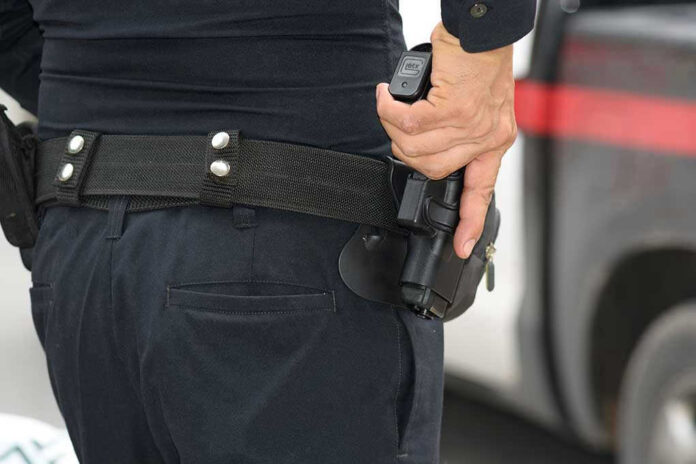
Felony charges for carrying rifles and shotguns have been abruptly ended in Washington, D.C., marking a stunning reversal in one of America’s most restrictive gun control cities and igniting a fierce national debate over the future of Second Amendment rights.
Story Snapshot
- Trump administration policy ends felony charges for carrying rifles and shotguns in D.C., dramatically loosening decades-old restrictions.
- Gun permit wait times have plunged from months to under five days, with walk-in and next-day registrations now possible.
- The change, enacted by federal executive order, bypasses local D.C. government and elevates tensions between city officials and the White House.
- Gun rights supporters hail the move as a long-overdue win for law-abiding citizens, while opponents warn of public safety risks and legal challenges.
Trump’s Executive Order Overhauls D.C. Gun Laws
In March 2025, President Donald Trump signed an executive order launching the “Making DC Safe and Beautiful Task Force,” setting the stage for a historic overhaul of D.C.’s gun policies. For decades, Washington, D.C., enforced some of the country’s strictest firearms regulations, with bans and harsh penalties for carrying rifles and shotguns in public. The new Trump-era directive swept aside these longstanding barriers, focusing on crime reduction and the removal of bureaucratic roadblocks for law-abiding residents seeking to exercise their constitutional rights.
The task force, working in close coordination with local officials, transformed the gun permitting process between April and August 2025. The average wait time for obtaining a permit dropped dramatically—from several months to under five days. Residents can now access walk-in or next-day appointments for firearm registration. This streamlining has not only made legal gun ownership more accessible but also signals the administration’s determination to empower citizens and reinforce the right to self-defense without undue government interference.
Historic Policy Shift Sparks Constitutional Debate
The Trump administration’s move to end felony charges for openly carrying rifles and shotguns in the nation’s capital represents a seismic shift in the balance between federal authority and local governance. While the precise legal mechanism—whether statutory change or a policy memo—remains somewhat opaque, federal directives have clearly taken precedence over local preferences. This action echoes recent Supreme Court decisions, such as the 2022 ruling in New York State Rifle & Pistol Association v. Bruen, which expanded Second Amendment protections and forced jurisdictions nationwide to revisit restrictive gun laws.
For many conservatives and gun rights advocates, these changes are long overdue. They argue that D.C.’s previous policies were relics of bureaucratic overreach, leaving law-abiding people defenseless in the face of rising violent crime. By streamlining registration and ending felony prosecutions for carrying long guns, the administration is reaffirming the principle that the right to bear arms “shall not be infringed”—a core conservative value and a bedrock of American liberty.
Opposition Warns of Public Safety Risks
Opposition groups, including prominent gun control advocates and many local D.C. officials, have condemned the reforms as reckless and dangerous. Critics warn that loosening restrictions on carrying firearms could lead to increased gun violence and undermine years of efforts to reduce crime. They also express concern that the rapid policy changes, imposed through federal executive authority, erode local control and set a precedent for overriding community standards. The debate has become a flashpoint in the broader national struggle between individual liberty and government regulation, with D.C. now a battleground for the future of gun rights in urban America.
Despite these warnings, advocates for the new policy maintain that making it easier for responsible citizens to defend themselves is a common-sense response to ongoing threats and the failures of past “soft-on-crime” policies. They point to the immediate increase in legal firearm registrations as evidence that the change is empowering everyday people rather than criminals.
Uncertain Outcomes and the Road Ahead
With the permitting and enforcement changes already in effect, the nation watches closely to see how the new landscape will affect public safety, legal challenges, and the broader gun debate. Law enforcement agencies must now adapt to the new reality, balancing public safety with respect for individual rights. While short-term effects include a surge in legal registrations and heightened political debate, the long-term impact on crime rates and community security remains uncertain. Both sides agree on one thing: Washington, D.C., has become the proving ground for the next chapter in America’s constitutional struggle over gun rights and government authority.
Sources:
DC gun permit wait slashed from months to days as Trump’s crime crackdown continues
New Gun Laws and Proposed Changes for 2025-2026
Media Tip Sheet: DOGE Attempts to Alter Gun Regulations
![Edward Greim on behalf of Phillip Callais [19:53]](https://patriotwise.com/wp-content/uploads/sites/4/2026/04/maxresdefault-1-218x150.jpg "Supreme Court Shocker: Voting Rights Act SHATTERED!")