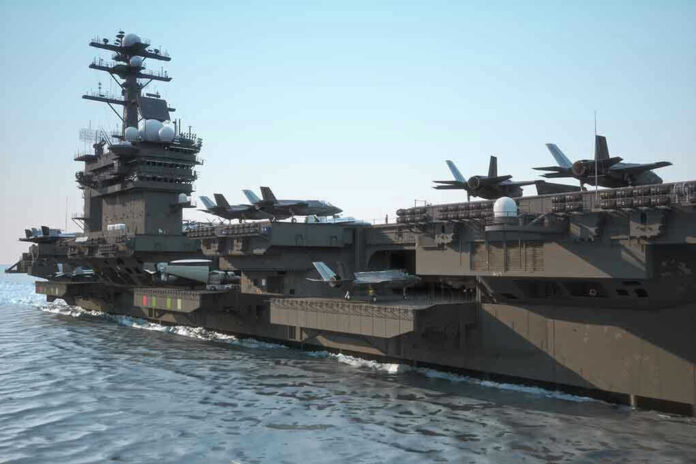
Two U.S. Navy aircraft crashed within 30 minutes over Chinese-claimed waters, exposing the ongoing dangers and high costs of defending American interests amid escalating regional threats.
Story Snapshot
- Two advanced U.S. Navy aircraft lost in the South China Sea within half an hour during routine operations from USS Nimitz.
- All five American crew members survived, but the costly incidents highlight operational risks and persistent Chinese challenges.
- The Navy has launched a formal investigation as questions mount over safety protocols and potential outside interference.
- Event underscores the strategic importance—and volatility—of America’s military presence against globalist ambitions in contested waters.
Two U.S. Navy Aircraft Downed in Disputed South China Sea
On October 26, 2025, the U.S. Navy suffered the rare loss of two advanced aircraft during routine operations over the South China Sea, a region fiercely claimed by China. Within just thirty minutes, both an MH-60R Sea Hawk helicopter and an F/A-18F Super Hornet, operating from the USS Nimitz, crashed into contested waters. Despite the high-stakes environment and potential for disaster, all five crew members were rescued and are reported to be in stable condition. The Navy immediately initiated a full investigation into the back-to-back incidents, which have drawn attention from defense analysts and policymakers alike.
The South China Sea represents a critical flashpoint for U.S. interests and a test of American resolve against authoritarian expansion. The USS Nimitz, on its final cruise with Carrier Air Wing 17, was conducting routine flight operations when these incidents occurred. The region has seen a steady increase in military and diplomatic friction, with China aggressively asserting territorial claims and pushing back against U.S. freedom of navigation operations. These tensions have only intensified as the U.S. maintains a visible naval presence to safeguard international law and keep global shipping routes open. The rapid sequence of the crashes has raised questions about operational safety, environmental hazards, and whether adversarial activity could have played a role, though no evidence of hostile action has been released.
Strategic Stakes: American Presence and Chinese Ambitions
Washington’s commitment to protecting international waterways is fundamental to American national security and global stability. The recent incidents serve as a stark reminder of the risks U.S. service members face daily in defense of freedom and constitutional values. China’s regime, emboldened by years of weak globalist policies and unchecked expansion, continues to challenge American dominance and the rules-based order. The loss of two aircraft—each representing significant taxpayer investment and technological prowess—underscores the hazards of operating in a theater rife with surveillance, close encounters, and the ever-present threat of escalation. For many conservatives, these events highlight the cost of projecting strength and the necessity of rejecting appeasement or retreat.
Operationally, the incidents disrupt Carrier Air Wing 17’s mission readiness and prompt immediate reviews of flight safety and maintenance protocols. The Navy’s ongoing investigation will examine every angle, from mechanical failure and weather to possible external interference. While all crew were rescued, the financial and strategic toll is substantial, with the F/A-18F Super Hornet alone valued at nearly $60 million. These losses come on the heels of similar incidents in recent years, emphasizing the need for robust oversight and unwavering support for those who serve on the front lines. As the investigation proceeds, the Pentagon faces pressure to ensure such accidents do not undermine American deterrence or embolden adversaries seeking to exploit any perceived vulnerability.
Regional Tensions, Political Fallout, and the Fight for American Values
The crashes have immediate and long-term ramifications for U.S.-China relations. In the short term, the Navy’s operational capabilities are temporarily degraded, and families of service members are left concerned. In the long term, the potential for heightened regional tensions remains high, especially if the investigation uncovers evidence of Chinese interference or systemic lapses. The economic cost—both in lost equipment and possible increased insurance and maintenance burdens—adds to the strain on the defense budget, already stretched after years of reckless spending and globalist mismanagement. More broadly, these events signal to allies and adversaries alike that the United States remains willing to pay a price to defend freedom of navigation and stand up to those who threaten constitutional order and American sovereignty.
Doesn’t pass the sniff test
US Carrier Loses Two Aircraft In 30 Minutes Over Chinese-Claimed Waters | The Daily Caller https://t.co/mZOZ6aiDTk
— sassywindsor (@sassywindsor) October 27, 2025
Expert analysis in military and academic circles has focused on the rarity and severity of losing two advanced aircraft in such quick succession. Some analysts point to the risks inherent in operating in contested zones, while others stress the symbolic importance of demonstrating resolve amidst adversity. Ultimately, the U.S. Navy’s handling of these incidents—and any policy adjustments that follow—will serve as a bellwether for America’s commitment to defending its values and interests abroad. For conservative Americans, these developments reaffirm the necessity of a strong military, vigilant oversight, and resistance to any agenda that threatens U.S. sovereignty, security, and the Constitution itself.
Sources:
US Navy loses two aircraft from USS Nimitz
Two US Navy planes crash aircraft carrier South China Sea 30 minutes apart
US Navy Sea Hawk chopper, Super Hornet jet