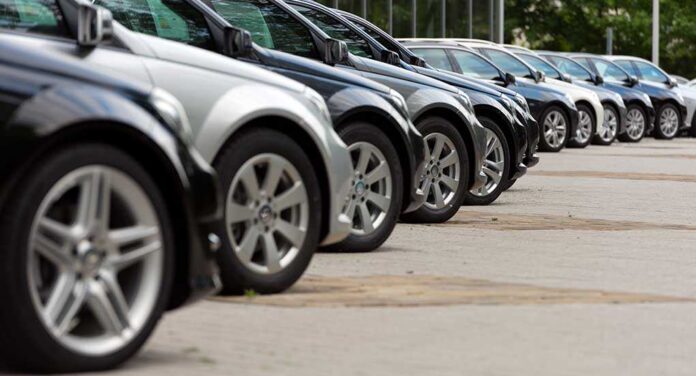
Trump’s aggressive 25% tariff on European cars marks a major shift in his second-term trade strategy, protecting American workers and manufacturing while escalating tensions with a key trading partner.
Quick Take
- Trump imposed 25% tariffs on EU passenger vehicles and light trucks, citing national security threats to America’s industrial base
- The tariffs target sedans, SUVs, crossovers, minivans, cargo vans, and critical auto parts including engines and transmissions
- Trump accuses the EU of unfair trade practices, pointing to Europe’s 10% car tariff versus America’s 2.5% baseline rate
- The move expanded to 15% by September 2025 following negotiations, but remains substantially higher than pre-tariff levels
Trump Invokes National Security for Auto Tariffs
President Trump signed a proclamation under Section 232 of the Trade Expansion Act of 1962, imposing a 25% tariff on imported automobiles and certain automobile parts to address what his administration describes as a critical threat to U.S. national security. The tariff applies to imported passenger vehicles including sedans, SUVs, crossovers, minivans, and cargo vans, along with key automobile parts such as engines, transmissions, powertrain components, and electrical systems. The White House stated the measure protects America’s automobile industry, which is vital to national security and has been undermined by excessive imports threatening America’s domestic industrial base and supply chains.
Addressing Long-Standing Trade Imbalances
Trump’s tariff action responds to decades of trade friction between the United States and European Union over automobiles. The EU currently collects a 10% tariff on vehicle imports—four times the rate of the U.S. passenger car tariff of 2.5%. Trump argues the European Union has systematically taken advantage of American workers and businesses by rejecting U.S. cars and farm products while the United States accepts European goods freely. He claims, without evidence, that the EU was created “in order to screw the United States.” The administration contends that reciprocal tariffs are necessary to level an unequal playing field that has disadvantaged American manufacturers and workers for decades.
EU Retaliation and Escalating Trade War
The European Union responded swiftly to Trump’s auto tariff threat by imposing tariffs on approximately $3.3 billion of American products, including 25% duties on iconic American exports like Harley-Davidson motorcycles, Levi Strauss jeans, and bourbon whiskey. The EU measures cover around 200 product categories, including corn, rice, orange juice, cigarettes, T-shirts, cosmetics, boats, and steel. This tit-for-tat escalation mirrors the broader trade conflict already underway with China, raising concerns about a widening global trade war that could disrupt international commerce and raise prices for American consumers.
USMCA Compliance and Tariff Flexibility
The Trump administration implemented provisions allowing importers of automobiles under the United States-Mexico-Canada Agreement to certify their U.S. content, ensuring the 25% tariff applies only to the value of non-U.S. content. USMCA-compliant automobile parts remain tariff-free pending further action by the Secretary of Commerce in consultation with U.S. Customs and Border Protection. This approach balances protectionism with recognition of integrated North American supply chains, allowing compliant manufacturers some relief while maintaining pressure on non-compliant importers to increase American production and sourcing.
Sources:
Trump’s tariff threat on European cars escalates global trade tensions
In U.S.-EU trade dispute, Trump claims Europe doesn’t … – CBS News
US drops tariffs on EU cars to 15% – Euronews.com
Fact Sheet: President Donald J. Trump Adjusts Imports of …