

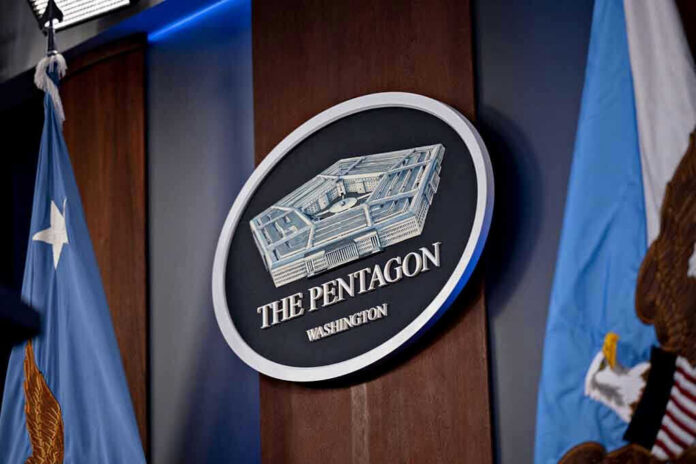
Senate Democrats are threatening to blow up a bipartisan funding deal unless the Trump Pentagon hands over more detail on a fast-track pot of defense money they’re branding a potential “slush fund.”
Story Snapshot
- House Republicans finished an FY26 funding package, but Senate Democrats are signaling they may derail the deal over demands tied to Defense Secretary Pete Hegseth and reconciliation spending.
- Reconciliation can move budget items faster by avoiding a Senate filibuster, but critics argue it can also reduce day-to-day congressional visibility into line-by-line spending.
- Congress has been working off incomplete FY26 defense details after delays in the administration’s budget rollout, complicating oversight and fueling mistrust.
- The standoff risks slowing weapons programs and military readiness planning while raising broader questions about Congress’ constitutional power of the purse.
Senate leverage collides with a House-negotiated FY26 package
House lawmakers completed an FY26 funding package on Jan. 28, 2026, and House Republicans said Senate Democrats were threatening to break a bipartisan understanding on several bills, including defense and DHS. Democrats’ leverage is procedural and political: without Senate cooperation, even a House-finished package can stall. House Republicans argued that walking away from negotiated terms is “abdication,” while Democrats pointed to unanswered questions about how defense add-ons could be executed.
Senate resistance has shown up in floor action as well. On Jan. 29, the Senate failed to advance a set of spending bills as Democrats pushed for DHS reforms, illustrating how quickly broader policy fights can become a choke point for basic government funding. With the fiscal calendar always looming, prolonged deadlock increases the odds of short-term extensions, last-minute negotiations, or disruptions that ripple into agencies that depend on predictable appropriations.
Why reconciliation funding triggers “slush fund” warnings
Reconciliation is a budget tool created under the 1974 Budget Act to allow certain fiscal measures to pass with expedited Senate procedures. In this fight, Democrats are pressing Hegseth and the Pentagon for more transparency and limits around reconciliation-related defense spending. The concern centers on whether large add-ons, layered beside the base defense budget, could shift priorities without the same granular scrutiny Congress expects through regular appropriations.
Available reporting describes a proposed reconciliation add-on of roughly $107 billion on top of a defense base around $893 billion, while House action advanced a flat defense bill in the low $831–$832 billion range during earlier markup activity. Those figures highlight why lawmakers want clarity: when numbers move through multiple lanes, it becomes harder for rank-and-file members—and the public—to track which programs are funded, which are deferred, and which are being reshaped through side agreements.
Budget delays and incomplete details intensify oversight concerns
House appropriators pressed the Pentagon for detailed FY26 spending plans while marking up bills without the level of program information lawmakers usually rely on. Democratic appropriators warned that rushed timelines and missing specifics carry “national security ramifications,” while Republicans acknowledged that doing oversight work is harder without the full submission. Even when both parties say they want a strong military, a process starved of details invites suspicion, messaging warfare, and tactical brinkmanship.
The uncertainty is not just a Washington process story. Pentagon planning for shipbuilding, nuclear modernization, and other long-lead programs depends on timely appropriations and clear guidance. Reporting also describes priorities such as a $5.9 billion shipbuilding boost and a review tied to the Sentinel ICBM effort, but some sourcing leaves unclear how much is inside the base request versus reconciliation. That ambiguity feeds the very arguments Senate Democrats are now using to slow the deal.
Hegseth controversies add political heat, but the core issue is Congress’ power of the purse
Democrats have repeatedly tied their transparency push to controversies surrounding Hegseth, including reporting about internal turmoil and scrutiny over handling of sensitive information in commercial messaging chats. Earlier House debate included failed Democratic amendments aimed at restricting or “fencing” portions of proposed Pentagon increases pending policy reviews. Republicans characterized those moves as partisan posturing, while Democrats argued they were basic accountability steps given the controversy and the size of the sums involved.
Senate Democrats raise 'slush fund' concerns, want answers from Hegseth on reconciliation spending https://t.co/LZDhRfHY7V
— Inside Defense (@insidedefense) February 5, 2026
For conservatives, the constitutional point matters at least as much as the personality clash. Article I gives Congress the power of the purse, and reconciliation should not become a shortcut that leaves voters guessing where billions actually go. At the same time, lawmakers who demand transparency also have to grapple with the practical cost of delay: slowed procurement, uncertain readiness accounts, and disrupted planning. The available sources show a real oversight dispute—but they also show a high-stakes funding clock that does not pause for politics.
Sources:
Hegseth Turmoil Overshadows Committee Debate on $150 Billion Pentagon Budget Boost
House appropriators press Hegseth for FY26 spending plans, marking up without answers
House completes FY26 funding while Senate Democrats threaten bipartisan deal
Congressional defense plans slowed by unsettled reconciliation debate
Senate fails to advance spending bills as Democrats push for DHS reforms