Qatar’s decision to shoot down two Iranian fighter jets marks a dramatic shift in the Gulf state’s posture, signaling active military engagement against Iran alongside U.S. forces in a conflict that threatens to engulf the entire Middle East.
Story Snapshot
- Qatar’s Defence Ministry successfully intercepted two Iranian fighter jets, seven ballistic missiles, and five drones on March 2, 2026
- The action represents a significant departure from Qatar’s previous reluctance to grant the U.S. unrestricted base and airspace access
- The engagement occurred during Day 3 of Operation Epic Fury, with 555 Iranian deaths reported and U.S. casualties mounting
- Gulf states are now actively defending against Iranian retaliation following joint U.S.-Israeli strikes that killed Supreme Leader Ayatollah Ali Khamenei
Qatar Takes Decisive Action Against Iranian Aircraft
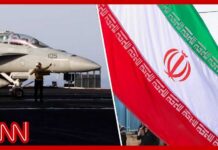
Qatar’s Defence Ministry announced on March 2, 2026, that it successfully engaged and destroyed two Iranian fighter jets approaching Qatari airspace from Iran. The operation also included intercepting seven ballistic missiles and five drones launched by Iranian forces. This marked the first time Qatar has directly targeted Iranian military aircraft during the current conflict, distinguishing its actions from other Gulf states that have primarily focused on defensive intercepts of missiles and drones. The engagement demonstrates Qatar’s willingness to actively participate in countering Iranian military operations rather than maintaining the neutral stance it initially adopted.
Gulf States Reverse Course on U.S. Military Support
The contrast between Qatar’s current actions and its initial hesitancy highlights a dramatic reversal in Gulf state cooperation with U.S. military operations. When the United States began its largest Middle East military buildup since the 2003 Iraq invasion in late January 2026, Gulf states including Qatar initially denied American forces unrestricted access to bases and airspace. Their reluctance stemmed from fears of Iranian retaliation against their territories and civilian populations. However, as Iran launched waves of missiles and drones targeting U.S. bases, Gulf capitals, and infrastructure across the region, these nations recognized that neutrality would not shield them from Tehran’s wrath.
Operation Epic Fury Intensifies Across the Region
The conflict escalated rapidly following the February 28 joint U.S.-Israeli strikes that killed Iranian Supreme Leader Ayatollah Ali Khamenei and other senior leaders. Iran’s immediate retaliation included launching missiles and drones against Israel, U.S. military installations, and Gulf state territories. By March 2, the third day of fighting, casualties had mounted significantly with 555 Iranian deaths reported by the Red Crescent, four U.S. service members killed in Kuwait, and eleven Israeli deaths. The chaos of combat operations also resulted in friendly fire incidents, including Kuwaiti air defenses mistakenly shooting down three U.S. F-15 fighter jets, though American crews survived. Saudi Arabia intercepted five drones near the Prince Sultan Air Base, which hosts 2,700 U.S. military personnel.
Regional Stability Collapses Under Iranian Assault
The conflict has shattered the Gulf region’s reputation as islands of stability amid Middle Eastern turmoil. Iranian strikes have caused explosions over Dubai and Doha, damaged civilian areas in Bahrain, and hit a British military base in Cyprus. Airspace closures across Jordan and Gulf hub airports have paralyzed regional aviation, stranding thousands of travelers and creating what analysts describe as a “black hole” in Middle Eastern air traffic. Iran’s targeting of oil tankers from its “shadow fleet” threatens energy supplies, while the formation of a new Iranian leadership council following Khamenei’s death adds political uncertainty to the military crisis.
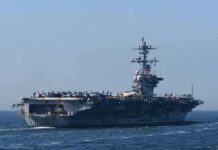
President Trump has deployed the USS Abraham Lincoln and Gerald R. Ford carrier strike groups alongside F-22 and F-35 fighter aircraft to the region, refusing to rule out the possibility of introducing ground troops. The scale of American military commitment rivals the 2003 Iraq invasion buildup, reflecting the administration’s determination to neutralize Iranian nuclear capabilities and missile threats. Qatar’s active engagement against Iranian aircraft reinforces the emerging Gulf coalition supporting U.S. operations, though the risk of further escalation and regional conflagration remains substantial as Iran adopts an increasingly aggressive offensive doctrine.
Sources:
CBS News: Iran-US War Day 3 Live Updates
Hindustan Times: Qatar Says It Shot Down 2 Iranian Jets Amid Wider Escalation in West Asia
Wikipedia: 2026 United States Military Buildup in the Middle East