
Bulgaria has quietly opened its skies to a new Iran war, while insisting it is not part of the fight.
Story Snapshot
- Bulgarian lawmakers approved U.S. tanker aircraft at Bezmer Air Base to support Middle East operations, including strikes on Iran.
- Sofia insists the mission is “logistical only” and that no combat operations will launch from Bulgarian territory.
- Tehran warns Bulgaria that even hosting refueling planes makes it an accomplice to “aggression and war crimes.”
- The move shows how smaller NATO states get pulled into big-power wars through base access and support roles, not just front-line fighting.
Parliament Clears U.S. Tanker Deployment to Aid Iran Operations
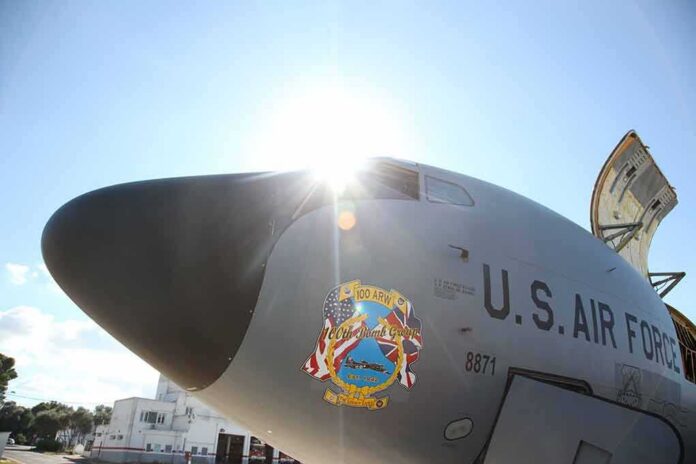
Bulgarian Parliament voted to let the United States station up to eight KC‑135 tanker aircraft and 250 troops at Bezmer Air Base from July 24 to October 1, 2026, to support U.S. operations in the Middle East. The base, about 160 miles southeast of Sofia, is already a joint‑use facility under a 2006 defense agreement with Washington. Lawmakers backed the plan by a wide margin, 136 in favor, 13 against, and two abstentions, reflecting strong alignment with U.S. and NATO policy.
The KC‑135 tankers will perform aerial refueling for U.S. combat aircraft flying long‑range missions, including strikes against targets in Iran. Refueling planes allow bombers and fighter jets to stay in the air longer and reach distant targets without landing, making them a critical part of modern air campaigns. While no offensive weapons are based at Bezmer, the refueling support helps enable the wider war effort, raising questions about how far “logistical” help really is from combat action.
Sofia Says It Is Meeting Allied Duties, Not Joining the War
Prime Minister Rumen Radev told lawmakers that Bulgaria is “meeting our allied commitments” and that combat operations from Bulgarian territory are “categorically out of the question.” He said the tankers are “solely for logistical missions involving in‑flight refueling outside Bulgarian airspace,” stressing that no strikes would launch from Bezmer. The defense minister said Bulgaria sought and received security guarantees from the U.S. to limit risks, and insisted the country would not be drawn into direct conflict.
President Iliana Iotova also argued that hosting tankers does not make Bulgaria a party to the war in Iran. She noted that the government followed legal procedures and required parliamentary approval for the deployment. This framing matches a long‑standing pattern, where governments describe base access and refueling as support roles, not combat participation. Officials emphasize that Bulgaria is a North Atlantic Treaty Organization ally honoring agreements, while trying to calm public fears that the country is stepping into a dangerous regional war.
Iran Warns of “Complicity” and Regional Escalation
Iran’s Foreign Ministry warned Bulgaria not to let its territory or bases help U.S. operations against Iran, saying any role in planning or carrying out such missions would amount to “aggression and war crimes.” Tehran urged the full parliament to reject the proposal and said the move raised the risk that Bulgaria, a small North Atlantic Treaty Organization state far from Iran, could be pulled into the growing conflict between Washington and Tehran. Iranian officials framed tanker support as direct involvement, not neutral logistics.
🇧🇬🇺🇸🇮🇷⚡️ — Bulgaria's parliament has approved the temporary deployment of up to eight U.S. KC-135 aerial refueling aircraft at Bezmer Air Base — despite an Iranian warning that the move would make Sofia complicit in "aggression and war crimes."
➡️ The measure passed by a vote of… https://t.co/MEaNZZBDlo pic.twitter.com/QlkZtdrzmq
— Raaz News – En (@raaznewsen) July 22, 2026
This clash of views highlights a deeper tension that many Americans know well: governments call these steps routine “support,” while critics see them as joining another foreign war without honest debate. Bulgaria’s vote fits a pattern seen in other campaigns, where hosting U.S. forces, granting airspace access, or allowing refueling turns a country into an essential link in the war chain. For citizens in both nations who distrust global elites and endless wars, it looks like one more example of decisions made far above their pay grade.
Why This Matters for Ordinary Americans and Allies
For many Americans on the right and left, this story feels familiar: another complex overseas deployment, approved by a small foreign parliament, helping extend a war that regular people never asked for. U.S. leaders gain more reach over Iran by using allied territory, while lawmakers in Sofia stress that everything is “limited,” “temporary,” and “logistical.” Yet the net effect is the same: more aircraft in the sky, more targets within range, and more chances for a mistake or wider regional blow‑up.
This also shows how middle and smaller countries become part of great‑power struggles. Bulgaria seeks to prove it is a “reliable ally” and gain favor with Washington, even as it must reassure its own citizens and manage threats from Iran. The details are technical—KC‑135, joint‑use air base, refueling missions—but the core issue is simple. When your territory and infrastructure help run a war, saying you are only doing logistics does not erase the moral and strategic stakes. That is what worries people who already feel the system serves elites, not them.
Sources:
realcleardefense.com, bta.bg, sofiaglobe.com, english.alarabiya.net, en.haberler.com
© patriotwise.com 2026. All rights reserved.