A quiet delivery of law-enforcement-grade SUVs to a New England ICE hub has reignited a familiar fight: enforcing immigration law versus activist pressure to block it.
Quick Take
- ICE received about 24 white SUVs at its Burlington, Massachusetts office on Jan. 7, 2026, prompting protests and renewed scrutiny.
- Reports say ICE previously proposed about $100 million for roughly 1,000 new SUVs tied to deportation operations, but officials have not clarified specific deployment plans.
- Activists argue the vehicles signal an “escalation,” while supporters see basic capacity-building for enforcing federal law.
- Other states have reported controversial tactics and incidents involving unmarked vehicles, raising civil-liberties questions alongside enforcement demands.
Burlington Delivery Puts ICE Expansion in the Spotlight
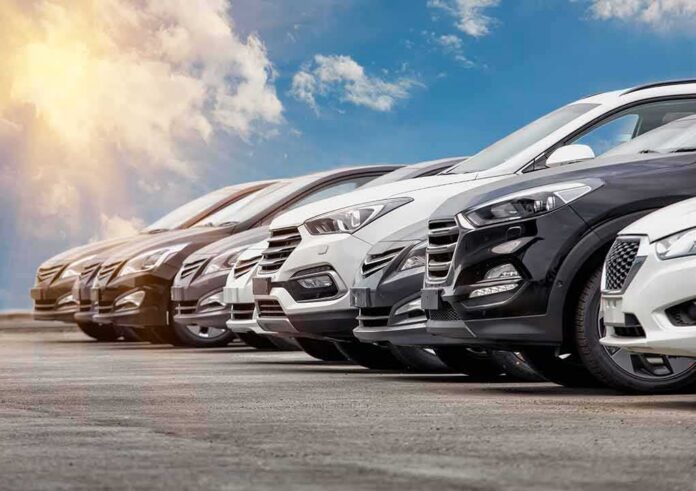
ICE’s New England headquarters in Burlington became a focal point after roughly 24 white SUVs—reported as Dodge Durangos and Ford Police Interceptor Utility vehicles—arrived on Jan. 7, 2026. Local accounts said the vehicles showed up without license plates, and neither ICE nor Massachusetts officials offered immediate clarity on their operational purpose. That lack of explanation fueled speculation locally, especially because Burlington is a regional hub with broad reach across the Northeast.
Activist group Bearing Witness and local residents framed the delivery as an indicator that tougher enforcement could be coming to Massachusetts. A protest outside the Burlington office on Jan. 14 drew about 300 demonstrators, reflecting ongoing organizing around immigration enforcement in the region. The debate has less to do with the vehicles’ paint color than what they represent: a federal agency increasing its ability to conduct arrests, transport detainees, and support field operations.
The Procurement Question: Big-Dollar Plan, Limited Official Detail
The bigger context is money and scale. Reports say ICE proposed spending about $100 million in late 2025 to acquire roughly 1,000 new SUVs for deportation support, listing models commonly used in law enforcement: Ford Police Interceptor Utility, Dodge Durango Pursuit, and Chevy Tahoe Police Pursuit vehicles. What remains unclear is whether the Burlington delivery is part of that proposal, an early tranche of a broader purchase, or a separate acquisition entirely.
The absence of detailed public explanation leaves a vacuum quickly filled by activists and partisans. For supporters of strong border and interior enforcement, the logic is straightforward: agencies cannot execute lawful orders without equipment, and vehicle fleets are basic infrastructure. For critics, unmarked or hard-to-identify enforcement platforms raise concerns about transparency and community fear. The available reporting does not include definitive statements from ICE explaining mission specifics for the Burlington SUVs.
Other States Report Unmarked Fleets and Controversial Tactics
What makes the Burlington story politically combustible is that it lands amid other reported ICE-related vehicle activity nationwide. In Baltimore, local reporting described about 60 unmarked SUVs and pickup trucks spotted in a midtown garage before they were removed. In Minnesota, reporting described ICE agents using rental vehicles with fake license plates and concealing tactical gear beneath yellow vests during surveillance work—details that have amplified public anxiety about who is conducting an operation.
In Colorado, local coverage described “death cards” left on vehicles of detained immigrants, a tactic critics called inflammatory. In Tennessee, an investigation into joint Tennessee Highway Patrol and ICE operations drew accusations from state Democrats of “blatant racial profiling,” including stops for minor issues like bent license plates or dark tint and heightened attention on people speaking broken English. Tennessee Highway Patrol leadership defended the work as consistent with policy and probable cause standards while acknowledging “insensitive” conduct occurred.
Constitutional Tension: Enforcement Authority vs. Civil Liberties Claims
Immigration enforcement sits at the intersection of federal power and individual rights, so tactics matter. When critics allege pretextual stops or discriminatory targeting, the claims implicate constitutional protections against unreasonable searches and equal-protection violations. At the same time, the federal government retains clear authority to enforce immigration law, and a functioning enforcement system inevitably requires logistics, transportation, and operational support—exactly what a vehicle procurement program is designed to provide.
The key limitation in the current record is that many of the loudest interpretations—both “this is a crackdown” and “this is just routine”—outpace the official details publicly available. ICE and state officials have not provided the kind of transparent explanation that would let citizens judge the balance between operational necessity and civil-liberties safeguards. Until that changes, the Burlington SUVs will remain less a transportation story than a proxy battle over whether immigration law will be enforced consistently.
ICE's Newest Undercover Vehicles Are Sure to Tick Off the Left
https://t.co/jAmTLlrXVn— Townhall Updates (@TownhallUpdates) March 4, 2026
For Massachusetts communities, the practical question is what new capacity looks like on the ground: more targeted arrests of criminal offenders, broader workplace operations, or increased coordination with other agencies. For the national debate, the political reality is simpler. Under the current administration’s enforcement priorities, activists who spent years pushing sanctuary-style resistance are likely to treat even standard equipment upgrades as provocation—while many voters see those upgrades as overdue course correction after years of porous borders and lax interior enforcement.
Sources:
New SUVs delivered to Mass. ICE office; Locals worry escalated ICE enforcement
Democrats demand accountability after blatant racial profiling in THP, ICE stops
Hard hats and dummy plates: Reports of ICE deceptions add to fears in Minnesota
Fleet of ICE vehicles removed from midtown Baltimore garage
ICE agents leave controversial “death cards” on vehicles of detained immigrants in Colorado
ICE agents outside local school campuses raise concerns