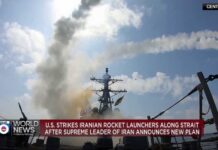


Gulf allies are privately pushing President Trump to continue America’s war against Iran, dragging us deeper into another endless Middle East conflict despite campaign promises to keep our troops out of foreign entanglements.
Story Snapshot
- Saudi Arabia and UAE urge Trump to escalate month-long bombing campaign against Iran despite 3,000+ deaths and domestic opposition
- Gulf states provide U.S. bases and airspace but refuse direct combat participation while Americans bear the burden
- Iran’s retaliation struck Gulf infrastructure over 2,300 times, disrupting global oil supplies through Strait of Hormuz chokepoint
- Trump’s allies leverage U.S. military might to protect their interests while American families suffer economic shockwaves and casualties
Gulf States Push for Continued Escalation
Saudi Arabia’s Crown Prince Mohammed bin Salman and UAE leadership are privately urging President Trump to intensify airstrikes against Iran, arguing that Tehran remains insufficiently weakened after a month of sustained bombing. These Gulf allies insist any settlement must neutralize Iran’s nuclear program, ballistic missiles, proxy militaries, and control over the critical Strait of Hormuz. While they provide bases and airspace for American operations, notably Saudi Arabia’s King Fahd air base, these allies have not committed their own forces to direct combat, leaving American service members to shoulder the fighting.
America Bears the Cost While Allies Stand Back
The irony is stark: Gulf nations face direct threats from Iranian retaliation, including over 2,300 attacks on UAE infrastructure alone and strikes on Saudi oil refineries and the U.S. Embassy in Riyadh, yet they remain reluctant to join offensive operations. Trump stated on March 29 that Saudi Arabia, UAE, Qatar, Kuwait, and Bahrain are “fighting back hard,” but sources reveal these nations primarily offer logistical support rather than combat forces. This arrangement forces American taxpayers to finance another regime-change war while our supposed allies stay safely on the sidelines, protecting their economic interests without risking their own soldiers.
Broken Promises and Mounting Casualties
President Trump’s second-term promise to avoid new wars rings hollow as the conflict enters its second month with over 3,000 deaths across the Middle East. The February 28 joint U.S.-Israel strikes that initiated this war triggered massive Iranian retaliation through thousands of drones and missiles, partially choking the Strait of Hormuz and disrupting 20 percent of global oil flow. American families now face soaring energy costs and economic uncertainty while Gulf monarchies pressure the administration to continue escalation. Trump contrasts Gulf support with NATO reluctance, yet this “support” amounts to hosting our bases while demanding we fight their battles against a regional rival.
Regional Security Concerns Mask Self-Interest
Gulf allies frame their hawkish stance as necessary to counter Iran’s existential threat, pointing to decades of proxy conflicts, missile programs, and the 2019 Abqaiq-Khurais attacks on Saudi facilities. UAE adviser Anwar Gargash publicly stated that curbing Iran’s nuclear and missile capabilities takes priority over any cease-fire, even suggesting ground invasion options. Saudi Foreign Minister Faisal bin Farhan warned that his nation’s “patience is not unlimited” following attacks on refineries. These statements reveal Gulf states’ determination to use American military power to settle regional scores and eliminate competition for Middle Eastern dominance, regardless of the cost to U.S. troops and taxpayers.
Economic Fallout Hits American Consumers
The war’s disruption of the Strait of Hormuz shipping lanes has sent shockwaves through global energy markets, directly impacting American consumers already struggling with inflation from years of fiscal mismanagement. Gulf exports have been halved by the chokepoint closure, refinery fires rage across Saudi Arabia, and UAE’s tourism-dependent economy faces collapse from infrastructure damage. Meanwhile, experts warn that continued escalation risks a “long, expensive” multi-front conflict that could drag on indefinitely. Conservative analyst Christopher Davidson notes the best-case scenario restores Gulf security, but the worst-case traps America in another unwinnable war while our allies reap the benefits without sharing the sacrifice.
Sources:
Gulf allies privately make the case to Trump to keep fighting until Iran is sufficiently weakened
Gulf States Face Stark Choice As U.S.-Iran War Escalates
2026 United States military buildup in the Middle East
Confrontation Between the United States and Iran