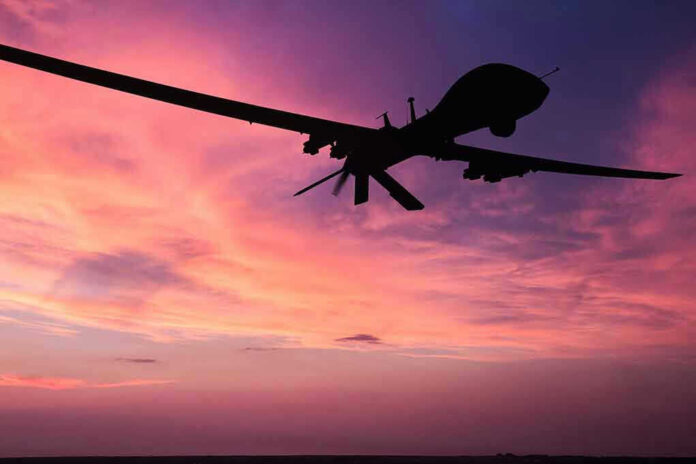
A new potential threat to aviation security has emerged as military drones reportedly targeted Zelensky’s plane en route to Dublin.
Story Snapshot
- Military drones allegedly followed Zelensky’s plane before Dublin visit.
- Incident raises concerns over aviation security and hybrid warfare tactics.
- Investigation required to determine the source and intent of the drones.
- Incident could pressure EU to tighten airspace security regulations.
Alleged Drone Incident Raises Security Concerns
In a recent incident stirring international attention, military-grade drones allegedly followed Ukrainian President Volodymyr Zelensky’s plane as it approached Dublin. The event has raised alarms about aviation safety and the growing use of hybrid warfare tactics. As authorities scramble to investigate the source and intent behind the drones, concerns over airspace security have resurfaced, urging a reevaluation of current defense mechanisms in place.
The alleged presence of drones near Zelensky’s aircraft has been described as a potential “hybrid attack,” a term that highlights the blend of conventional military action with non-traditional tactics. This incident underscores the persistent threat posed by unidentified aerial systems, particularly in politically sensitive regions. The European Union, known for its high standards of safety, must now consider the implications of such breaches on its airspace security strategies.
Implications for European Airspace Security
The incident involving Zelensky’s plane is not isolated but part of a broader context of drone-related security threats in Europe. The use of drones in sensitive airspaces has been a growing concern, with previous incidents reported across various European countries. This event specifically could lead to increased calls for regulatory reforms and enhanced collaborative security measures among EU countries, despite Ireland’s traditional stance of neutrality. Strengthening radar capabilities and implementing stricter no-fly zones could be critical steps in addressing these vulnerabilities.
As the investigation unfolds, the possibility of foreign involvement remains a topic of speculation, with fingers pointing towards state-sponsored actions. However, without concrete evidence, these remain as hypotheses, underscoring the complexity of attributing such incidents to specific actors. The situation demands a careful analysis to avoid premature conclusions that could escalate tensions unnecessarily.
Strategic Responses and Future Considerations
In response to this unsettling event, there may be a push for tighter EU-wide regulations governing drone usage, especially around critical infrastructure and VIP flights. Moreover, this incident might prompt discussions on enhancing cooperative defense measures, even among countries like Ireland that traditionally maintain a neutral stance. By investing in advanced detection and deterrence technologies, European nations can better safeguard their airspaces against such covert threats.
The incident involving President Zelensky’s plane serves as a stark reminder of the evolving nature of security threats in our modern world. As nations grapple with these challenges, continued vigilance and international cooperation will be paramount in ensuring the safety and security of all air travel routes.
Sources:
The Journal: Drones over Dublin in Hybrid Warfare Scenario