
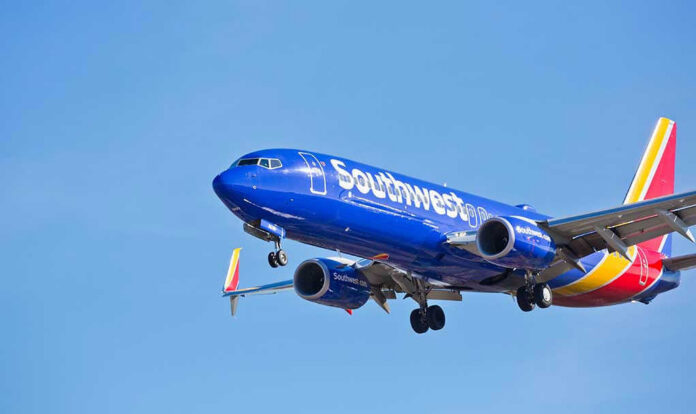
Two Southwest Airlines jets nearly collided over Nashville International Airport, forcing pilots to execute emergency evasive maneuvers in a harrowing near-miss that exposes troubling questions about air traffic control coordination at one of America’s busiest hubs.
Story Snapshot
- Southwest Flight 1152 departing for Knoxville and an arriving Southwest jet came dangerously close during simultaneous runway operations at Nashville International Airport
- Video footage captured the incident, showing cockpit alarms sounding as pilots executed emergency evasive action to prevent a mid-air collision
- No injuries reported, but the incident highlights ongoing safety concerns surrounding Southwest Airlines, which faced FAA fines in 2023 for operational failures
- FAA preliminary review underway as questions mount about air traffic control procedures and whether airline growth has outpaced infrastructure capabilities
Close Call Over Nashville Runway
An incoming Southwest Airlines flight approaching Nashville International Airport executed emergency evasive maneuvers to avoid colliding with Southwest Flight 1152, which was simultaneously taking off bound for Knoxville. Video footage of the incident shows the arriving aircraft diving to avoid contact as the departing plane accelerated down the runway. Both aircraft were operating during what should have been coordinated arrival and departure sequences managed by air traffic control. The near-miss occurred in clear visibility conditions, eliminating weather as a factor and raising immediate questions about coordination failures at a major transportation hub handling over 20 million passengers annually.
Pattern of Safety Concerns
This latest incident adds to a troubling pattern for Southwest Airlines, which faced FAA scrutiny and fines in 2023 for operational failures and prior runway incursions at other airports. The airline operates as a dominant carrier at Nashville International, managing high-volume flight schedules that demand precise air traffic control coordination. Aviation safety experts note that while such near-miss events represent “routine risks” in dense airspace, the video evidence suggests potential clearance errors that should never occur at a properly managed facility. The incident underscores whether regulatory oversight has kept pace with airline expansion, particularly as Southwest maintains its aggressive scheduling at focus cities like Nashville.
Infrastructure Versus Growth Reality
The near-collision spotlights a broader concern shared by Americans across the political spectrum: government agencies failing to ensure basic safety as commercial aviation grows. Nashville International’s status as a Southwest hub means frequent simultaneous operations where timing errors can prove catastrophic. Critics argue that airline growth has outpaced air traffic control infrastructure modernization, leaving travelers dependent on last-second pilot interventions rather than systematic prevention. The FAA has promoted NextGen ATC upgrades for years, yet funding debates in Congress continue while incidents like this demonstrate real-world consequences. For everyday Americans paying premium prices for air travel, the expectation of competent government oversight protecting their safety seems increasingly like wishful thinking.
Accountability Questions Linger
Neither Southwest Airlines nor the FAA issued detailed public statements following the incident, leaving passengers and taxpayers without clear answers about what failed and who bears responsibility. The preliminary FAA review process often shields specifics from public scrutiny, frustrating citizens who fund these regulatory agencies through their tax dollars. Pilots on the arriving flight deserve recognition for their quick action under pressure, but the fundamental question remains: why did these aircraft reach such dangerous proximity in the first place? Air traffic controllers managing runway clearances operate under FAA standards designed to prevent exactly this scenario. When those standards fail, whether through human error, inadequate staffing, or outdated technology, the flying public deserves transparent accountability, not bureaucratic silence that protects the system over the people it serves.
Sources:
Plane forced to take evasive action to avoid mid-air collision – The Independent