

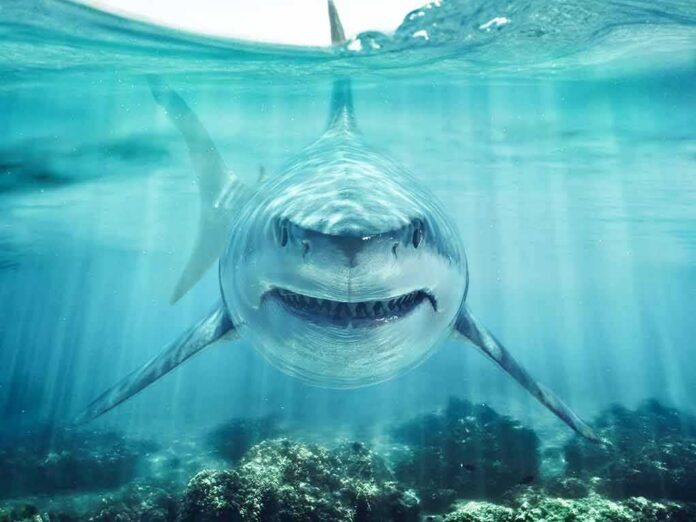
A great white shark ripped into a seal just off Nantucket’s shore, and scientists say this dramatic scene was routine for that spot.
Story Highlights
- A Massachusetts scientist confirmed the shark was a great white feeding on a seal.
- Experts say this behavior is common near Great Point due to many seals.
- Beachgoers filmed the event; witnesses estimated the shark at 12 to 14 feet.
- Recent reports show seasonal great white activity rising across New England.
What Happened Off Nantucket’s Coast
Beachgoers near Nantucket filmed a great white shark attacking a seal a short distance from the shore. Gregory Skomal, a senior fisheries scientist with the Massachusetts Division of Marine Fisheries, reviewed the video and identified the animal as a white shark feeding on a seal. The Atlantic Shark Institute shared the clip, and local reporting noted onlookers estimated the shark’s length between 12 and 14 feet, which is an approximation rather than a measurement.
Witnesses described a burst of thrashing and blood in the water as the shark completed the kill. The location was broadly described near Great Point, a stretch known for large seal groups. Officials did not report injuries to people linked to this event. The stark footage drew wide attention because it unfolded in plain view of a popular beach, turning a normal predator-prey moment into a viral scene.
Why Scientists Say This Is Normal For The Area
Skomal said the behavior was not unusual for Great Point. Seals along that shoreline provide a steady food source for white sharks, which move through Nantucket waters in early summer and again in fall as part of their seasonal migration. This pattern matches years of tracking and field observation across New England. Sharks often feed where seals and baitfish gather near shore, which brings dramatic encounters closer to beaches than many people expect.
Regional data reinforce the seasonal rhythm. In nearby Maine, reports logged nearly 30 white shark sightings in recent weeks, including a juvenile within 500 yards of Wells Beach, aligning with late summer movement and feeding. Maine’s Department of Marine Resources urged caution after tag detections showed repeated nearshore visits by some sharks, highlighting stretches with ongoing activity instead of one-off pass-throughs. Those alerts aim to lower risk while explaining the natural cycle.
Safety Messages Without The Hype
Local officials across New England often warn swimmers to avoid seals, stay close to shore, and heed flags and lifeguards when sharks are around. Those steps reduce the already low risk to people while respecting the fact that beaches share water with apex predators. In Scarborough, Maine, nearly a dozen white sharks were seen over two days with no reported injuries or aggressive behavior toward people, a reminder that presence does not equal pursuit.
I THINK WE NEED A BIGGER BOAT
The growth in the populations of great white sharks & seals increased the number of encounters off the coast of Maine in the summer of 2026.
55‑year‑old thought he had caught his foot on a boat propeller, but it turned out to be a great white shark. pic.twitter.com/DjXyXIGrlr— Lev (@Lev1446491) September 18, 2026
Media headlines can turn a normal feeding event into a crisis narrative. That framing can miss the bigger point: sharks return each year because the food is there, and the season favors nearshore hunting. Communities can balance clear safety advice with plain facts about when and why sharks show up. That helps families enjoy the coast, supports local economies that depend on summer beach days, and keeps fear in check when nature puts on a rough, real show a few yards from the sand.
Sources:
nypost.com, boston.com, wgme.com, bostonglobe.com, foxnews.com
© patriotwise.com 2026. All rights reserved.