

Scientists lowered the most extreme climate-warming scenario, and President Trump claimed vindication while tech leaders warn that fast-moving artificial intelligence may pose the nearer risk.
Story Highlights
- Researchers deemed an old worst-case climate path implausible, shrinking top-end projections.
- President Trump said doomsday climate warnings were exaggerated and called earlier United Nations-linked predictions wrong.
- Fact-checkers say revisions do not erase climate dangers or current warming trends.
- Artificial intelligence leaders are urging slowdowns and stronger safety rules amid rising risk concerns.
What Changed In The Climate Outlook
Independent experts updated climate scenarios this spring and found the old worst-case pathway, known as RCP 8.5, is no longer the most plausible track. Analysts cited changes in energy use and policy as reasons the top-end warming range should be lower than once feared. The New York Times reported the revised worst case now points to about 3.5 degrees Celsius of warming if progress stalls, still severe but below earlier high-end estimates. These are scenario updates, not a claim that risks are gone.
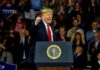
President Trump responded by saying prior climate projections were wrong and that alarmist warnings wasted money and trust. He has for years called climate change talk a “con job” and a “hoax,” including at the United Nations. He framed the scenario shift as proof that critics oversold danger. Media summaries noted his message after the new paper circulated and highlighted his long-running dispute with global climate institutions and advocates.
What Fact-Checkers And Scientists Say Now
Associated Press reported that the revision reflects an “implausible” status for the old worst-case scenario, not an admission that climate change is safe or that action is needless. FactCheck.org added that scientists did not “admit they were wrong” across the board and that warming remains a serious problem. The update narrows the range and lowers the top tail, but it does not undo observed heat, sea rise, and impacts already measured. This is a course correction, not a cancellation.
Scientists and communicators often remind readers that scenarios are tools, not straight-line predictions. The new analysis aims to better match current energy trends and policies. It also tries to prevent debate from centering only on the most extreme case. That helps reduce confusion that feeds “alarmist versus denialist” fights and keeps attention on the most likely paths where choices still matter. Clear communication is key so people understand both progress and real ongoing risks.
Why Artificial Intelligence Entered This Debate
At the same time, leading artificial intelligence founders and researchers are calling for slower rollouts and tougher guardrails. Reports describe public statements from OpenAI and Anthropic leaders pushing for stronger testing and the power to block unsafe systems. Their message is that misaligned advanced systems could move faster than institutions can respond, which raises near-term societal and security risks. This shift places artificial intelligence alongside climate as a major governance test.
I wasn’t going to do this. But I think you need to see this AI report.
I built a local AI model over the last 3 years that is expert at Paul Ekman FACS for deception.
Watch the shoulders of this trained debate actor. They did well in training him but can not remove the “tells”.… https://t.co/6g7ZA4HMTH pic.twitter.com/FxpvaIMjaA
— Brian Roemmele (@BrianRoemmele) September 15, 2026
The comparison fuels a broader frustration shared by many Americans. People on the right and left see elites talking past everyday concerns while risks pile up. Energy costs, job security, and online manipulation shape daily life. When climate models get revised, some feel whiplash. When artificial intelligence executives ask for brakes they did not want before, others see profit motives at work. Both cases point to a system that often reacts late and struggles to set fair, steady rules.
What This Means For Policy And Public Trust
Policy debates now hinge on two tasks at once. Leaders must keep cutting emissions in practical ways while avoiding hype that erodes trust when facts change. They also must build a clear artificial intelligence safety regime that tests powerful models before release and sets accountability for harms. Both jobs require steady institutions, transparent data, and rules that apply to powerful players, not just households. The public will judge success by results: lower risk, lower costs, and fair play.
Sources:
nypost.com, pbs.org, nytimes.com, apnews.com, cfr.org
© patriotwise.com 2026. All rights reserved.