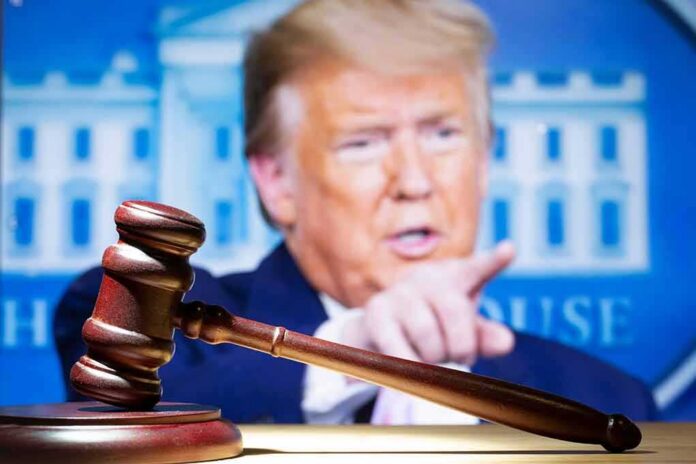
Hidden-camera footage and congressional letters now spotlight a pricey shortcut around justice: paid “pardon brokers” claiming they can steer clemency straight to President Trump’s desk.
Story Highlights
- Hidden-camera reporting shows brokers pitching access to bypass the Justice Department and reach Trump directly.
- Fees reportedly ran as high as $3 million, with one client paying nearly $1 million for a failed push.
- CBS analysis found most second-term clemencies did not go through Justice Department review.
- Democrats demanded records on alleged “pay-to-play” efforts; the White House denies wrongdoing.
What The Investigation Captured On Camera
CBS News and 60 Minutes aired hidden-camera recordings that showed named brokers promoting direct influence over pardons. The brokers said they could “put pressure on the president,” “circumvent the Department of Justice,” and deliver applications into Trump’s orbit. In one meeting, two men said they wanted to “put the pen in his hand and get him to sign it,” describing an approach built on personal proximity rather than formal review. The footage featured specific names and dollar figures, not vague claims.
The reporting said some brokers charged as much as $3 million, and one client paid nearly $1 million for access that did not secure a pardon. CBS cited an analysis that about 70 percent of Trump’s second-term clemency actions bypassed the Department of Justice, and that the share rose even higher when January 6 cases were counted. The evidence shows a market for access. It does not by itself prove that money caused a specific decision.
How Congress Is Probing Possible “Pay-To-Play”
House and Senate Democrats sent letters seeking contracts, communications, and donation records from clemency recipients tied to lobbying or intermediaries. Lawmakers named figures linked to high-dollar efforts and asked for details on who got paid and why. One case involved nearly $960,000 reportedly paid to two brokers, prompting specific requests for documents that track how those funds were used in the clemency push. These are investigative demands, not final findings.
The inquiry focuses on whether a private market formed around a public power that the Constitution gives the president. The Department of Justice has a pardon office for review. The concern is that paid go-betweens may be routing around it for profit. That risk is not new in American politics, but the current claims feature names, invoices, and video, which raises the stakes for oversight. The requested records could clarify timelines, payments, and any contacts with insiders.
What The White House And Allies Say In Response
The White House says people who pay for pardon lobbying are wasting their money and that President Trump follows a robust review process with counsel, the Department of Justice, a designated pardon adviser, and Trump as the final decider. Ed Martin, who led the Justice Department pardon office, said he had not seen a transactional “pardon economy” or quid pro quo while in that role. Brokers cast their work as lawful advocacy, not pay-to-play.
Boosie is going OFF on Jack Burkman and Jacob Wohl after 60 Minutes aired its investigation into the pardon-broker situation surrounding his attempt to secure a presidential pardon. 😳‼️
Boosie says he was led to believe that paying the pair $600,000 would result in a pardon,… pic.twitter.com/tj12KAYxTj
— Traps N Trunks (@trapsntrunks) September 15, 2026
These denials matter because the bar for criminal corruption is high. Selling influence is not the same as buying a result. Still, both conservatives and liberals share a core worry: when access costs millions, ordinary people lose. A system that leans on back channels—no matter who is in power—erodes trust. If most clemencies bypassed the Department of Justice review, transparency is the minimum fix the public will expect.
Why This Matters Beyond Partisan Lines
Presidential clemency is broad by design, but it relies on norms and clear process to avoid favoritism. When formal checks are weak, an “access market” tends to form. That pattern has appeared under presidents of both parties. Today’s fight is about whether that market hardened into a business that promised a fast lane to the Resolute Desk. The answer will shape how future presidents grant mercy and how citizens judge fairness in the justice system.
What To Watch Next
Watch for contracts, bank records, and messages that tie broker claims to real contact with decision makers. Timelines that show payments followed by action will draw scrutiny. If records show only lobbying and no linked results, critics will likely press for ethics rules and more transparency rather than criminal charges. If evidence links money to outcomes, pressure for reforms—and possibly prosecutions—will grow across the aisle.
Sources:
© patriotwise.com 2026. All rights reserved.