
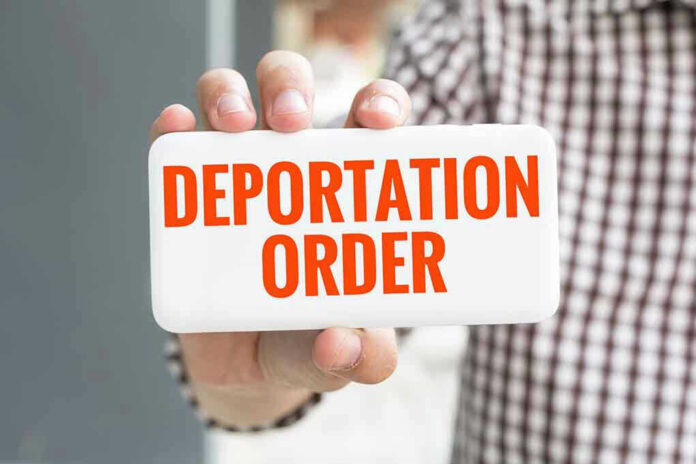
A controversial deportation case could set a precedent for silencing campus activism under the guise of protecting U.S. foreign policy.
Story Highlights
- Mahmoud Khalil, a student activist, faces deportation without criminal charges.
- Legal provision used is a rarely invoked Cold War-era law.
- Case raises concerns about free speech and civil liberties.
- Potential chilling effect on campus activism and student visa holders.
Deportation Ordered for Campus Activist
In a significant legal move, an immigration judge has ordered the deportation of Mahmoud Khalil, a Columbia University student activist, to Algeria or Syria. The decision is based on his alleged misrepresentation of his role with the United Nations Relief and Works Agency (UNRWA) and his campus activism. The government did not present any criminal charges, instead citing that his activism could negatively impact U.S. foreign policy, particularly regarding anti-Semitism and campus safety.
Since his detention by U.S. Immigration and Customs Enforcement (ICE) in March 2025, Khalil has been held at the LaSalle Detention Center in Louisiana. Legal proceedings have been ongoing, with the government citing a section of the Immigration and Nationality Act that is rarely used, especially in cases involving political activism. This highlights the Trump administration’s hardline stance on protests perceived as anti-Semitic or supportive of terrorism.
Legal and Social Implications
The case has sparked significant debate over free speech and civil liberties. By using a Cold War-era law to deport Khalil, the government sets a precedent that could deter campus activism and increase scrutiny on student visa holders. Civil rights organizations argue that this action is an attack on free speech, with potential long-term implications for First Amendment protections, particularly for non-citizens engaged in political activism.
Critics of the deportation warn of a chilling effect not only on campus activism but also on broader immigrant communities. The fear of deportation for engaging in protest could lead to self-censorship among students and activists concerned about their legal status. This has intensified the national debate over immigration, free speech, and U.S. policy towards Israel and Palestine.
Political Context and Future Outcomes
The deportation order comes amid rising tensions surrounding U.S. foreign policy and campus protests. With Khalil’s future uncertain as his legal team pursues asylum and challenges the arrest, the case remains a flashpoint in discussions about the boundaries of lawful dissent and the extent of government power in immigration matters.
Judge Orders Deportation of Anti-Semitic Columbia Activist Mahmoud Khalil, Saying He 'Willfully Misrepresented' UNRWA Work https://t.co/WnEjstt9lR
— ConservativeLibrarian (@ConserLibrarian) September 18, 2025
As this case unfolds, it serves as a crucial benchmark for how political activism, especially on contentious issues like Palestine, is treated under current U.S. immigration policies. The outcome could either reaffirm or challenge the use of foreign policy as a justification for deportation, influencing the landscape of academic freedom and civil liberties in the United States.
Sources:
Wikipedia: Detention of Mahmoud Khalil