
A South Los Angeles gang member turned Instagram “cash flex” selfies into a $2.8 million bank fraud scheme that shows how social media and weak institutions are reshaping crime in America.
Story Snapshot
- A South L.A.-based Crips gang member was sentenced to nine years in federal prison for a $2.8 million bank fraud conspiracy.
- The scheme used stolen and altered checks and recruited everyday people through Instagram posts showing foot-high stacks of cash.
- Federal prosecutors say gangs are shifting from street violence to organized bank and mail fraud powered by social media.
- The case highlights deep worries across the political spectrum that crime, technology, and weak oversight are eroding the American Dream.
Instagram “cash flex” leads to federal prison sentence
Federal prosecutors say Chase Matthew Griffin, a 26-year-old member of a South Los Angeles-based Crips street gang, turned Instagram into a recruiting tool for a fast-moving bank fraud ring. Court documents show Griffin stole checks from the mail, altered or counterfeited them, and then used Instagram to find people willing to hand over access to their bank accounts. He posted pictures of himself holding stacks of cash more than a foot high, signaling easy money to followers who joined the scheme.
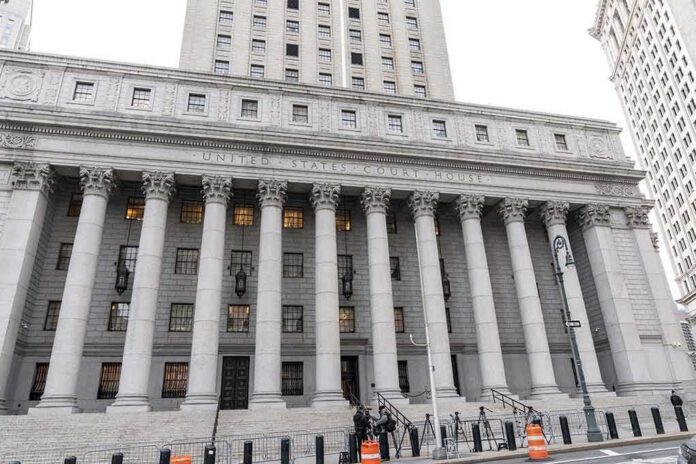
United States District Judge Josephine L. Staton sentenced Griffin to 108 months—nine years—in federal prison after he pleaded guilty to one count of conspiracy to commit bank fraud. Prosecutors say the fraud ring pulled in about $2.8 million by quickly depositing the stolen and altered checks into accomplices’ accounts and withdrawing funds before banks spotted the fake transactions. Griffin was ordered to pay more than $300,000 in restitution, a fraction of the total losses but still a heavy debt for a young defendant.
How the fraud ring worked and who it targeted
According to the United States Attorney’s Office for the Central District of California, Griffin and his partners ran the scheme from 2022 through September 2025. They stole checks from the mail, changed the payee names, or created counterfeit versions, then made them appear payable to accomplices they found online. These recruits gave Griffin access to their accounts, often at major banks and credit unions, letting him deposit the doctored checks and drain the money before fraud systems could respond.
The case files do not spell out every victim, but the nature of the scheme hits ordinary people and financial institutions alike. When banks and credit unions eat losses or pass them on through higher fees, everyday customers feel the pain. At the same time, people who are struggling financially may be tempted by these Instagram “quick cash” offers and end up as defendants themselves. That mix of online lures, weak mail security, and overwhelmed bank fraud teams feeds the wider fear that the system is failing to protect regular citizens.
Part of a larger shift toward organized fraud
Federal officials say Griffin’s case is one of several recent fraud operations in Southern California where gangs have moved from classic street crime to complex financial schemes. In another case, a group dubbed the “Check Gang” was indicted for stealing mail, robbing post offices, and trying to take about $800,000 from banks with altered checks, also using social media to recruit helpers. Separate federal complaints in the region describe identity theft rings that targeted hundreds of bank customers and caused more than $1 million in losses.
This pattern lines up with other reports of gangs changing tactics in Los Angeles. Law enforcement has documented gangs following wealthy residents to rob them, while other criminal groups chase government relief funds, mortgage loans, and benefits meant for the vulnerable. To many Americans, both conservative and liberal, these stories reinforce a belief that criminals and some elites have learned how to game complex systems—finance, technology, even public aid—while ordinary people bear the cost when those systems break.
Shared public worries about crime, technology, and trust
For older conservatives, this case tracks with long-held concerns about lawlessness, weak borders, and institutions that seem more focused on politics than public safety. For older liberals, it underscores fears about rising inequality, exploitation of struggling communities, and a justice system that often reacts only after huge harm is done. Both groups see the same problem: high-tech crime grows while leaders in Washington argue and posture.
Griffin’s Instagram posts did not just show off cash; they became an open ad for a criminal enterprise that federal agencies say could move millions before banks even knew what happened. Yet those same agencies still rely on slow mail safeguards, aging fraud tools, and scattered oversight to protect the public. The result is a growing sense that the federal government, large banks, and social media platforms are all one step behind, leaving regular Americans to wonder who is truly looking out for them.
Sources:
townhall.com, facebook.com, instagram.com, latimes.com, frankonfraud.com, ice.gov, foxla.com
© patriotwise.com 2026. All rights reserved.