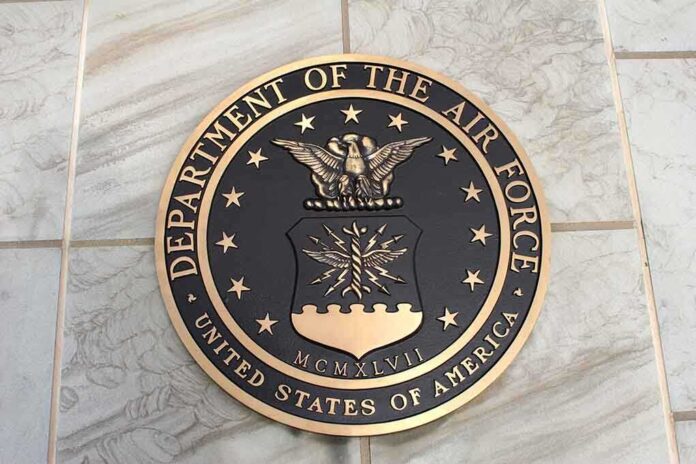
A sudden shake-up in military leadership leaves the Air Force without its chief, fueling fresh concerns over stability and national security under President Trump.
Story Snapshot
- Gen. David W. Allvin will retire two years early as Air Force Chief of Staff, a rare move for the position.
- No official reason for the early departure has been given, raising questions about top-level stability.
- This continues a recent pattern of early exits among senior military leaders since Trump took office.
- Leadership transition and modernization efforts could face disruption or reprioritization as a result.
Unprecedented Early Exit Threatens Air Force Continuity
Gen. David W. Allvin’s announcement to retire in November 2025 after only two years as Chief of Staff marks a striking deviation from the norm, as the role has historically been a four-year appointment. Allvin’s tenure was defined by rapid modernization initiatives and strategic shifts, many driven by priorities set from the White House. The lack of a public explanation for his departure, coupled with the abruptness of the news, has prompted unease among defense officials and military families who value continuity and strong leadership at the nation’s highest military ranks.
READ NOW: Pentagon Confirms Air Force Chief Allvin Will Step Down Early — U.S. Air Force Chief of Staff Gen. David Allvin will retire in early November after serving just two years of a four-year term, marking the latest early departure of a…https://t.co/rP3YSRxLCN
— Top News by CPAC (@TopNewsbyCPAC) August 19, 2025
During Allvin’s time in charge, the Air Force focused on overhauling its force structure, updating deployment models, and launching new technology programs like the F-47 fighter jet contract and the Collaborative Combat Aircraft competition. These efforts coincided with aggressive cost-cutting and workforce reductions mandated by the Trump administration. While some initiatives continued, others have been paused since February 2025, underscoring the uncertainty that has gripped the service in recent months. The transition plan aims to minimize disruption, but key modernization projects now hang in the balance until a successor is named and confirmed.
Leadership Turnover: A Growing Pattern Under Trump
Allvin’s early retirement fits a broader trend of high-level military turnover since Trump’s return to office. Previous chiefs, such as Gen. CQ Brown and Gen. Michael Moseley, departed ahead of schedule for reasons ranging from promotions to scandals. However, the recent cluster of unexpected resignations and retirements with no clear rationale has fueled speculation about internal pressures or policy disagreements. Defense analysts and military leadership experts warn that repeated turnover at the top risks undermining morale, strategic direction, and operational effectiveness across the Air Force and other branches.
The Trump administration’s assertive influence over military appointments has been a defining feature of its approach to defense policy. By prioritizing rapid transformation and cost savings, it has pushed for leaders who align closely with its vision. Yet the outcome has been mixed: while some modernization goals have advanced, the pace of change and ongoing uncertainty have left many airmen seeking stability and clear guidance. The current transition, managed by Secretary of the Air Force Troy Meink and Secretary of Defense Pete Hegseth, aims to preserve core values and readiness while preparing for new leadership.
Ripple Effects for Military Strategy and Conservative Values
The departure of a sitting Chief of Staff midway through his term places the Air Force—and by extension, American national security—at a crossroads. Short-term impacts include uncertainty, transition delays, and possible shifts in ongoing initiatives. In the long term, the decision on Allvin’s successor will shape the future of force modernization, personnel strategy, and the Air Force’s ability to respond to emerging threats. For conservative Americans, this episode highlights a critical need for strong, principled leadership that defends constitutional rights, supports national defense, and resists bureaucratic overreach or unaccountable decision-making. The consequences of instability at the highest military levels are felt not only by service members but by all who rely on a secure and effective national defense.
Looking ahead, Air Force personnel, defense contractors, and military families will be watching closely as the transition unfolds. The Senate’s confirmation process for a new chief will be a key moment, with lawmakers and the public scrutinizing both the administration’s choice and its broader handling of military leadership. As modernization projects and strategic priorities are reconsidered, the stakes for America’s security, values, and global standing remain high. The path chosen in the coming months will signal either a renewed commitment to stability or further upheaval in a time of national challenge.
Sources:
USAF Allvin Retirement Surprise | Defense One
Air Force Chief Retires | Task & Purpose
Gen Allvin Retirement Air Force Chief of Staff | DefenseScoop
In Surprise Move, Air Force Chief of Staff to Retire 2 Years Early | Air Force Times
Air Force Chief Gen. David Allvin to Retire | Breaking Defense