As ten states boycott Trump’s “Great American State Fair,” Pennsylvania’s senators and local companies are quietly exposing how both parties use taxpayers and patriotism as political props.
Story Snapshot
- About one-fifth of states, mostly Democratic-led, are skipping the Trump-backed fair over cost and politics.
- Pennsylvania’s governor declined to fund a booth, citing high taxpayer costs and trouble finding willing sponsors.
- Pennsylvania Senators Dave McCormick and John Fetterman stepped in with businesses to represent the state anyway.
- The clash shows how both parties turn national celebrations into partisan weapons while ordinary Americans get sidelined.
How a national birthday party turned into a red–blue standoff
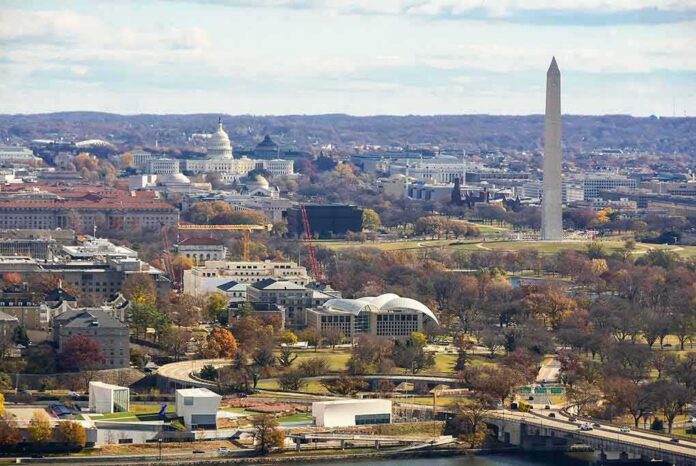
The Great American State Fair on the National Mall was sold as a unifying celebration for America’s 250th birthday, with displays from all 50 states and the territories over 16 days in Washington, D.C.[3] Several Democratic-led states refused to take part, including Connecticut, Illinois, Maine, Massachusetts, North Carolina, Oregon, Washington, and Pennsylvania.[2][4] Officials in these states pointed to high costs and what they saw as a Trump-centered, partisan tone, not a neutral national event.[2][4]
Oregon staff flagged shipping and setup bills that were tens of thousands of dollars higher than expected, calling them “substantially” more than planned.[2] Pennsylvania’s Department of Community and Economic Development said it would not sponsor a booth because of “high cost to taxpayers” and failure to find companies willing to attach their brands to the fair.[4][5] For many Americans who already feel squeezed by inflation and government waste, this only confirmed that political leaders treat public money like campaign fuel, not like hard-earned tax dollars.
Why ten states walked away — and why that worries people on both sides
Reports suggest that roughly a fifth of U.S. states chose not to send official delegations or spend public funds on the fair at all.[2] Some officials said they feared the fair would become more like a Trump rally than a nonpartisan national showcase, especially after Trump promoted it online as hosting “the Greatest Rally, EVER!”[1][2] Concerns grew as musical acts dropped out once they realized the event was tightly tied to Trump, shrinking the entertainment lineup and raising doubts about the fair’s true purpose.[1]
For many conservatives, this boycott looks like another example of blue-state leaders letting “woke” politics override basic patriotism and tourism opportunities. For many liberals, the fair seems like one more “America First” stage show that ignores real problems like health costs and wages. In both cases, citizens see leaders playing to their base instead of using a rare national moment to talk honestly about debt, energy, immigration, or the growing gap between the rich and everyone else.
Pennsylvania’s no-show — and how its senators tried to fill the gap
Pennsylvania’s absence struck many as especially strange because the Declaration of Independence was adopted in Philadelphia, making the state central to any 250th anniversary story.[3][4] The state government first delayed, then confirmed it would skip the fair, saying the price tag for a booth was too high and that no in-state company wanted its brand tied to the Trump-run celebration.[4][5] That choice put Pennsylvania in the same camp as several other Democratic-led states that also walked away.[4][7]
Yet Pennsylvania did not stay invisible for long. News outlets in the state reported that Senators Dave McCormick, a Republican, and John Fetterman, a Democrat, teamed up with Pennsylvania groups to make sure the Commonwealth still had a presence at the fair.[10] A local video report said the plan brought in Pennsylvania businesses to join the senators in representing the state, even without official backing from the governor’s office.[12][13] Their move shows that when state leaders bow out, other politicians and private companies will often step in to claim the patriotic spotlight.
What this fight reveals about boycotts, elites, and everyday Americans
Historians note that political boycotts have long been a tool in American life, from colonial protests to civil rights campaigns.[16][21] Recent research finds that more and more Americans now “vote with their wallets,” joining boycotts or “buycotts” based on party loyalty and social values.[19][24] The state fair dispute fits that pattern: state leaders use participation, or non-participation, as a public statement, even if the boycott does little to fix debt, border problems, or the cost of living.[19][25]
Both parties claim they are defending taxpayers, but neither side has shared detailed budgets that prove who is actually saving or wasting money. The fair’s own website calls the event free to attend, which suggests the real fight is over government and sponsor spending, not ticket prices.[3] While politicians and media outlets argue over crowd size and spin, many Americans see the same old story: an elite political class turning a simple national fair into another battlefield, while the promise of the American Dream feels further out of reach.
Sources:
[1] Web – 10 States Boycott the Great American State Fair, But PA Senators and …
[2] Web – ‘Packed to the brim’: Trump says 45K guests attend Great … – WCIV
[3] Web – Trump scrambles to exaggerate pitiful crowd size at Great American …
[4] Web – Great American State Fair | Washington DC
[5] Web – What we know about Trump’s Great American State Fair | CNN Politics
[7] Web – The opening day of Trump’s Great American State Fair went exactly …
[10] Web – Thousands celebrate America 250 at Great American State Fair in DC
[12] Web – PA officially to not participate in the Great American State Fair – …
[13] Web – Pennsylvania skipping Trump state fair celebration – The Hill
[16] Web – Pennsylvania skips Great American State Fair in Washington, DC
[19] Web – [PDF] A CASE FOR THE POLITICAL BOYCOTT – West Virginia Law Review
[21] Web – Boycotts, buycotts, and political consumerism in America
[24] Web – Boycotts in America: A history of political and social protest
[25] Web – History of Successful Boycotts | Ethical Consumer
© patriotwise.com 2026. All rights reserved.