A child-safety law in Britain may end up building the kind of face-scan ID system many Americans on both the right and the left fear is coming here next.
Story Snapshot
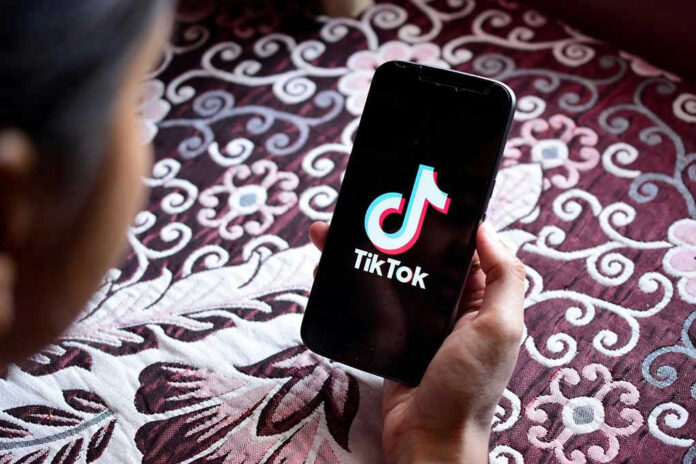
- Britain will ban children under 16 from major social media apps starting next year, targeting platforms like TikTok, Snapchat, YouTube, Instagram, Facebook, and X.
- Prime Minister Keir Starmer says the goal is to stop bullying, addiction, and mental health harms, citing strong parent support and a national consultation.
- Enforcing the ban means tech firms must know who is under 16, pushing the country toward digital ID checks, facial age scans, or similar tools for nearly everyone.
- Experts, civil liberties groups, and many young people warn blanket bans are weak on evidence, easy to dodge, and could expand state and corporate control over the internet.
What Starmer’s Social Media Ban Actually Does
British Prime Minister Keir Starmer has announced that children under 16 will be banned from using a range of major social media apps, including TikTok, Snapchat, YouTube, Instagram, Facebook, and X, with the ban planned to take effect early next year.[1][2] Starmer claims social media is making children unhappy, helping bullies target them, and may be harming their mental health, so he argues the country must “not compromise on the safety and happiness of our children.”[1][2] His government says the move follows a large consultation that drew more than one hundred thousand responses and that over ninety percent backed an under‑16 ban, giving him a political story that parents demanded action.[1] Officials also say they will tighten rules on gaming and livestreaming sites so strangers cannot easily contact children, framing the effort as a broader crackdown on harmful online features, not just classic social networks.[1][3] Enforcement will not target kids directly; instead, companies will face penalties if they allow under‑16s on restricted platforms, just as alcohol sellers are punished for selling to minors even though some teens still drink.[2][3]
Starmer links this new step to powers the government already holds under the Online Safety Act and a Children’s Well‑being and Schools law, saying these give regulators clear tools to force age checks and punish non‑compliant companies.[2][3] Supporters in the United Kingdom point to Australia, which has already rolled out a similar under‑16 social media ban, complete with heavy fines for platforms that fail to keep minors off their services and “reasonable steps” rules that include age‑verification technologies. In both countries, parents who break the rules face no direct punishment; instead, the burden falls on global tech companies, which could face multi‑million‑dollar penalties if they repeatedly fail to block under‑age users. For many worried families, this sounds like long‑overdue pushback against Silicon Valley after years of stories about self‑harm content, online exploitation, and rising teen anxiety tied to constant screen time and comparison culture. But while the political story is simple—“protect the kids”—the details of how this works in the real world are far more complex and raise red flags that should worry anyone who already distrusts big government and big tech.
Why Enforcement Points Toward Digital IDs and Face Scans
To keep twelve‑ to fifteen‑year‑olds off apps while allowing sixteen‑year‑olds on, platforms must know each user’s true age, not just a birthdate typed into a form, which critics say quietly creates a de facto national digital ID system. Online forums and policy watchers in Britain note that, under the Online Safety Act, companies that cannot “reasonably” prove they kept under‑16s out risk large fines, so they will likely demand identification from almost all users to protect themselves. The Information Commissioner’s Office, the country’s data watchdog, has already signaled that tools like facial age estimation, digital ID checks, or one‑time selfie matching will be needed for reliable age assurance, which backs fears of face‑scan style controls tied to everyday internet use. Australia’s model, which Starmer cites as a template, explicitly allows social media platforms to use government IDs, facial or voice recognition, or behavior‑based “age inference” to verify ages, and bars simple self‑declaration or parent promises. Once those systems exist, civil liberties groups warn they are likely to spread beyond child safety, letting governments or companies flag “harmful” content, throttle speech, or even track access to news and political debate in ways that are hard to roll back. For Americans already uneasy about talk of digital driver’s licenses, centralized health passes, or “trust scores,” Britain’s move shows how a child‑protection story can open the door to a much wider surveillance‑ready infrastructure.
Many researchers, civil society groups, and technology policy experts in the United Kingdom argue there is “overwhelming consensus” against a blanket ban, saying it lacks strong evidence and may not deliver real safety gains. A report from a leading industry and research group warns that broad bans can push teens toward more hidden, less regulated, or encrypted platforms, reduce chances to build healthy digital skills, and deepen the gap between young people with tech‑savvy parents and those without guidance. Critics also point out a basic logic problem: in Britain, sixteen‑year‑olds can vote in some elections, yet the same government claims they are too young to hold a basic social media account, which talk shows use to question how serious and grounded the policy really is. Others worry about fairness for kids who rely on online communities for support, including bullied students, religious minorities, and young people in unstable homes, who may lose safe spaces even as determined abusers and predators simply move to harder‑to‑police channels.[5][6] Yet these critics have not had a full look at the government’s consultation data or any confidential legal advice, so they are often arguing from general principles rather than line‑by‑line takedowns of Starmer’s specific claims about bullying and mental health harms.[5]
Shared Fears: Safety, Power, and Who Controls the Internet
This fight in Britain echoes a pattern we see again and again: political leaders frame youth social media rules as common‑sense child safety, while skeptics warn that weak evidence, rushed lawmaking, and vague definitions of “harmful” content open the door to censorship and control.[2] Earlier this year, British lawmakers debated amendments that would let the science and technology secretary restrict youth access to wide categories of online services, limit virtual private network use for minors, and redefine what counts as harmful content, with very few checks or hard proof requirements. The same law would shift power away from the independent communications regulator and toward a single cabinet minister, making it easier for future governments—of any party—to tighten or weaponize controls without a full vote in Parliament. In Britain’s polarized media space, outlets on one side highlight grieving parents and police chiefs who want unsafe platforms blocked for under‑16s, while outlets on the other side talk about “mission creep,” data leaks, and a slide toward a permission‑based internet.[1] Across that divide, there is a growing sense that the people making these rules do not fully understand the technology, do not share the risks they create, and are more focused on appearing tough than on doing the hard, careful work of targeted, evidence‑based reform.
Britain will ban children aged under 16 from using a range of social media apps, including Snapchat, TikTok and YouTube, to protect them from harmful content and excessive screen time, Prime Minister Keir Starmer said Monday. https://t.co/aKEiGuhbqh
— PBS News (@NewsHour) June 15, 2026
For Americans watching from a distance, Starmer’s plan is a warning sign. Many conservative parents want protection from online filth and grooming, and many liberal parents fear Big Tech’s impact on kids’ minds and attention spans. But both sides also worry about a “deep state” of unaccountable elites and giant firms quietly tightening their grip on speech, data, and daily life. Britain’s under‑16 social media ban brings those tensions into sharp focus: a real problem—children’s safety and mental health—being tackled with tools that could easily outlive the crisis and expand the power of the very institutions millions of ordinary people no longer trust.
Sources:
[1] Web – UK’s Left-Globalists PM Starmer Announces Under-16 Social Media Ban …
[2] Web – UK PM Keir Starmer announces social media ban for under-16s
[3] YouTube – Under-16s social media ban announced by Keir Starmer …
[5] YouTube – BREAKING: Keir Starmer announces under-16s social media ban
[6] Web – Keir Starmer’s social media ban for under-16s could backfire …
© patriotwise.com 2026. All rights reserved.