

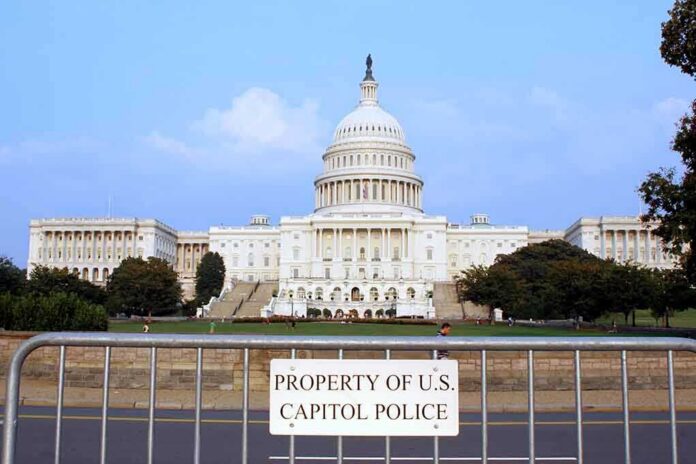
Congress has now told President Trump to stop the Iran war or ask lawmakers for approval, and that is a rare constitutional clash.
Quick Take
- The Senate passed a war powers resolution by a 50-48 vote.[1]
- Four Republicans joined most Democrats in backing the measure.[1]
- The House had already passed a similar resolution earlier this month.[4]
- The vote is historic, but the resolution is still largely symbolic.[1]
Senate Rebuke Lands Amid Growing War Debate
The Senate voted Tuesday to approve a House-passed war powers resolution on Iran.[1] The measure tells President Trump to remove United States forces from hostilities unless Congress declares war or gives specific approval.[1] It passed 50-48, with four Republicans joining Democrats and Senator John Fetterman casting the lone Democratic no vote.[1] That split shows how far this fight has moved beyond party lines and into a basic dispute over war powers.
The vote matters because it is the first time both chambers have passed this kind of rebuke since the War Powers Resolution of 1973.[1][17] Congress wrote that law to limit presidential war making and require notice within 48 hours, with a 60-day limit for troops to remain without approval.[17] Supporters argue the Iran campaign needs that kind of consent. Critics inside the White House say the law itself is unconstitutional, setting up a direct test of executive power.[11]
Why Conservative Voters Are Watching Closely
For many conservatives, this is not about cheering war or cheering restraint. It is about who makes the call when American troops are sent into danger. The Constitution gives Congress the power to declare war, and the War Powers Resolution was meant to keep presidents from drifting into open-ended conflict.[18] If the administration believes force is needed, the cleaner path is to make the case openly and win a real vote, not rely on a workaround.
The House passed its own version earlier, 215-208, after four Republicans broke with their party.[4][11] The White House called that vote meaningless and an unconstitutional legislative veto.[11] That language shows how little room there is between the branches now. Even so, the House and Senate votes send a signal that support for the Iran campaign is not automatic, even in a Republican-led Washington that many voters expect to respect limits on power.
What Happens Next in Washington
The resolution that passed in the Senate is a concurrent resolution, so it does not carry the force of law and does not need the president’s signature.[1][9] That makes it a political warning, not a binding order. Tim Kaine’s separate measure would need more votes and would eventually face the House again.[1] If Congress wants real control, it would need a joint resolution or another form of legislation that becomes law after presidential approval.
BREAKING: US President Donald Trump has responded to the Senate’s approval of a war powers resolution directing him to halt any military action against Iran, saying that the vote was "poorly timed and meaningless."
🔴 LIVE updates: https://t.co/YVBK4dqrFU pic.twitter.com/p14YVJLCUv
— Al Jazeera English (@AJEnglish) June 24, 2026
The practical question now is whether Congress will push past symbolism and demand a formal answer from the administration.[1][11] The Senate vote shows that enough lawmakers, including some Republicans, are uneasy with a war carried out without clear authorization.[1][6] That unease fits a long pattern in Washington, where presidents move first and Congress reacts later. For voters who want less overreach and more constitutional order, this fight is far from over.
Sources:
[1] Web – Senate votes to limit Trump’s Iran war powers in rare rebuke…
[4] Web – Senate rejects latest resolution to limit Trump’s Iran war powers
[6] Web – House passes resolution to end hostilities with Iran – NPR
[9] Web – House Passes War Powers Resolution To Limit Trump’s … – i24 News
[11] YouTube – House votes to limit Trump’s war powers amid Iran conflict
[17] Web – War Powers Resolution – Avalon Project
[18] Web – War Powers Resolution of 1973 | Richard Nixon Museum and Library
© patriotwise.com 2026. All rights reserved.