
When a president’s phone call helps bend World Cup rules, it raises the question many Americans already ask: who are powerful institutions really working for?
Story Snapshot
- Trump confirmed he called FIFA’s president to push review of Folarin Balogun’s red card and then praised the reversal as a “great decision.”
- FIFA’s disciplinary committee used a little-known power to suspend Balogun’s automatic ban, letting him face Belgium despite the red card.
- European soccer leaders say the move breaks World Cup rules and warn it crosses a “red line” on political interference.
- The controversy feeds a wider belief that global sports and politics are run by elites who bend rules when it suits them.
How Trump’s Call Turned A Routine Red Card Into A Global Fight
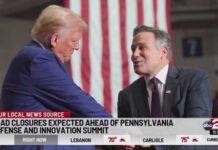
President Donald Trump told reporters he personally called International Federation of Association Football (FIFA) President Gianni Infantino after United States striker Folarin Balogun was sent off and hit with an automatic one-game ban. Trump said he asked for a review because he believed the play was “two great athletes” colliding at full speed, not a foul. On his Truth Social account, he later thanked FIFA for “doing what is right” and reversing what he called “a great injustice,” celebrating the outcome as a victory for the United States team.
Under normal World Cup rules, a red card is supposed to be simple and strict: the player is out for the rest of the match, the team plays with ten men, and the player automatically misses the next game. Those rules apply to both straight reds and two yellows in one game, and teams can only argue about extra games being added, not about the one-game ban itself. That baseline is meant to protect fairness so star players cannot get special treatment once a referee has made a decision on the field.
FIFA’s Unusual Use Of A Little-Known Disciplinary Power
FIFA’s disciplinary committee chose a very unusual path in the Balogun case: it kept the red card on his record but suspended the one-game ban for one year using Article 27 of the FIFA Disciplinary Code. That move allowed Balogun to play in the Round of 16 against Belgium while placing him on probation, meaning the ban could still be enforced if he committed a similar foul within that period. United States Soccer accepted the ruling and quickly shifted focus to the Belgium match, calling the decision a chance to move past the controversy on the field.
Reports describe the rule FIFA used as “obscure” because it is rarely discussed in public and is normally used to delay, not erase, punishment in long disciplinary cases. Soccer explainer pieces note that World Cup regulations say red cards trigger an automatic suspension, and that appeals are generally limited to extra games or clear errors like mistaken identity. The way FIFA stretched its disciplinary code here looks more like a legal workaround than a standard application of the tournament’s rules, which is why many observers say it feels like the system flexed for a politically powerful caller.
Why European Soccer Leaders And Critics See A Dangerous Precedent
The Royal Belgian Football Association and the Union of European Football Associations (UEFA) sharply condemned FIFA’s decision, calling it “in direct contradiction with the provisions of the FIFA World Cup 2026 competition regulations” and branding it “unprecedented, incomprehensible and unjustifiable.” They argue that tournament rules clearly state referee decisions about events on the field are final and that a straight red card must lead to an automatic one-match ban without special probation for star players. For them, the core issue is not Balogun’s tackle but whether rule books still mean anything when politics enters the locker room.
Analysts point out this fight taps into a long history of political interference in global sports, from leaders pressuring referees decades ago to modern phone calls between heads of state and sports bosses. Critics of FIFA governance say the Balogun case exposes how much power sits with its president and inner circle, who can influence or frame disciplinary decisions even when committees are labeled “independent.” A former FIFA official told British radio the Balogun ruling looked “driven by political motivations,” warning it could make fans doubt every future decision in tight, high-stakes matches.
What This Controversy Reveals About Power, Rules, And Ordinary Fans
Many American fans of all political stripes see this saga as another example of powerful institutions that bend rules for insiders while regular people face strict penalties at work, in court, or with the Internal Revenue Service (IRS). Conservatives frustrated by globalist elites and past “woke” politics look at FIFA’s move and see a club of bureaucrats willing to twist regulations for a star player after a call from a president, yet slow to act on real corruption. Liberals angry about inequality and favoritism see the same pattern: one set of rules for the well-connected, another for everyone else.
Trump praises praises FIFA President Gianni Infantino for intervening to help lift a red-card suspension for US player Folarin Balogun, revisiting a decision that outraged soccer fans around the globe https://t.co/AOibLQFb7N
— Bloomberg (@business) July 18, 2026
At the same time, Trump supporters can reasonably view his intervention as standing up for an American athlete in an international system they already distrust, and they cheer the fact that a United States player got a second chance on the world stage. But even some who welcome Balogun’s return worry about the cost: every future United States win will now carry whispers that politics, not just performance, shaped the path. In a country where many believe both Washington and global bodies like FIFA serve the “deep state” more than ordinary citizens, this episode adds fuel to a shared fear: when rules become flexible for the powerful, trust in the game — and in government — breaks for everyone else.
Sources:
mediaite.com, theguardian.com, youtube.com, foxnews.com, tcwsl.com, sportingnews.com, footballaustralia.com.au, en.wikipedia.org, playthegame.org, boycottsaudi2034.com
© patriotwise.com 2026. All rights reserved.