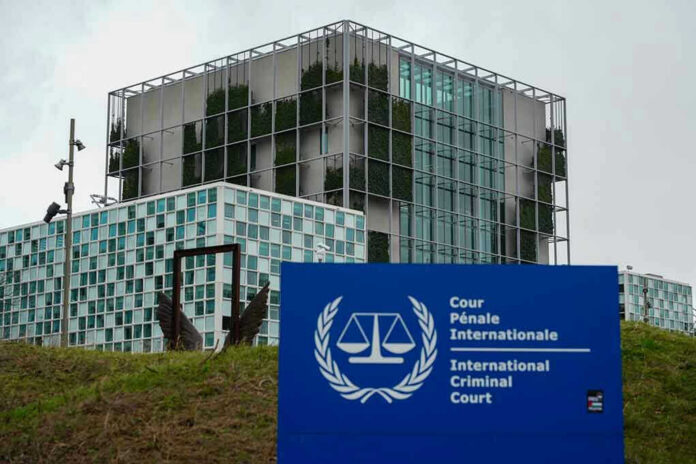
The Trump administration has formally branded an international court a national security “threat” and is now using U.S. power to choke off its ability to function.
Story Snapshot
- The Trump administration has declared a national emergency over the International Criminal Court and launched a global campaign to weaken it.
- New sanctions target the court’s top prosecutor and judges, even though no U.S. citizen has ever been prosecuted there.
- Supporters say this defends U.S. sovereignty; critics say it is an attack on international justice and a warning sign of unaccountable power.
- The fight exposes a deeper problem both left and right see: powerful elites using global rules when it suits them and ignoring them when it does not.
Trump’s National Emergency Over an International Court
President Donald Trump’s second administration has turned a long-running U.S. dispute with the International Criminal Court into a declared national emergency. In February 2025, Trump signed Executive Order 14203, which says any attempt by the court to investigate, arrest, detain, or prosecute certain U.S. or allied persons is “an unusual and extraordinary threat” to U.S. national security and foreign policy, and he “hereby declare[s] a national emergency to address that threat.” The order defines these “protected persons” broadly. It includes current and former U.S. troops, officials, and others working for the U.S. government, as well as some foreign citizens from allied countries. The White House argues the court has “no jurisdiction” over the United States or Israel because neither has joined the treaty that created it.
This move did not come out of nowhere. The United States never ratified the Rome Statute, the treaty that set up the International Criminal Court, and past administrations of both parties have pushed back when foreign judges seemed ready to judge American wars. Under Trump, that resistance has hardened into open hostility. A Harvard analysis notes that Executive Order 14203 allows asset freezes, travel bans, and bans on U.S. persons providing “funds, goods, or services” to sanctioned court officials. The administration’s public message is blunt: any claim of authority over Americans by this court is “illegitimate” and will be punished.
Sanctions, Targets, and the Push to “Disable” the Court
The sanctions are not just threats on paper. The State Department and Treasury Department have already hit at least 11 International Criminal Court officials with real penalties, including the chief prosecutor and several judges. These measures block access to property in the United States, bar travel to U.S. territory, and forbid U.S. citizens and companies from doing business with the named officials. Secretary of State Marco Rubio has framed this as a “whole-of-government” campaign to “systematically disable the ICC’s ability to operate” when it targets American or Israeli nationals. The State Department’s own statement calls the court “an intolerable threat to U.S. sovereignty” because it “claims the authority to prosecute and even imprison American servicemen and officials” despite U.S. refusal to join the treaty.
Beyond direct sanctions, Washington is pressuring other countries to walk away from the court. Reporting describes plans to step up diplomatic efforts, including visa bans and broader penalties, and to push allied governments to reject what the U.S. calls the court’s “purported authority” over American citizens. One Reuters report quotes an administration source saying the U.S. is even seeking changes to the court’s founding charter that would bar investigations of Trump and senior officials, end probes of Israeli leaders over Gaza, and formally close an earlier investigation into U.S. forces in Afghanistan. Critics note the U.S. is not a party to that treaty, so it cannot force such changes under normal rules of international law.
No U.S. Prosecutions, but Real Political and Legal Fallout
For all the talk of a grave threat, there is still no case where the International Criminal Court has actually prosecuted a U.S. citizen. Human rights groups point out that the court has never investigated crimes committed on American soil, and that its Afghanistan investigation shifted focus away from U.S. personnel in 2021. Legal experts explain that because the United States is not a member, the court’s power over Americans is already narrow. It only reaches conduct on the territory of countries that did sign the treaty, such as Afghanistan, not acts inside the United States.
🚨 DEFANGING THE ICC: On The @Josh_Hammer Show, Eugene Kontorovich breaks down the Trump administration's strategy to dismantle the International Criminal Court, warning that the court plans to wait out the administration before issuing secret warrants for U.S. officials. pic.twitter.com/7geq7P3z0g
— Salem News Channel (@WatchSalemNews) July 15, 2026
Yet the broader clash is very real. European Union officials have called U.S. attacks and threats against the court’s elected judges “unacceptable” and insist the court is a “critical cog” in the global justice system. Human Rights Watch, in a briefing for member states, labeled the U.S. sanctions “an outrageous abuse” of American economic power meant to sideline those who investigate war crimes. Three International Criminal Court judges have gone so far as to sue the Trump administration, arguing the sanctions are unlawful and undercut judicial independence. Their case tests how far a U.S. president can stretch “national emergency” powers when the main danger cited is not an armed attack but legal scrutiny.
Why Both Left and Right See a Bigger Problem
This fight hits nerves on both sides of America’s political divide. Many conservatives see the International Criminal Court as another group of distant, unelected officials trying to sit in judgment over U.S. troops while ignoring border chaos, crime, and threats from hostile states. For them, Trump’s hard line looks like long-overdue defense of sovereignty after decades of “globalist” drift in Washington. They worry that if foreign prosecutors can second-guess battlefield decisions, American commanders will hesitate and enemies will gain ground.
Many liberals, meanwhile, fear the opposite risk: that powerful leaders in Washington and Jerusalem can use U.S. financial muscle to shut down any outside check on alleged war crimes. To them, sanctioning judges for even considering cases sends a chilling message to whistleblowers and victims, and it deepens the sense that there is one set of rules for the powerful and another for everyone else. When the government declares a “national emergency” because a court might someday look into official conduct, critics see another example of elites in both parties using emergency powers and complex treaties in ways ordinary citizens cannot follow or control.
What This Tells Us About Power, Accountability, and the Deep State
Underneath the legal jargon, this is a story about who gets to hold whom accountable. The Trump administration is telling the world that foreign judges will never sit in judgment of Americans without U.S. consent, and it is willing to use economic warfare to make that stick. International bodies, human rights groups, and much of the media describe the same actions as an “assault” on the rule of law and a signal that great powers can break rules with impunity. Both cannot be fully right, and both capture part of a deeper truth.
For many Americans on the left and right, the common thread is a federal government that seems more focused on protecting its own than on delivering justice or prosperity at home. Washington signs on to global rules when they help big banks, big tech, or defense contractors, but fights those rules when they might touch senior officials or powerful allies. The International Criminal Court clash shows how both international institutions and U.S. leaders can feel far away, unaccountable, and insulated from everyday struggle. Whether one cheers or fears Trump’s campaign against the court, it is hard to miss the pattern: decisions with huge moral stakes are being made in elite circles, while ordinary citizens are left wondering who, if anyone, is ever held to account.
Sources:
gatewayhispanic.com, whitehouse.gov, amnesty.org, aljazeera.com, en.wikipedia.org, state.gov, reuters.com, hls.harvard.edu, theguardian.com, foreignpolicy.com, tandfonline.com, sites.law.wustl.edu
© patriotwise.com 2026. All rights reserved.