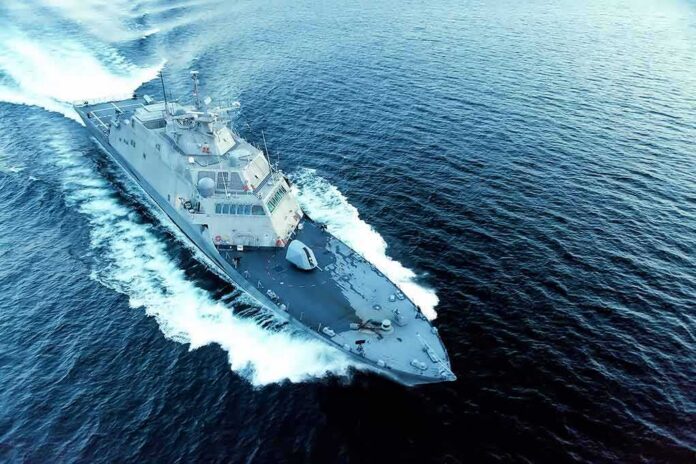
America just used experimental sea drones in a “self-defense” strike inside Iran while a ceasefire is supposed to be holding, raising fresh questions about who is really being protected and who is calling the shots.
Story Snapshot
- U.S. Central Command says strikes in southern Iran were “self-defense” to protect American troops from Iranian threats.
- Targets included missile launch sites and boats allegedly laying mines near the Strait of Hormuz, close to Bandar Abbas.
- Corsair unmanned sea drones were used for the first American combat strike by drone boats, marking a major shift in warfare.
- The strikes happened under a fragile ceasefire, deepening public doubts about honesty, accountability, and “forever conflict.”
U.S. Says Drone-Boat Strikes Were Needed to Protect Troops
U.S. Central Command, which oversees American military operations in the Middle East, said it carried out new strikes in southern Iran that it called “self-defense” actions. Officials said the goal was to protect American troops from threats posed by Iranian forces during a fragile ceasefire. In a statement, spokesperson Captain Tim Hawkins said U.S. forces conducted self-defense strikes in southern Iran “to protect our troops from threats posed by Iranian forces.” His wording was awkward and unclear, but the message was firm: the United States is framing this as protection, not escalation.
Central Command said the strikes hit missile launch sites and small Iranian boats that were trying to lay mines near the Strait of Hormuz, one of the world’s key shipping lanes. These waters carry a huge share of global oil and trade, so any threat there affects fuel prices, shipping costs, and the wider economy. Hawkins also said the command “continues to defend our forces while using restraint during the ongoing ceasefire,” trying to reassure Americans that the military is not rushing toward full war while still acting forcefully when it believes troops are at risk.
Iranian Attacks Claimed, But U.S. Ships Took No Damage
Earlier reporting from the New York Times said Iranian forces launched missiles, drones, and small boat assaults at three American warships as they passed through the Strait of Hormuz. Central Command said U.S. forces “eliminated inbound threats” and then struck Iranian military sites they said were responsible for the attacks, including drone locations, command centers, and intelligence, surveillance, and reconnaissance facilities. The United States also described hitting vessels that were attempting to deploy mines and missile launch facilities in southern Iran.
Yet military officials also confirmed that none of the American naval ships were actually damaged in these attacks. That matters to many citizens who already feel the government is quick to use force but slow to give full details. When Washington calls strikes “self-defense” even when U.S. hardware survives untouched, it feeds a sense on both the right and the left that leaders stretch legal words to justify actions they already wanted to take. The official cause of a related Apache helicopter crash is still “under investigation,” with some Pentagon sources suggesting a collision, not an Iranian hit, which leaves another hole in the story and fuels public mistrust.
First Combat Use of Corsair Sea Drones Changes the Game
U.S. Central Command has confirmed that the weapon used in this latest strike included the Corsair unmanned surface vessel, a type of armed sea drone. According to reporting based on CENTCOM’s statements, three Corsair drone boats carried out what is being called the first-ever American combat strike using sea drones. These small, unmanned boats can move in close, carry explosives, and hit coastal or naval targets without putting a human crew at risk, which makes them attractive to planners but alarming to citizens who fear war becoming easier to start and harder to stop.
Reports and social media posts say one of these Corsair missions targeted facilities near Iran’s Bandar Abbas naval base, a major port on the country’s southern coast. Bandar Abbas sits right by the Strait of Hormuz, so any strike there is both a military message and an economic warning. For many Americans already angry about high prices and endless overseas commitments, experimental drone attacks during a ceasefire sound less like “restraint” and more like a slow creep toward permanent conflict managed by distant elites. They worry that high-tech tools give the deep state more ways to act without real debate or transparent proof.
Ceasefire, Civilian Toll, and Growing Doubts Across the Spectrum
These strikes took place during a declared ceasefire between the United States and Iran, a pause that was supposed to cool tensions while talks continued. U.S. officials have been careful to stress that each strike is “purely defensive” and does not mean a return to full hostilities, language echoed in other recent operations near Iran that also targeted radar systems, drone control stations, and missile sites under the self-defense label. Iran, for its part, accuses Washington of breaking the ceasefire and violating its sovereignty, saying the attacks are a “gross violation” and reporting dozens of deaths and injuries.
🚨💥 BREAKING NEWS: US Sea Drones Hammer Iranian Naval Base in First-Ever Combat Strike:
CENTCOM just dropped dramatic footage showing American one-way attack sea drones, known as Corsair USVs, racing across the water and slamming into Iran's Bandar Abbas Naval Base.
The… pic.twitter.com/QvojpVNzTI
— Donnie Cope (@dcopechatter) July 13, 2026
For many Americans, whether conservative or liberal, this pattern is starting to look familiar and troubling. The government says warships or commercial vessels came under fire, then launches large “self-defense” strikes inside another country, often without showing public evidence like radar logs, crew testimony, or clear video. Some see this as necessary toughness in a dangerous region. Others see it as another example of leaders and bureaucrats playing global war games while regular people face inflation, high energy costs, and a shrinking American Dream at home. Both sides share a fear that the rules are being bent, that new weapons like Corsair drones make shadow conflicts easier, and that the people paying the price are far from the rooms where “self-defense” is defined.
Sources:
insidedefense.com, bbc.com, nytimes.com, ajc.com, centcom.mil, reddit.com
© patriotwise.com 2026. All rights reserved.