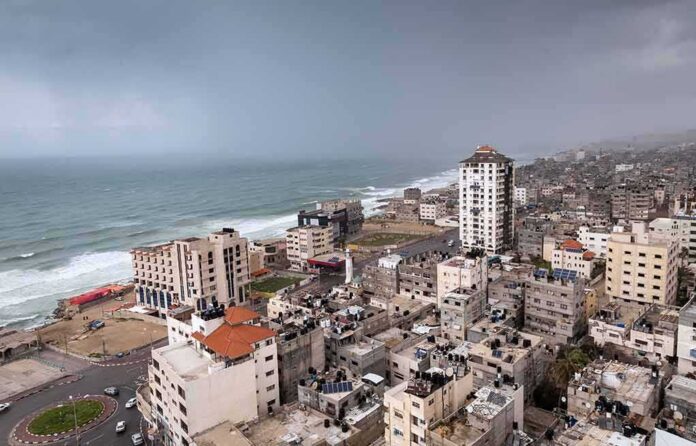
Overnight in Gaza City, a war-damaged apartment block collapsed as families slept, killing many and leaving rescuers digging by hand for survivors.
Story Snapshot
- A damaged residential building in Gaza City collapsed overnight, causing multiple deaths and injuries.
- Local civil defense crews searched the rubble while lacking heavy machines needed for faster rescue.
- Published reports vary on the death toll, but all confirm a deadly collapse with people still missing.
- The collapse reflects wider risks in Gaza, where war damage has left many buildings unstable.
What Happened Overnight in Gaza City
Local media and medical sources reported a residential building in southwest Gaza City collapsed around 2:15 a.m. The structure had been damaged by war and housed families seeking shelter. Early counts said at least eight to 13 people died, with more than 15 injured, as rescuers searched the debris for survivors. Other wire reports the same day placed the death toll higher, but all agreed that people were trapped and crews were still working the site.
Reuters Connect carried a titled update stating that 11 Palestinians were killed as the damaged six-story building fell, adding to the body of same-day coverage. The Associated Press reported a higher toll and said rescue teams were digging for dozens more beneath the rubble. A regional outlet described the building as six stories and warned that around 100 people could be unaccounted for, underscoring the scale of the emergency. Exact figures remained in flux as searches continued.
Rescue Operations and On-the-Ground Limits
Palestinian Civil Defense responders led the search using whatever tools they had. Reports said crews lacked heavy equipment, which slowed efforts to lift slabs and reach lower voids where people might survive. That shortage can stretch early casualty counts over many hours. Similar bottlenecks have shaped other recoveries in Gaza, where restrictions, damaged roads, and scarce fuel complicate access to cranes and excavators needed for safe, fast rescues.
Medical teams treated the injured and moved the dead to local facilities as names were confirmed. Reporters on the scene described frantic digging by relatives and neighbors trying to clear chunks of concrete. The building’s prior damage raised the risk that nearby walls could shift. That forced responders to work with care to avoid secondary collapses. Such conditions make exact numbers hard to fix until teams can stabilize the site and complete systematic searches.
Why Collapses Like This Keep Happening
Years of strikes and urban combat have left a large share of Gaza’s housing stock damaged or destroyed. Analysts and field reporting have documented widespread structural weakening that turns once-sturdy homes into hazards during aftershocks, storms, or normal use. In this environment, a building can stand for months and then fail without warning. The headline fact is clear here: a damaged building fell and people died. The deeper engineering cause will need assessment once recovery ends.
The collapse of a residential building in Gaza City killed 21 people, including children, and injured 45 others, according to the Palestinian Civil Defence, as rescue teams searched for people trapped beneath the rubble on Wednesday, September 16.
Video Credit: (Ahmed_Khaleel0)… pic.twitter.com/eDxYE6ygVU
— The Siasat Daily (@TheSiasatDaily) September 17, 2026
Across Gaza, repeated damage, displacement, and thin emergency resources form a feedback loop. Families crowd into the least-broken structures they can find. Civil defense teams respond across many sites at once. Limited machines and blocked routes slow every step. That is why casualty figures often shift during the first day. As responders gain access and lift heavier sections, they update the counts. The shared goal remains simple: find survivors fast and prevent more loss.
How This Fits the Bigger Picture
The collapse feeds a broader fear felt across politics: ordinary people pay the price when systems break down. Readers on the right and left can see the same failure here. Damaged infrastructure, scarce gear, and slow aid turn a wounded building into a mass-casualty event. Wire outlets converged on the core facts despite differing totals: the building collapsed, people died, and rescue crews kept digging. That is the sobering through-line of this story.
Sources:
apnews.com, reutersconnect.com, abcnews4.com, ap.org
© patriotwise.com 2026. All rights reserved.