South Korea says North Korea has pushed new mines, fences, and even visible artillery toward the border, hardening the line that divides the peninsula.
Story Highlights
- South Korea reports North Korea is expanding border defenses with mines, roads, and barriers.
- A South Korean work report says the build-out could continue into 2028.
- Legacy North Korean artillery appeared near the western border and was visible from the South.
- North Korea blew up parts of inter-Korean roads and rails on its side in 2024.
What South Korea Says Is Changing at the Border
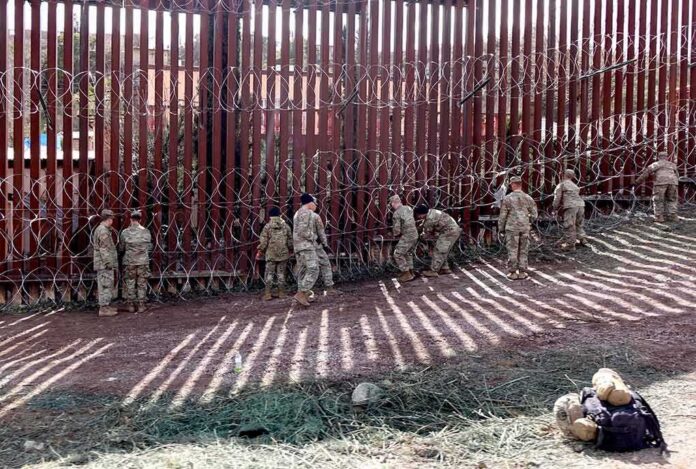
South Korea’s military reports that North Korea has sent large numbers of troops to strengthen defenses near the Demilitarized Zone. The work includes laying land mines, building anti-tank barriers, and improving tactical roads inside or near the Military Demarcation Line. South Korean troops fired warning shots during several encounters with North Korean soldiers who crossed the line while working. South Korean officials also said some North Korean troops died after setting off mines during these efforts.
South Korea’s Joint Chiefs of Staff later described the activity as part of a wider campaign to harden the border. Their work report said North Korea accelerated construction after Kim Jong Un ordered a stronger southern front. The report listed minefields, barbed-wire fences, tactical roads, and other obstacles, and projected the effort could extend through the second half of 2028. The military pledged tighter surveillance and public updates as the construction continued.
Artillery in Plain View Near the Western Front
Photographs taken from an observation deck in Gimpo appeared to show a 122 millimeter self-propelled howitzer in Kaepung County, across the western border. A spokesperson for South Korea’s Joint Chiefs of Staff said North Korea had deployed older, legacy artillery along coastal areas in plain view, and called the positioning unusual. The official description emphasized that this was not a new weapon system, and did not by itself signal immediate attack plans.
South Korean and local media reports said the guns were visible at close range, which is uncommon on that stretch of the front. Visibility matters because it is meant to send a message. Putting weapons where civilians and cameras can see them turns a military move into a political signal. The sightline toward the capital region raises public stress, even if the hardware is dated and crews are not clearly preparing to fire.
Severed Links and a Strategy of Separation
In October 2024, South Korea released video showing a blast on the North’s side of the border. South Korea said North Korea blew up parts of shared road and rail segments that once supported inter-Korean ties. South Korean officials said the destruction matched North Korea’s pledge to cut links and further fortify its side as it shifted to a “two hostile states” policy. The move fit a clear pattern of physical and political separation.
🇰🇵NORTH KOREA: North Korean self-propelled artillery has been spotted near the heavily militarised border with South Korea, with their guns pointed towards the South.
According to South Korean reports, three armoured vehicles, believed to be 122mm self-propelled howitzers, were… pic.twitter.com/NGOisqozb4
— POPULAR FRONT (@PopularFront_) October 27, 2026
This border-build fits a longer cycle on the peninsula. The buffer zone has never been static. Both sides have used fences, guard posts, mines, and drills to send messages and shape risk. Today’s mix of mines, anti-tank barriers, and forward-visible guns looks like earlier periods of tension, even if the politics have changed. The open display grabs attention, but South Korean officials still label the guns as legacy systems, which tempers claims of an imminent attack while keeping pressure high.
Why This Matters for Americans Watching Abroad
These steps increase the chance that a mistake at the border could spiral. Warning shots, mine incidents, and troop crossings add friction to an already tense place. That matters to families who worry that Washington often reacts late and then spends big to manage crises far away. It also matters to leaders who prefer clear deterrence and fewer entanglements. Strong alliances and steady facts help avoid panic headlines that push the United States toward costly choices with little debate.
How to Read the Signals Without the Hype
South Korean officials describe a sustained North Korean construction campaign and an unusual forward display of old artillery. Those are tangible facts. They do not prove an attack plan, and officials have not said they do. They do show a border getting harder and more dangerous to manage. For citizens on the left and right who think distant elites play games with security, this is a case where careful attention to verified moves beats dramatic talk shows every time.
Sources:
youtube.com, khan.co.kr, abcnews.com, khaosodenglish.com
© patriotwise.com 2026. All rights reserved.