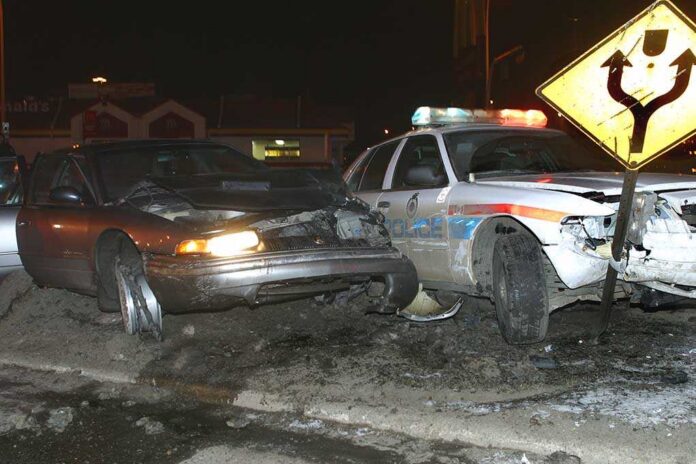
Police video and court records show Washington state House candidate Krista Perez admitting to drinking wine before a five-car crash, then sobbing and praying in the patrol car after a DUI arrest.
Story Highlights
- Police say Perez admitted to drinking wine before a five-car crash in Tacoma.
- Court records describe signs of intoxication and a later DUI charge with a refusal enhancement.
- Body-cam video shows Perez begging to go home, declining tests, and crying in a patrol car.
- Perez said she did not feel impaired and complained of arm pain; no BAC result is public in the footage.
What Police And Court Records Say Happened In Tacoma
Police responded just after midnight to a crash on South G Street in Tacoma. Officers reported five vehicles were involved, including a truck linked to Krista Perez, a Democratic candidate for the Washington House. Court records say officers found Perez appearing confused and smelling strongly of alcohol. The Tacoma City Attorney’s office later filed a driving under the influence charge. The News Tribune reports the case includes a refusal enhancement tied to breath sample issues.
Local reporting says Perez told officers she had wine earlier that day at a friend’s place. The News Tribune’s election follow-up states police tried field tests and a breath test. Records describe attempts that did not produce a usable sample, which can add penalties if proven in court. Prosecutors filed the DUI charge two days after the crash, according to the municipal court docket summaries cited by local outlets.
What The Body-Cam Footage Shows The Night Of The Arrest
Body-camera video circulated by news outlets shows Perez talking with officers and later crying and praying in a patrol car. In the footage described by Fox News, Perez admits to drinking wine, asks to go home, and declines some tests. The clip shows emotional scenes but does not include a final chemical test number. The coverage centers on her own words and her behavior during the stop and arrest process in Tacoma that week.
A longer breakdown of the same footage says Perez stated she did not feel impaired and rated herself a four on a ten-point scale of sobriety. The analysis notes she complained of severe arm pain and said she did not understand parts of the process. The video segment shared publicly does not present a blood or breath alcohol concentration result. That gap matters for court but does not change what police used to support the arrest that night.
How Evidence And Due Process May Shape The Case
Courts often see disputes over field sobriety tests. Government studies and legal reviews describe limits on test accuracy and scoring between different officers. Some research reports accuracy rates in the sixty to eighty percent range, depending on the test and study design. That means these tools can support an arrest but are not exact science for proving impairment at the moment of driving. Defense teams often press that gap during trial or plea talks.
A Democrat running for the Washington Legislature told police she drank wine, then asked to go home before taking a sobriety test. Exclusive body cam shows Krista Perez sobbing and praying in the back of a patrol car after her Tacoma DUI arrest. Watch the video. pic.twitter.com/cc7rwvJEpF
— Jason Rantz on Seattle Red (@jasonrantz) September 16, 2026
Public debate tends to form fast when video, politics, and a pending charge collide. Here, police and prosecutors cite odor, an admission to drinking, crash details, and failed or refused testing attempts. Perez, on camera, denies feeling impaired and describes pain and confusion. Voters and victims want answers, but courts move on evidence, not clips. Until a lab result, plea, or verdict lands, the record is a mix of official claims and the candidate’s on-scene statements.
Why This Resonates With Frustrated Voters
People across the spectrum see a system that feels two-tiered and slow to deliver clear answers. They watch a candidate involved in a late-night crash, then watch selective video online. They hear strong claims but wait weeks for hard numbers and rulings. That cycle fuels doubt about fairness and accountability. The best remedy is sunlight: full reports, timely lab results, and equal treatment in court. Justice should be about facts, not status or spin.
Sources:
thenewstribune.com, noticias.foxnews.com, foxnews.com, seattletimes.com, slavigo.com, dw.courts.wa.gov
© patriotwise.com 2026. All rights reserved.