President Trump said he has “no regret” about the Iran war and would make the same choice again, even if it hurts Republicans in November.
Story Snapshot
- Trump told Fox News he does not regret the Iran war and would repeat the decision.
- He linked the stance to midterm politics and said election fallout would not change his mind.
- Polling shows support for the war near one-third and weak approval of his handling.
- Low support raises risks for both parties and feeds anger over costs and leadership.
What Trump Said And Why It Matters
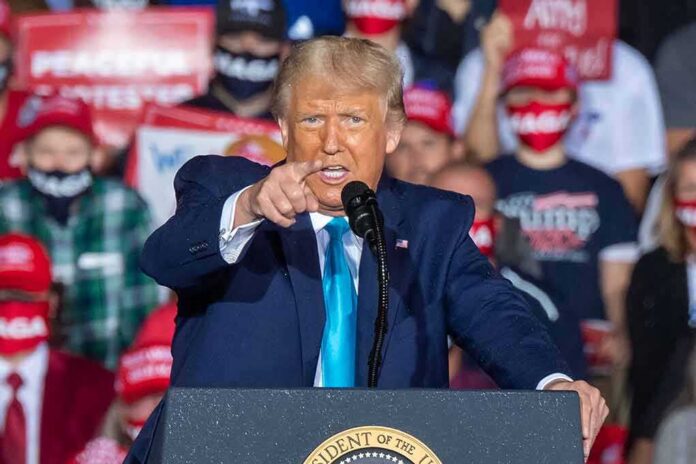
President Trump said, “I don’t believe in the word regret,” when asked about the war with Iran and the midterm elections. He added that he would do it “exactly” the same way again. He made the comments in a Fox News interview aired this week, confirming a stance he has repeated in recent days. The message was clear: he will not shift strategy to ease political pressure. That hard line sets the stage for a high-stakes election season.
Trump also argued earlier that Iran aims to sway U.S. voters and predicted the war would end “immediately after” the midterms. That claim places the conflict inside a political frame, even as fighting and costs continue. His words signal confidence that sanctions and pressure will force Iran to bend soon. They also suggest the White House is timing expectations around November, not around battlefield or diplomatic milestones.
Public Opinion And Election Risks
Surveys show a tough road. A Reuters/Ipsos poll found only about one in three Americans back the war. Support has stayed below 40 percent for months, and Trump’s overall job rating remains weak. A CNN poll reported deep concern about the economy and gas prices, and low confidence that Trump has a clear plan for Iran. These numbers point to a common pattern in U.S. politics: early backing fades as wars drag on and bills rise.
Other coverage echoes that trend. Major outlets note that Trump’s approval on Iran sits in the twenties or low thirties, with many voters saying the war was a mistake or not worth the cost. That split affects both parties. Republicans risk losses if older voters link higher prices to war policy. Democrats risk blowback if they appear to root against a U.S. military goal for political gain. Voters across the spectrum are showing fatigue with open-ended conflict.
Why This Resonates With Voter Frustration
Many Americans feel leaders in Washington ignore daily pain to score points. The Iran war debate taps that nerve. Conservatives who dislike high energy costs and long wars see little proof of quick gains. Liberals who fear wider conflict and cuts to social support see rising trade-offs at home. Both sides worry that decisions serve party timelines, not the public interest. Polling that shows weak support adds weight to those concerns about priorities and accountability.
The Fed is about to hike into a supply shock they cannot fix with rates. 🛢️
While base case is a 10-15% correction, watch the crisis triggers:
🔴 Brent >$120
🔴 Credit spreads blowing out
🔴 AI debt-funding canary (Amazon capex > cash flow)
#Investing https://t.co/wONcJDdCTQ— Akash Chaudhari (@AKaSho21) September 11, 2026
Trump’s “no regret” stance will test whether resolve beats fatigue. If his forecast of a quick end proves right, he may claim strategic patience paid off. If fighting and prices persist into winter, voters may punish the party in power. For now, the facts are simple: the President owns the decision, support is low, and the clock is ticking toward November. That mix is exactly what often turns a foreign war into a domestic verdict.
Sources:
foxnews.com, iranintl.com, nytimes.com, fortune.com
© patriotwise.com 2026. All rights reserved.