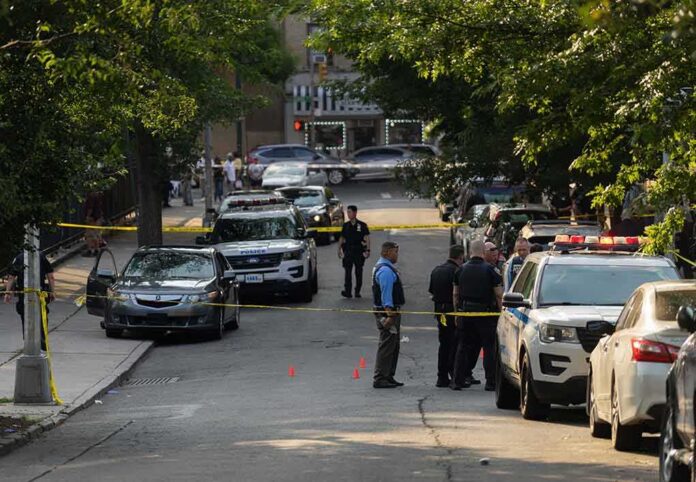
A Will County judge ordered a Frankfort mother held without bond after police found her 2-year-old son dead by ligature in the family’s basement, a case prosecutors say involved disturbing statements and a chilling online focus hours before the child’s death.
Story Highlights
- Prosecutors charged Corie Walsh with first-degree murder after her son Barrett died by ligature asphyxia in a basement incident.
- A teen neighbor found Barrett and began CPR while calling 911, according to reports.
- Prosecutors say Walsh called the boy “the devil” and followed the Lindsay Clancy case that same day.
- The defense says Walsh was in a psychotic episode and rejects any “copycat” motive.
Charges, Autopsy Status, and What Police Reported
Will County authorities charged Corie Walsh with three counts of first-degree murder after officers found her 2-year-old son, Barrett, unresponsive in the basement of their Frankfort home on September 4, 2026. A preliminary autopsy cited asphyxia due to ligature compression of the neck, and the coroner labeled the death an apparent homicide while final toxicology and reports are pending. Police and court filings describe the child as discovered hanging from a device attached to a rafter, consistent with ligature asphyxia descriptions across outlets.
Prosecutors say Walsh made incriminating statements, calling Barrett “the devil” and “the Antichrist,” according to charging materials summarized in court. Reporters at the first hearings also noted police found Walsh upstairs in a bathtub with cuts on her wrists and thighs, with blood in the water, which authorities framed as self-harm after the incident. Another infant and two older children were in the home but were not injured, a fact prosecutors point to in arguing intent and selective targeting.
Neighbor’s 911 Call and Timeline Clues
A 17-year-old neighbor entered the home, found Barrett in the basement, called 911, and began CPR while waiting for first responders, according to CBS Chicago’s account of the scene response. Prosecutors told the court that Walsh had been discussing the Lindsay Clancy case in a group text hours before Barrett’s death, a detail they argue shows focused interest close in time to the incident. The timeline claim does not by itself prove motive, but it anchors the day’s events in a documented online discussion.
Newsrooms use different words for the mechanism—hanging, strangulation, ligature compression. Those terms refer to overlapping medical ideas, but the variety also reflects that the public record is still built from charging summaries and early hearings rather than a final medical report. The Will County Coroner has said that final cause and manner await toxicology and investigative inputs, which is common in complex death inquiries.
Defense Position: Psychosis, No “Copycat,” and Treatment Needs
Defense attorneys say Walsh was in a psychotic episode and that the case is not first-degree murder. Andrea Lyon, a member of the defense team, rejects any link between Walsh’s interest in the Clancy case and Barrett’s death, calling the copycat idea baseless and cruel. Co-counsel Robert Kerr says prosecutors cannot prove Walsh acted knowingly and intentionally. He adds that doctors urged immediate care for her after the incident and that she needs treatment, not a narrative built on internet comparisons.
This dispute sits inside a pattern the public sees often: early, shocking details drive fast judgments, while the final forensic and court records take time. Preliminary autopsy findings, selective quotes from interviews, and a dramatic online thread can harden views before a jury hears full evidence. People on both the right and the left worry that media and officials shape the story first and supply the documents later. Waiting for the full complaint, transcripts, and final autopsy should help test both sides’ claims.
Why This Case Resonates Beyond One Family
Families expect the system to protect children and also to tell the truth plainly. When a toddler dies and details spill out by leak and hearing recap, trust erodes. Conservatives see institutions that fail to deter violence and then rush to narratives. Liberals see gaps in mental health care and a focus on blame over treatment. Both sides agree on this part: clear records, transparent forensics, and steady due process matter more than shock lines in a headline.
What to Watch Next
Watch for the release of the full charging packet and any probable-cause affidavit, which should clarify what physical and digital evidence prosecutors have beyond summaries. Look for the final autopsy and toxicology from the Will County Coroner to confirm cause and manner, or to refine them. Expect defense motions on mental state and statements to police, since the timing and context of those interviews may shape what a jury hears. Until then, the facts set the frame; the court will supply the verdict.
Sources:
nypost.com, cnn.com, theblaze.com, mystateline.com, nbcchicago.com, x.com, abcnews.com
© patriotwise.com 2026. All rights reserved.