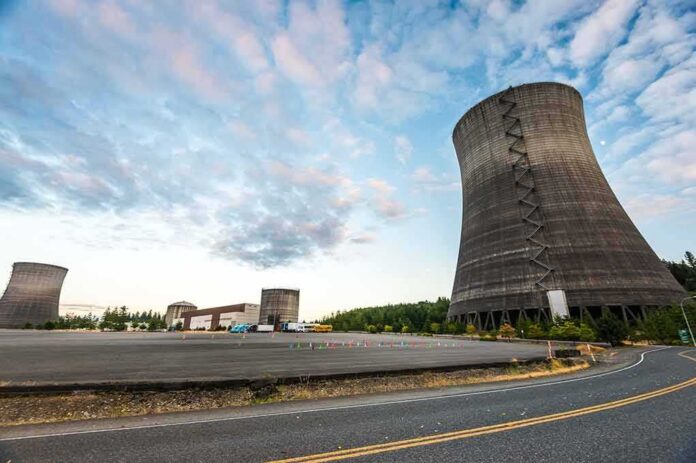
A drone struck a cooling tower at Russia’s Kursk nuclear plant while the reactor unit kept running and no fire broke out, the nuclear watchdog said.
Story Snapshot
- The International Atomic Energy Agency said a cooling tower at Kursk was hit by a drone, but operations continued.
- International Atomic Energy Agency Director General Rafael Grossi condemned any strikes on nuclear sites as unsafe.
- No change in reactor operating mode and no fire were reported after the strike.
- The event fits a wider pattern of wartime risks around nuclear facilities in the region.
What the nuclear watchdog confirmed
The International Atomic Energy Agency said it was informed that a drone hit a cooling tower linked to a reactor unit at the Kursk Nuclear Power Plant early Thursday. Reports to the agency said the unit was operating at the time, but its operating mode did not change and no fire occurred. A separate outlet echoed those details, noting the strike and the lack of immediate safety impact on the reactor’s status. These points define the technical bottom line for this incident.
International Atomic Energy Agency Director General Rafael Grossi said that any attack on a nuclear facility is unacceptable because it can put nuclear safety at risk. His warning reflects a consistent position the agency has taken during the war. The agency has urged all parties to avoid actions that could damage safety systems or cut power to plants. That stance is designed to lower the odds of an accident that could affect people far beyond a battlefield.
Why a hit on a cooling tower still matters
Cooling towers support heat removal from a plant’s systems, even though they are not the reactor core. Damage to such structures can strain plant operations if it affects cooling capacity. In this case, the plant kept running without a mode change, which points to limited immediate impact. But the strike highlights a bigger risk. Fighting near nuclear sites can stack small failures into larger problems. That is why the International Atomic Energy Agency flags even peripheral hits as serious warnings.
The Kursk incident echoes earlier alerts about war-related hazards at nuclear sites in the region. The World Nuclear Association summarized multiple war-time events and the International Atomic Energy Agency’s concern about drone activity and blasts near key facilities. The agency has also briefed global bodies that the situation around other plants, like Zaporizhzhia in Ukraine, remains precarious due to repeated military activity and stress on safety pillars. Together, these cases show a pattern of rising risk even when no radiation is released.
Competing narratives and clear facts
State media and national authorities often frame such strikes to serve wider goals in the information space. In this episode, the strongest common facts remain narrow and practical: a drone reached the plant area, the cooling tower was hit, the reactor unit stayed online, and no fire occurred, as conveyed to the International Atomic Energy Agency. The agency did not identify the attacker in these reports. That restraint keeps the focus on safety rather than blame, which often drives headlines.
Earlier in the war, Russia told the International Atomic Energy Agency about drone fragments found near a spent fuel area at Kursk, showing at least some information flow from the operator to the agency during past events. That history helps explain why the International Atomic Energy Agency can issue prompt updates when new incidents occur. It also shows how war pushes nuclear oversight into crisis mode. The agency must track events quickly, even when full forensic detail is not yet public.
The stakes for ordinary people
Residents in the region, and across borders, carry the risk if a strike triggers a safety failure. A reactor accident does not respect politics or maps. That is why the International Atomic Energy Agency repeats the same core message: keep combat and drones away from nuclear plants. People on the right and left can agree on this much. No one wants leaders, militaries, or bureaucracies to gamble with basic safety at sites that power cities and anchor local jobs.
🚨☢️ Drone Strike Reported at Russia’s Kursk Nuclear Plant 🇷🇺🇺🇦
Ukraine reportedly carried out a drone attack that damaged a cooling tower at the Kursk Nuclear Power Plant.
⚠️ The IAEA confirmed the incident, but said the nuclear facility itself was not damaged.
☢️ The IAEA…
— Dheeraj Kumar yadav (@dheerajkyadav37) September 19, 2026
In the United States, this news taps a deeper frustration. Many citizens think the “elites” talk about safety but leave systems fragile. They see wars draw on, while critical sites stay exposed. The Kursk strike is a reminder. One drone can test the guardrails that protect whole communities. Clear rules, honest reporting, and fast fixes matter more than talking points. The International Atomic Energy Agency has laid out the risk plainly. It is up to governments to act like safety comes first.
Sources:
insiderpaper.com, world-nuclear.org, stimson.org, kleinezeitung.at
© patriotwise.com 2026. All rights reserved.