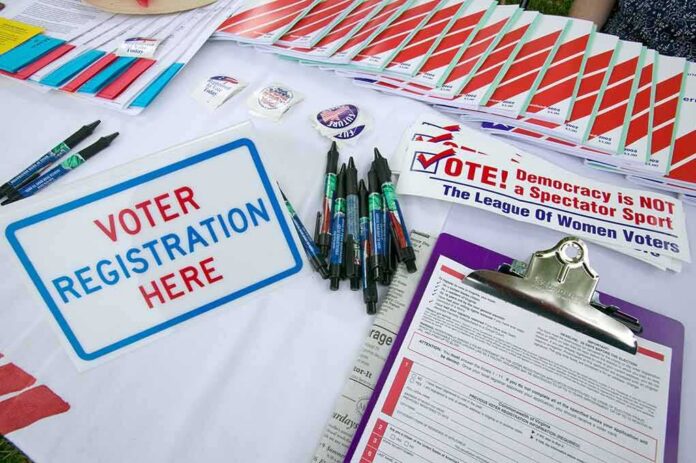
A federal grand jury charged 10 lawful permanent residents in Southern California with allegedly registering to vote by falsely claiming U.S. citizenship, sharpening a high-stakes clash over election integrity and government credibility.
Story Snapshot
- Grand jury indicts 10 green card holders over alleged false citizenship claims tied to voter registration.
- Some cases also allege voting in multiple elections, raising the stakes beyond registration records.
- Justice Department ties the charges to a wider California sweep under Operation Protect the Vote.
- California officials and analysts question a broader federal list of suspected noncitizen registrants.
What Prosecutors Allege in the New Indictments
The U.S. Attorney’s Office for the Central District of California said a federal grand jury indicted 10 noncitizens who live in Los Angeles and Orange counties. Prosecutors claim the defendants registered to vote by falsely saying they were U.S. citizens. The release lists names, dates, and actions for several people. One defendant, Omar Alexander Muñoz, is accused of registering in 2019 and voting in 2020, twice in 2022, and again in 2024, according to the office’s summary.
The Justice Department said some defendants also lied on later naturalization forms about prior registration or voting. That creates separate charges for false statements to federal officials. The department linked these indictments to a larger California effort that has brought arrests and various charges against foreign nationals for election-related crimes. Officials describe the push as part of Operation Protect the Vote, led by all four U.S. Attorney’s Offices in California.
How the Case Fits a Broader Election Fight
The department’s California sweep has produced numbers that can confuse the public. There are 10 indictments in this release, earlier complaints involving 28 people, and national counts in a separate department update. These categories mix registration allegations, claims of actual voting, and false statements on immigration forms. Each item requires different proof and records. Clear separation of these buckets helps the public judge scale and risk without inflating any single claim.
Federal officials also referenced a separate, much larger list of people flagged as likely noncitizens on voter rolls. California officials and independent analysts challenged that list’s accuracy and methods. A review tied to the University of California, Los Angeles Voting Rights Project reported that more than forty percent of names on the federal list did not appear in the state voter file, and at least twenty-two people on it were U.S. citizens, raising concerns about false matches.
Disputed Claims and What Evidence Is Still Missing
One named defendant, Muñoz, publicly denied ever registering or voting. He suggested someone else may have used his personal information. Those claims will be tested in court. At this stage, an indictment is not proof of guilt. Prosecutors have not publicly released the full registration forms, signature records, or ballot envelopes for each case. Those details matter because they tie a person, a signature, and a ballot to a specific act at a specific time.
OPERATION PROTECT THE VOTE: DOJ CHARGES SIX MORE IN CALIFORNIA, BRINGING TOTAL TO 34
On November 2, 2026, the Justice Department announced six additional federal criminal cases in California involving allegations of unlawful voter registration, voting, and false statements on…
— Receipts Matter (@ReceiptsMatter) November 3, 2026
California election officials said the broader suspected-noncitizen list included duplicates and people recorded as U.S.-born. They argued the data was unreliable and said they had not received sufficient federal methodology to validate every name. That dispute adds to voter anxiety. People across the political spectrum worry that leaders hide errors, rush announcements near elections, and posture for headlines instead of solving the root problems that break trust in the system.
Why This Matters to Voters
The stakes are simple and serious. Noncitizens cannot vote in federal elections. If even a small number vote, that harms trust. If large government lists are wrong, that also harms trust and can hurt innocent people. Both problems point to the same fix: show the records. Voters need transparent, verifiable evidence about who registered, who voted, and how officials confirmed each case. Clean data and clear processes protect every lawful vote.
What to Watch Next
Courts will decide if prosecutors can prove each charge beyond a reasonable doubt. Watch for filings that include voter registration applications, election history records, ballot envelopes, and naturalization forms. Those records will show intent, timelines, and whether errors came from individuals, agencies, or identity misuse. The outcome will also test whether federal and state officials can cooperate on data sharing without fueling more confusion right before people cast their ballots.
Sources:
townhall.com, justice.gov, newsweek.com, eastbaytimes.com, cbsnews.com, npr.org
© patriotwise.com 2026. All rights reserved.