
Federal agents moved to deport a Hasidic Jewish teacher after a small-town flag protest led to criminal charges and a visa revocation, raising free speech concerns across the aisle.
Story Snapshot
- Immigration agents detained Yehonatan Ovadia after a 2023 flag protest led to charges and a guilty plea.
- Government lawyers say the case is standard enforcement tied to criminal conduct and status loss.
- Ovadia’s attorneys claim retaliation for religious and political speech and filed a federal lawsuit.
- A judge kept Ovadia in custody while deportation proceedings continue; timing remains unclear.
What Sparked The Case: A Flag Protest And Criminal Charges
New York Town Hall staff reported that an Israeli flag, raised after the October 2023 Hamas attacks, went missing during a protest. Local police tied the incident to Yehonatan Ovadia, a 35-year-old Israeli citizen and religious teacher. He was charged and later entered a guilty plea in the case, according to reporting that tracks his court record. Those criminal proceedings became the hinge for immigration action months later, turning a local dispute into a federal detention and possible removal.
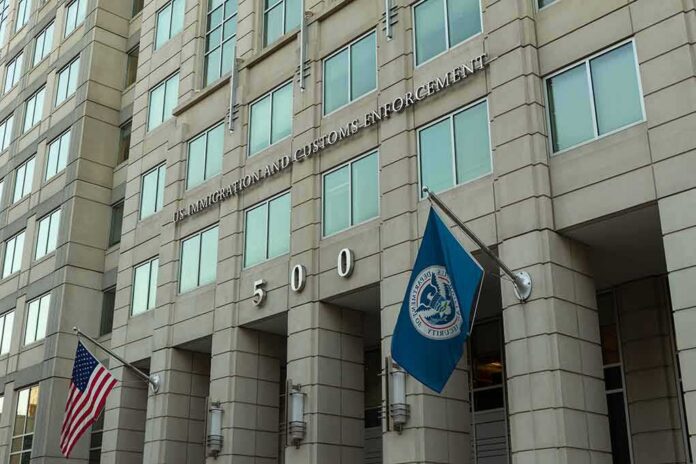
Federal immigration officers detained Ovadia in August 2026 and revoked his legal status. He has remained in immigration custody in New York since then while the government seeks to deport him. The New York Times detailed how the protest, the charges, and the plea fed into federal action. It emphasized that immigration authorities framed the case as a straightforward application of the law after a criminal offense affected a noncitizen’s right to remain in the country.
The Government’s Position: Ordinary Enforcement After A Status Violation
Department of Homeland Security officials and immigration lawyers for the government argue the facts are clear. A protest crossed into illegal conduct, a criminal case followed, and a noncitizen then lost legal status. Under immigration law, the government has broad power to detain and remove noncitizens who violate terms or commit offenses. Reporting on the case cites that sequence and notes officials insist they are not punishing speech, but enforcing existing rules as written and applied in many other cases.
A Manhattan judge declined to release Ovadia from custody while his case proceeds. That keeps him in detention as the removal process continues. Haaretz reported the ruling and described the court’s view that detention can continue during deportation efforts when the government shows a legal basis and ongoing proceedings. The decision did not decide the ultimate First Amendment question. It focused on custody and litigation posture at this stage.
The Defense’s Claim: Retaliation For Religious And Political Speech
Ovadia’s lawyers say the government is punishing him for beliefs and speech, not just for a protest that crossed a legal line. They argue his anti-Zionist stance comes from religious conviction in the Satmar Hasidic tradition, not from hate. They filed a federal lawsuit in Manhattan seeking his release and alleging retaliation for protected expression. The New York Times summarized the filing and quoted counsel rejecting claims that he is antisemitic or a threat to public safety.
Supportive coverage in other outlets repeated the defense’s core points. The Jerusalem Post quoted attorney Eric Lee, who said it is absurd to call Ovadia antisemitic because his views target a state, not a people or a faith. The defense team also says authorities blurred the line between anti-Zionism and antisemitism, and that such conflation chills lawful dissent. They contend immigration law cannot be used as a back door to police unpopular speech.
Why This Case Resonates: Speech, Status, And Power
This case sits in a wider fight over when protest conduct flips into deportation risk for noncitizens. Civil liberties groups have warned that immigration tools can be used to punish activists. Legal scholars at Knight First Amendment Institute have argued the Constitution bars retaliation against immigrants for protected speech, even if they lack citizenship. The current court battles test where that line is and whether status revocation linked to expressive events can pass constitutional review.
Many Americans see a deeper problem beyond this one case. People on the right worry about disorder and selective enforcement. People on the left worry about government power used against dissent. Both sides fear a system that seems to serve insiders first. This case blends law and politics in a way that fuels that distrust. The court process will decide Ovadia’s fate. But the bigger question is whether immigration law is being used as a shield for public safety or a sword against speech.
Sources:
ynetnews.com, ground.news, x.com, jta.org
© patriotwise.com 2026. All rights reserved.