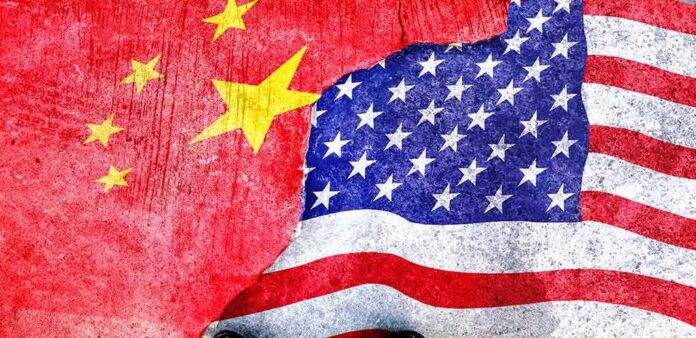
For the first time since 1995, a major regional survey says Latin Americans now see China as a more positive influence than the United States.
Story Snapshot
- A 2026 Latinobarómetro survey found 65% view China’s influence as positive, versus 57% for the U.S.
- The crossover marks a first in the survey’s history since 1995, based on 19,200 interviews in 17 countries.
- Two countries, Costa Rica and the Dominican Republic, still rate the U.S. more positively on influence.
- The U.S. still leads on overall favorability, showing views on “influence” differ from general liking.
What the 2026 Latinobarómetro Survey Shows
Latinobarómetro reported that 65% of respondents across 17 Latin American countries rated China’s influence as positive, while 57% said the same for the United States. The survey uses 19,200 face-to-face interviews, supporting a region-wide read of opinion. Reporters noted this is the first time China has led the United States on this measure since the annual series began in 1995. China’s rating rose sharply from 48% in 2020, while the U.S. figure slipped from 60% to 57%.
Coverage of the results identified two notable exceptions. In Costa Rica and the Dominican Republic, respondents still viewed the United States as a more positive influence than China. That detail suggests the shift is broad but not universal. It also hints that local politics, trade ties, or recent events may shape views country by country, even as the overall regional trend now favors China on the influence question.
Influence vs. Favorability: Why the Difference Matters
Reports on the same survey said the United States still leads China on overall favorability, at 63% versus 58%. That gap shows people can separate influence from liking. A country may be seen as helpful or effective in a region while not winning the most hearts. This split helps explain how China can lead on “positive influence” at the same time the United States remains broadly more favorable on general measures.
Recent polling trends support this pattern. A 2026 survey from the Pew Research Center found views of the United States have grown more negative in several Latin American countries over the past year, while views of China held steady. As a result, the two powers now sit closer together on several measures. This suggests a slow convergence in public opinion, not a sudden swing to one side across the board.
What Could Be Driving the Shift
China has expanded trade, finance, and infrastructure ties across the region for years. That activity can shape how people judge day-to-day impact. Investment in ports, power, and telecom can look like concrete help, especially when local economies struggle. Reports note that China’s outreach often tries to build goodwill through culture and education programs, which can soften its image and boost perceived influence without military force or direct pressure.
China a better influence in Latin America than US: poll – Yahoo https://t.co/YDyaGfZhSx
Follow @NewsHubGlobe for 24/7 breaking news from around the world. pic.twitter.com/Th3BwXF97g
— News Hub (@NewsHubGlobe) October 3, 2026
The United States still holds deep ties in the Americas, from family links to commerce and security. But policy whiplash, headlines about intervention, and domestic fights can weigh on its brand. When people judge “influence,” they may react more to recent shocks, aid reliability, or how each power shows up in crises. That kind of yardstick can favor the partner seen as investing today, even if overall favorability still tilts to the United States.
Why This Matters for Americans Across the Spectrum
For many conservatives and liberals, this result taps a shared worry: the United States is losing ground because leaders chase headlines, not results. Voters see rising debt, policy swings, and global distractions while rivals build steady ties. When a poll shows China scoring higher on “positive influence” in our own neighborhood, that looks like the cost of drift. People want practical wins that help allies grow and keep supply chains secure.
For Washington, the lesson is straightforward. Show up with clear goals and reliable follow-through. Support local growth with energy, ports, and safer streets. Cut red tape on trade that helps small businesses. Fund education, health, and digital links that citizens feel in daily life. Explain policies in plain language, not jargon. If Americans see their tax dollars working and partners see real tools to solve problems, the United States can regain the edge on influence without losing core values.
Read the Fine Print, But Do Not Ignore the Headline
The poll is strong on topline results but leaves some details unclear, like the exact wording of the influence question and country-level sample sizes in public reporting. Those limits do not erase the core finding. They simply remind readers that “influence” is narrow and different from “favorability.” Even so, the crossover is a milestone that signals a real shift in how people in Latin America judge major powers today.
Sources:
feedpress.me, aljazeera.com, ropercenter.cornell.edu, news.gallup.com
© patriotwise.com 2026. All rights reserved.