President Trump said North Korea’s nuclear weapons are a reality to manage while Iran must never get one, drawing fire for a double standard backed by hard power.
Story Highlights
- Trump said North Korea already has nukes, but Iran must never get them.
- Trump cited a personal rapport with Kim Jong Un as part of his approach.
- Critics said the stance undercuts nonproliferation by rewarding threshold crossing.
- The White House says the Iran line is clear and consistent: no nuclear weapon.
What Trump Said And Why It Matters
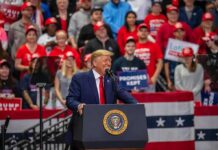
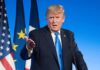
President Trump told reporters that North Korea already has nuclear weapons, so the United States must manage that risk, not pretend it can wish it away. He added that he considers Kim Jong Un a “friend,” signaling that talks and personal ties remain his tools with Pyongyang. On Iran, Trump repeated a familiar line: Tehran will never be allowed to have a nuclear weapon, and U.S. policy will enforce that limit with pressure and leverage. The contrast is now explicit and on record.
The White House amplified that message in official language, saying the President has always been clear that Iran cannot have a nuclear weapon. That stance aligns with years of statements in speeches and press releases. Supporters call the approach common sense: stop new nuclear states before they start, and contain those that already crossed the line. Detractors see a split standard that risks telling the world, “get the bomb and the pressure eases.” The debate is intense because the stakes are high.
Critics See A Risky Double Standard
Analyst Rajan Menon argued that if the United States stands for nonproliferation, it cannot wave away North Korea’s arsenal simply because it exists. He also said there is no reasonable way to undo North Korea’s nuclear status, which makes U.S. tolerance look like reluctant acceptance, not a principle. A Stars and Stripes opinion warned that the posture could reward states that build a bomb while hammering those still below the line, a perverse set of incentives that future proliferators may notice.
Progressive commentators mocked Trump’s friendly framing of Kim, saying it looks like praise softens judgment on a dictator with nuclear arms. Conservative readers, meanwhile, may view the Iran hard line as overdue after years of failed deals and attacks on U.S. partners. Liberals may worry that embracing personal diplomacy with one autocrat while threatening another deepens global mistrust. Both sides share a core concern: policy made by elites can drift from clear rules, leaving citizens to absorb the risks.
How This Fits Long-Running Nuclear Playbooks
Security scholars note that U.S. policy often shifts from “prevent” to “manage” once an adversary is nuclear-armed, even as leaders still say denuclearization is the goal. In practice, that means sanctions, deterrence, and talks for North Korea, while Iran faces a harder stop to block the first weapon. Analysts have said there is logic in treating the two cases differently because their starting points differ, even if the politics are messy and the messaging can sound uneven.
🚨 BREAKING 🇺🇸🇰🇵🇮🇷
TRUMP ON NORTH KOREA’S NUKES: “A DIFFERENT PRESIDENT” COULD HAVE STOPPED IT.
Trump says North Korea was able to develop nuclear weapons under previous U.S. leadership, while insisting Iran must not be allowed to obtain them.
He called Kim Jong Un a “friend”… pic.twitter.com/eUQmtbNRFW
— Xi Znping (@XiZnping) October 2, 2026
That gap between words and reality fuels today’s anger at Washington. Voters on the right and left see a pattern: big claims from leaders, limited progress on core threats, and rules that seem to bend for the powerful. On nuclear policy, clarity matters. If the goal is to stop spread, the United States must show how tough lines deter cheaters without signaling that a completed bomb earns leverage. Clear goals, honest tradeoffs, and steady enforcement are what rebuild trust at home and abroad.
Sources:
thehindu.com, en.tempo.co, internazionale.it, ynetnews.com, nbcnews.com, whitehouse.gov, thehill.com
© patriotwise.com 2026. All rights reserved.