A national campaign tied to America’s 250th birthday is quietly shifting the focus from **“independence” in 1776** to a new, activist call for **“interdependence”** that many see as both a challenge to the founding story and a sign of how far trust in the federal government has fallen.
Story Snapshot
- Linda Sarsour is helping lead a “Next 250” movement that uses the 250th anniversary of 1776 to push a new vision for America’s future, centered on “interdependence,” not just independence.
- Conservative media have framed this shift as “Screw 1776,” but no evidence shows Sarsour using that phrase or presenting a detailed replacement for the Declaration of Independence.
- Sarsour openly grounds her politics in being “unapologetically Muslim American” and “unapologetically Palestinian American,” arguing the founding left people like her out.
- The fight over Sarsour’s comments reflects a deeper national clash: whether America should repair and live up to the 1776 ideals, or write a new story shaped by identity-based activism.
Who Linda Sarsour Is and Why She Provokes Strong Reactions
Linda Sarsour is a well-known activist who rose to national fame as a co-chair of the Women’s March on Washington, one of the largest single-day protests in United States history. She often introduces herself as “unapologetically Muslim American” and “unapologetically Palestinian American,” tying her work to identities she says were ignored when the founding document was written in 1776. She supports the Boycott, Divestment, Sanctions movement against Israel and describes it as a nonviolent way to push for human rights, stressing her belief that Americans have a constitutional right to boycott.
Sarsour has helped build groups like MPower Change and Until Freedom, which focus on racial justice, civil rights, and direct action. Her memoir, “We Are Not Here to Be Bystanders,” frames her life as resistance to systems she views as oppressive. These choices put her at odds with many conservatives and some liberals who see her stance on Israel and her ties to the Democratic Socialists of America as extreme or even dangerous. At the same time, her work attracts many Americans who feel ignored by both parties and who believe the current system leaves them locked out of the American Dream.
What Sarsour Is Saying About 1776 and the “Next 250” Campaign
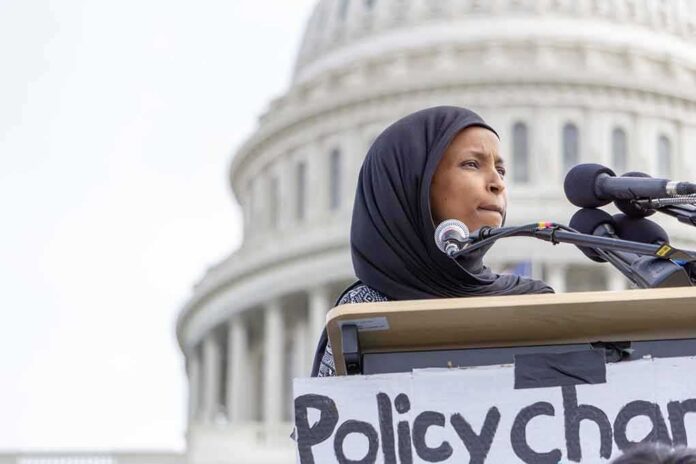
The current controversy centers on how Sarsour talks about America’s 250th anniversary and the founding story. In a recent conversation about the “Next 250 for All of Us” mobilization, she described a plan to bring people to Washington, D.C. on June 27 to “declare our interdependence” and demand a new, unified vision for the country’s next 250 years. She and other movement leaders want the anniversary to be a moment to look honestly at the past and push for concrete changes going forward, not just repeat old patriotic language. This framing treats 1776 as a starting point that failed many communities and needs serious rethinking.
Some conservative outlets and social media users have boiled that message down to a harsh slogan—claiming Sarsour said “Screw 1776, let’s build a document that matches my values.” That phrasing fits deeper fears many people have about activists wanting to throw out America’s founding principles rather than improve them. But based on available public records and transcripts, there is no solid evidence that Sarsour used those exact words or laid out a detailed plan for a new founding document. The “Screw 1776” line appears to be a hostile summary, not a verified quote backed by a full transcript.
What the Declaration of Independence Actually Says – and Why It Still Matters
The Declaration of Independence, approved on July 4, 1776, states that “all men are created equal” and that they have “unalienable Rights” including “Life, Liberty and the pursuit of Happiness.” It claims governments exist to protect these rights and that people can change or replace any government that destroys them. The National Archives still calls this document a “milestone” that set out America’s core ideals and declared the colonies to be “Free and Independent States.” For many Americans across the political spectrum, these words remain the heart of what this country is supposed to be.
At the same time, the words “all men” were written in a world where women, Black people, Native Americans, and non-Christians had few or no rights. Activists like Sarsour argue that the founding’s fine words never truly included people like her, and that the lived reality was one of exclusion and hierarchy rather than equality. This claim fits a broader pattern among progressives who say the founding must be “reinterpreted” or even rebuilt to face racism, religious bias, and economic inequality that they believe the original document did not prevent. Critics respond that the answer is to finally live up to 1776, not toss it aside.
How This Fight Reflects a Deeper National Breakdown
The clash over Sarsour’s comments touches a frustration that many conservatives and liberals now quietly share: the feeling that the federal government is failing ordinary citizens while serving the interests of a small group of elites. People who support America First policies see globalist trade deals, open borders, and identity politics as proof that leaders have walked away from the founding promise of equal treatment under law. People on the left look at growing inequality, harsh immigration enforcement, and weak social protections and see a system that works for corporations and the wealthy, not for working families.
Into that mistrust walks a debate about 1776 itself. For some activists, talking about “declaring interdependence” is a way to say the old story no longer fits today’s diverse, unequal America. For many others, including older conservatives and some older liberals, it sounds like one more attempt by the political class and activist networks to rewrite the rules without fixing the real problems—corruption, waste, and a government that seems more focused on its own survival than on protecting citizens’ basic rights. That is why slogans like “Screw 1776,” even if they are distorted, hit such a nerve.
Sources:
twitchy.com, awpc.cattcenter.iastate.edu, brennancenter.org, millikin.edu, jta.org, youtube.com, fordfoundation.org, en.wikipedia.org, aclu-tn.org, constitutioncenter.org, trumpwhitehouse.archives.gov
© patriotwise.com 2026. All rights reserved.