
President Trump unveiled cash rewards for fraud tipsters — even journalists — but the payout rules do not match his promise.
Story Snapshot
- Trump launched a $25 million fraud whistleblower program with public payouts.
- Trump said tipsters get a 1% commission with “no limit,” including reporters.
- Official guidance says rewards are generally capped at up to $30,000.
- The gap raises basic questions about who qualifies and how much they can earn.
What The Administration Announced On Fraud Rewards
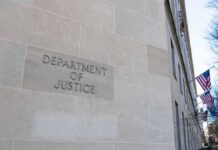
President Trump and Vice President JD Vance announced a federal Fraud Whistleblower Incentive Program on October 20, 2026. The White House and the Department of Justice said the effort is funded at $25 million and aims to pay the public for actionable tips about fraud in federal programs. Multiple outlets reported that eligible tipsters could receive up to $30,000 if their information leads to a conviction or significant enforcement action by the government. Trump also framed the program as part of a broader push to recover large sums.
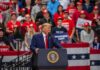
During the Oval Office event, Trump told reporters that whistleblowers would receive a one percent commission on funds recovered and said there would be no limit to how much a person could collect. He added that “even reporters” could take part, subject to their employers’ rules and applicable law. The public pitch stressed speed, simplicity, and financial incentives. That message targeted widespread anger over waste and abuse in government spending across both left and right.
Where Trump’s Promise And Program Rules Clash
Public details from the administration describe a reward ceiling that conflicts with Trump’s “no limit” one percent pledge. Reports citing official guidance say the program pays generally up to $30,000 when a tip leads to charges or major federal action, not an automatic share of the total recovery. Coverage from business and legal outlets highlighted this split, noting the website language about capped awards alongside Trump’s uncapped commission claim to the press. That gap creates uncertainty for would-be tipsters who want to know actual payouts.
This confusion matters because money is the core motivator in any whistleblower program. If rewards are capped at $30,000, a person who helps recover tens of millions might feel shortchanged next to the one percent pitch. If the one percent applies, a major case could mean life-changing sums. Until rules, terms, and eligibility are clear in writing, the promise can look like a headline with fine print. Reporters, who Trump explicitly invited to participate, face added ethics and employer limits that could bar them from cashing in.
How This Fits With America’s Whistleblower Tradition
The idea of paying insiders to expose fraud is not new. The federal False Claims Act lets private citizens sue on behalf of the government and share in recoveries. Since Congress strengthened that law in 1986, total settlements and judgments have topped $85 billion, with whistleblowers often awarded between 15 percent and 30 percent of recoveries in successful cases. The Department of Justice reported a record number of whistleblower filings in recent years, showing steady public interest in reporting fraud.
Trump’s program appears to borrow that incentive logic but shifts it into a faster, tip-based track. That may widen access to people who lack lawyers or do not want to file formal cases. It may also increase low-quality tips if the process is loose. Strong programs set clear steps, protect confidential sources, and spell out rewards so people know what to expect. The current mismatch between a one percent “no limit” pitch and an “up to $30,000” cap risks eroding trust before the first big case pays out.
Why Both Sides See Promise And Peril
Americans across the spectrum are frustrated by waste, fraud, and the sense that elites play by different rules. Many believe government misses obvious red flags while insiders profit. A reward program that pays citizens to expose abuse speaks to that anger. It puts power, and cash, in the hands of people who can spot fraud on the ground. If well run, it could save taxpayer money and show quicker action against wrongdoing that hurts families and small businesses.
President Trump just put a bounty on fraud.
He announced the Fraud Whistleblower Incentive Program today. You report fraud at https://t.co/wbvF4Kmgif, and if it's real, you get paid. Trump's words: "If you find a billion dollars, we are giving a commission to that person of 1%." pic.twitter.com/ezCB8KvySp
— jasconnor (@jasconnor1) October 21, 2026
But mixed messages from leaders feed a deeper worry: big announcements without clear follow-through. People want to know if they will get a capped check or a true one percent share. They want to know who counts as eligible, how cases are judged, and how long payments take. Clear, public rules can reduce doubts that political allies get special deals or that officials will move the goalposts later. On fraud, details make or break trust in government promises.
Sources:
mediaite.com, yahoo.com, inquirer.com, washingtonexaminer.com, spectrumlocalnews.com
© patriotwise.com 2026. All rights reserved.