
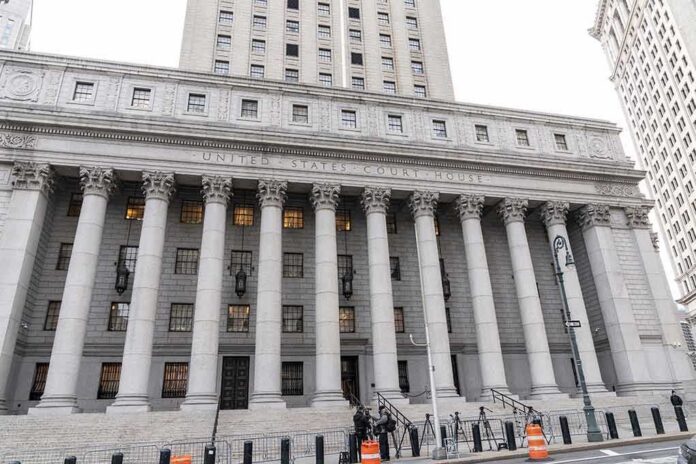
A federal judge stopped the government from deporting a man shot by immigration officers, keeping the courts in control of the case.
Story Snapshot
- Judge J. Paul Oetken temporarily barred removal to preserve court authority while a detention challenge proceeds.
- The order also limited transfers so the detainee stays within reach of the New York and New Jersey federal courts.
- Officials say agents fired because they believed the driver’s actions put lives in danger; investigations continue.
- The ruling is procedural and does not decide whether the shooting or any future deportation is lawful.
What the Court Ordered and Why It Matters
U.S. District Judge J. Paul Oetken issued a two-page order on October 9 that bars deporting the wounded man, identified in filings as Oscar Bergal, without further court approval while his habeas petition is pending. The judge said the pause protects the court’s jurisdiction. The order also blocks transfers outside the Southern District of New York, Eastern District of New York, or District of New Jersey without permission. The court’s step is temporary and addresses process, not guilt or innocence.
Attorneys filed the habeas petition soon after the shooting, arguing that immediate removal could make court review meaningless. They also raised custody concerns, saying Bergal did not appear on Immigration and Customs Enforcement’s detainee locator, which tracks people in federal immigration detention. The court’s transfer limits aim to avoid moving him beyond practical reach. The ruling keeps the case local so a judge can review detention, medical access, and any related claims tied to custody.
What Officials Say Happened During the Arrest
Department of Homeland Security leaders defended the immigration officers’ actions. Officials said Bergal refused orders to exit his vehicle during a targeted arrest. They said he struck two government vehicles and then moved the vehicle toward other officers. Leaders said agents fired because they believed lives were in immediate danger. They said agents did not know a five-year-old child was inside the car when shots were fired. Federal inquiries are underway.
Markwayne Mullin, the Secretary of Homeland Security, said officers were serving a lawful warrant during the operation. He said the department will not pause immigration enforcement after the incident. Agency leaders framed the case around officer safety and public risk in a dense city block. Their account stresses training, real-time judgment, and a split-second threat. Those claims will face review as investigators examine the use of force and the arrest planning that led to the stop.
What the Ruling Does Not Decide
The judge’s order does not settle whether the shooting was justified or whether Bergal can be deported later. It simply holds the line while the court reviews his detention through habeas corpus. Courts often use this tool to make sure the government does not move someone before judges can rule on claims tied to custody and legal rights. The order reflects a common balance: keep the person here, keep the court’s power intact, and decide facts after both sides present evidence.
BREAKING: A federal judge has halted the deportation of Oscar Belgal, the man shot by an ICE agent during an operation in the Bronx Thursday.
The ruling also limits where ICE can transfer him while his legal challenge proceeds.https://t.co/v5UdZv2OhM pic.twitter.com/eoDxdQyhcS
— Graham Hodson (@GrahamHod_son) October 9, 2026
Public details still have gaps. Reports use two last names, “Bergal” and “Belgal,” which can cause confusion in records. Reporters have not published full body-camera video, ballistic work, or sworn witness accounts that would resolve key disputes. That is normal when federal investigations are ongoing. The process now moves on two tracks: internal and federal probes into the shooting, and court review of detention and transfer limits to protect access to justice.
Why This Case Hits a Nerve Across the Aisle
People across the spectrum see a system that shields itself first. Supporters of strict enforcement worry courts will tie agents’ hands when seconds count. Critics of heavy-handed tactics worry agencies can move people out of reach before judges review the facts. The court’s order aims down the middle. It does not bless or blame the shooting. It keeps the courthouse door open, so facts can be tested in daylight, not lost on a tarmac.
Sources:
abcnews.com, cbsnews.com, univision.com, nbcnews.com, congress.gov
© patriotwise.com 2026. All rights reserved.