Federal agents say more than 700 white-powder letters hit officials and institutions across the country as elections neared, and an Oklahoma man now faces charges tied to that wave.
Story Snapshot
- Prosecutors allege a nationwide series of 700+ white-powder mailings over the 2024 and 2026 cycles.
- Targets included election offices, members of Congress, media outlets, pollsters, and law enforcement.
- Tested samples reportedly contained yeast or flour, but evacuations and disruptions followed.
- Affidavit cites letters with “DECLARATION OF WAR” themes and treason threats “OR WORSE!!”.
Charges Center on Scale, Timing, and Threat Language
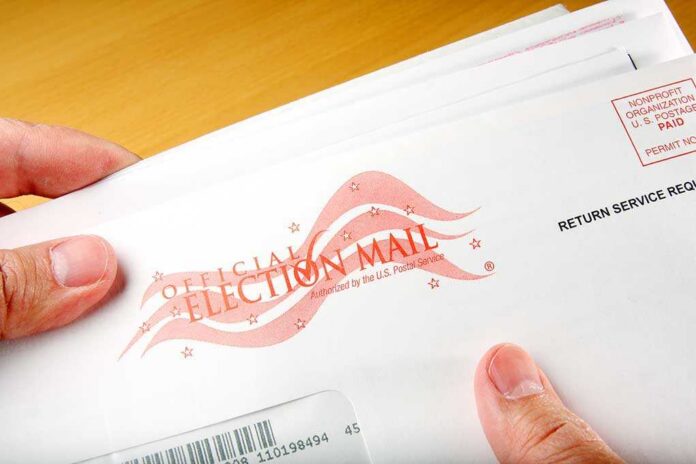
Federal prosecutors charged an Oklahoma man with mailing powder-filled envelopes to officials and institutions across the United States. The criminal complaint, unsealed just before midterm voting, describes more than 700 mailings tied to one sender, with activity spanning the 2024 and 2026 election periods. Investigators say the letters went to election offices, lawmakers, pollsters, media, and law enforcement. Authorities report that some letters included a “DECLARATION OF WAR” theme and threats of treason charges “OR WORSE!!”.
The alleged mailings reached election offices near critical dates, prompting evacuations and hazmat responses. The Oklahoma State Election Board reported a letter on October 13, 2026, that led to an evacuation after the white powder was found. The pattern supports a theory that the sender aimed to frighten officials or disrupt operations during election activity. Law enforcement urged caution and treated the envelopes as potentially dangerous until tests could be done.
What Testing Found and What It Did Not
Laboratory work on several seized samples reportedly found yeast or flour, not a toxic substance. That finding aligns with a hoax model that still causes fear, shut-downs, and costs. Not every sample had been tested at the time of charging, so results could vary case by case. Agents also reported that some messages were written in ultraviolet-reactive ink, which suggests planning to hide content from a quick visual check and to unsettle recipients who discovered it later.
Authorities linked the Oklahoma suspect to the broad series, but public summaries do not list every forensic step for each mailing. Reports do not detail a full chain tying the accused to the authorship of every line or to every envelope in the 700-plus count. That level of attribution usually emerges later through discovery, expert reports, and court hearings. For now, the complaint lays out scope, recipients, language, and the suspected timeline across two election cycles.
Election Security Pressures and Public Confidence
The case lands amid higher reports of threats and abuse toward election workers since 2020. A 2026 survey by the Brennan Center for Justice found that 32 percent of local election officials reported threats, harassment, or abuse tied to their jobs, and more than half worried about coworkers’ safety. These surveys measure self-reports, not confirmed crimes, but they map a rising strain on the people who run elections day to day. Such stress can weaken staffing and slow services.
FEDERAL PROSECUTORS CHARGE OKLAHOMA MAN OVER 700+ THREATENING MAILINGS: WHAT THE RECORDS SHOW
UPDATE: NOVEMBER 3, 2026
Federal authorities have arrested an Oklahoma City man accused of sending hundreds of threatening letters to election officials, lawmakers, and other…
— Receipts Matter (@ReceiptsMatter) November 3, 2026
Many Americans on the right and left see these scares as proof that the system is under strain. People worry about safety, delays, and whether powerful insiders protect themselves while workers on the front lines bear the risk. This case shows how even a non-toxic powder can force evacuations, drain resources, and shake trust. When election workers face chaos, voters pay the price with longer waits, reduced access, and doubt about a process that should be steady and boring.
How Authorities Say It Unfolded
Investigators say letters went to offices across many states, including those of state election chiefs and members of Congress. The complaint points to coordinated planning based on volume, timing, and shared features of the envelopes. Some letters referenced the “United States Traitor Elimination Army,” raising the temperature with talk of treason and punishment. The case was unsealed November 3, 2026, amplifying attention as polling places opened and officials worked to keep operations normal.
What Comes Next in Court
The accused faces federal charges, and the case now moves into legal proceedings that will test the government’s evidence. Prosecutors will need to show who prepared and mailed the letters, and why. Defense counsel can challenge links across the hundreds of mailings and the intent behind the messages. For the public, the key takeaway remains simple: even hoax substances can spark fear and disruption, and that disruption is a real cost during an election.
Sources:
washingtontimes.com, usatoday.com, news9.com, rollcall.com, rmb.reuters.com
© patriotwise.com 2026. All rights reserved.