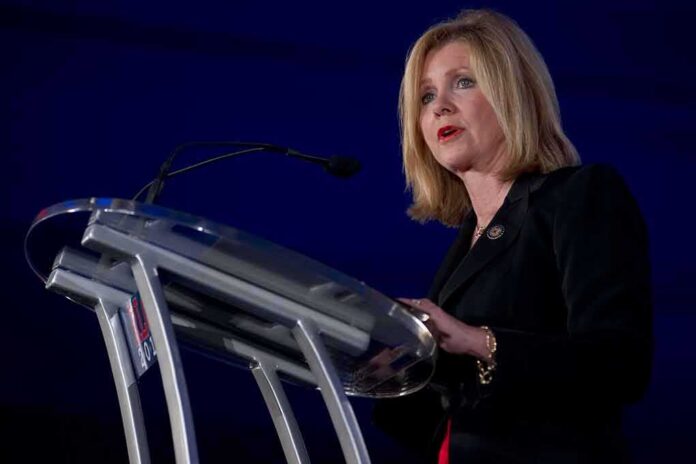
Polls are closing in Tennessee after a race that turned into a test of whether a well-known Republican can hold off a late challenge from a fellow conservative.
Quick Take
- Senator Marsha Blackburn entered the Tennessee governor’s race and quickly became the early Republican front-runner.
- Campaign polling and outside reports showed Blackburn ahead of Representative John Rose, but the margin narrowed as Election Day neared.
- Rose stayed in the fight by arguing he could win voters who wanted a more local, outsider-style conservative.
- The race reflects a larger public distrust of political power centers, with both candidates trying to claim they best match Tennessee voters.
Blackburn’s Early Edge Set the Tone
Blackburn’s entry into the 2026 governor’s race gave Tennessee Republicans a high-profile contest almost at once. The Associated Press reported that she announced her bid in August 2025 and set up a primary clash with Representative John Rose. Later coverage said she had been seen as the likely nominee for months, helped by strong name recognition, endorsements, and a campaign that raised $8.3 million.
That early lead shaped the whole race. A Tennessean report on July 14 said Blackburn’s campaign shared internal polling that put her at 51 percent, with Rose at 20 percent and state Representative Monty Fritts at 12 percent. Another Blackburn-backed poll, shared in late July, showed her at 42 percent, Rose at 25 percent, and Fritts at 22 percent. Those numbers suggested Blackburn still held a clear advantage, even as the gap tightened.
Rose Tried to Turn Narrowing Margins Into Momentum
Rose did not run as a symbolic challenger. Coverage from the Nashville Banner said his campaign polling placed him 15 points behind Blackburn, a distance that still left room for a late push. The same reporting said he framed himself as the conservative outsider with business and leadership experience, while Blackburn leaned on party backing from state Republican leaders and major conservative groups. That split gave the race a sharper style clash.
Other reports pointed to a late surge narrative around Rose. Reuters said Blackburn had led by comfortable double-digit margins for much of the race, but recent weeks showed signs the contest had tightened. The Hill also noted that late polling suggested the race could be closer than expected. That matters because close races often reward campaigns that can turn anger at political insiders into turnout, especially when voters are skeptical of both parties and the power structure around them.
What the Closing Phase Says About Tennessee Politics
This race fit a familiar pattern in modern Republican primaries. A nationally known senator entered with built-in advantages, while a challenger tried to break that lead by stressing momentum and local credibility. The result was not just a fight over one office. It became a measure of how much weight Tennessee voters give to celebrity, party machinery, and anti-establishment messages when choosing a governor.
DDHQ Race Update (est. 36% in): Tennessee Governor Republican Primary
Marsha Blackburn (R): 111,616 (43.6%)
John Rose (R): 82,521 (32.2%)
Monty Fritts (R): 61,887 (24.2%)Follow more results here:https://t.co/JoPzkRCY0Z pic.twitter.com/iDGPf791ZC
— Decision Desk HQ (@DecisionDeskHQ) August 7, 2026
The broader lesson reaches beyond one ballot count. Tennessee Republicans were deciding whether to reward a figure tied to the national conservative brand or a rival who argued he better fit the state’s day-to-day concerns. That tension mirrors a wider public mood across the country, where many voters on both sides say they are tired of polished insiders, cautious institutions, and political systems that seem more focused on control than results.
Sources:
tennessean.com, marshablackburn.com, foxnews.com, en.wikipedia.org, nashvillebanner.com, nytimes.com
© patriotwise.com 2026. All rights reserved.