

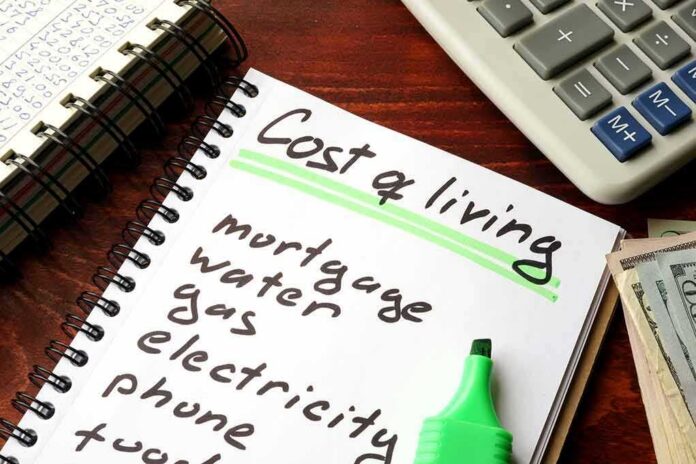
Economists expect inflation to speed up again in September, with energy costs pushing prices higher.
Story Snapshot
- Forecasts point to headline consumer inflation rising to about 3.6% year over year in September.
- Prices are expected to jump 0.6% from August, up from a 0.4% monthly gain previously.
- Higher oil and energy costs are seen as key drivers of the expected increase.
- The Bureau of Labor Statistics set the official release for October 14 at 8:30 a.m. Eastern.
What the New Inflation Reading Is Expected to Show
Dow Jones–surveyed economists expect the Consumer Price Index to rise 0.6% in September and 3.6% from a year earlier, faster than August’s 3.4% pace. That would mark an acceleration in headline price growth month over month and year over year. The same outlook sees a softer “core” reading once food and energy are excluded, suggesting most of the heat sits in volatile categories. The Bureau of Labor Statistics scheduled the September report for October 14 at 8:30 a.m. Eastern.
August’s baseline is clear: the all-items index rose 3.4% over 12 months through August, while the monthly increase was 0.4%. The jump to a 0.6% monthly gain would be a notable pickup if realized. This matters for families because monthly bumps compound into higher yearly costs. It also matters for policy because faster headline gains can affect interest rates, borrowing costs, and retirement savings. One short caveat: the figures above are forecasts until the agency posts the data.
Energy’s Outsized Role in the Headline Number
Analysts point to oil and gasoline as main reasons the headline rate could rise in September. Energy prices move quickly and can swing the index even when other categories are steady. That is why economists track a “less food and energy” measure to judge the trend. The Bureau of Labor Statistics explains that the all-items index covers a set basket of goods and services, while energy is one major component that can change sharply month to month.
Core inflation may look calmer. Forecasts call for a 0.2% monthly gain and about 2.5% over the year on a core basis, pointing to slower underlying pressure even if drivers pay more at the pump. This split—hot headline, cooler core—often happens when oil surges. It can fuel political heat without proving that inflation is spreading across every aisle in the store. Households still feel the hit because fuel touches commuting, shipping, air travel, and food distribution.
Why the Timing and Method Matter for Your Wallet
The schedule shapes markets and policy talk. The Bureau of Labor Statistics set the release for October 14, and investors, businesses, and unions plan around that clock. Forecasts guide expectations but can miss the mark, especially in periods with big commodity moves. Since 2000, the Federal Reserve has preferred a broader price gauge called the Personal Consumption Expenditures index, which often runs a bit lower than the Consumer Price Index over time.
For families, the label on the index matters less than the bill at the end of the month. A faster headline pace can mean tighter budgets, higher credit card rates, and delayed big purchases. For retirees on fixed incomes, a hot monthly print can erode buying power. For workers, raises that trail prices mean less real pay. Many readers across the political spectrum see this as one more sign that Washington talks a lot while everyday costs keep climbing.
Sources:
cnbc.com, bls.gov, clarin.com, ground.news, dof.ca.gov, federalreserve.gov, chicagofed.org
© patriotwise.com 2026. All rights reserved.