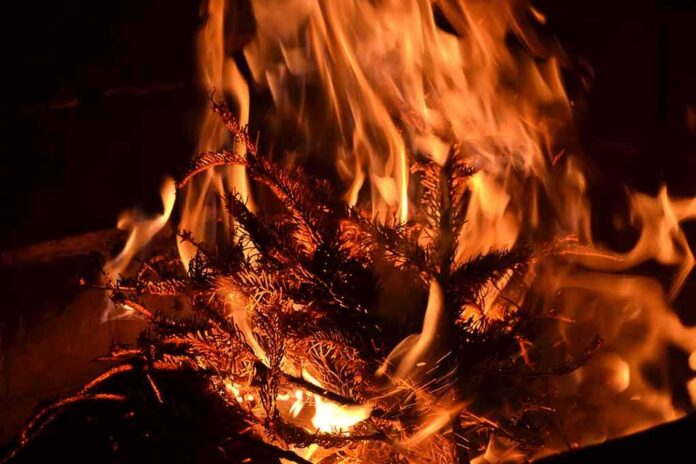
A “once in a lifetime” megafire west of Madrid has grown so large that officials say it is close to fusing with a second giant blaze across the regional border, threatening to turn central Spain into one continuous wall of flames.
Story Snapshot
- Two major wildfires near Madrid have already merged, and a third fire in neighboring Ávila is close to joining them.
- Spain has declared its first-ever national emergency for wildfires, allowing the military to take charge of the response.
- Tens of thousands of people have been evacuated or ordered indoors as flames race across regional borders.
- The crisis highlights how slow planning, dense fuel buildup, and political infighting leave ordinary people exposed when disaster hits.
Fires Near Madrid Grow Into One “Worst in History” Megablaze
Spanish emergency officials say two wind-driven wildfires west of Madrid have already merged into a single massive blaze that they describe as the worst in the region’s history. Reporters on the ground note that this combined fire has burned roughly 30 square kilometers of land, tearing through forest and rural communities. Flames have destroyed homes, cut roads, and forced hurried evacuations in several mountain towns as smoke spread toward the capital region.
Authorities say the main danger now is that this megafire, burning near the regional border, could link up with a third fast-moving blaze in neighboring Ávila province. Spain’s interior minister said firefighters were racing to stop three separate fires in Madrid and Ávila from joining, warning that strong winds and rough terrain made that task harder by the hour. Local officials in both regions have spoken of “little time left” before the fronts touch.
National Emergency Declared as Communities Scramble to Escape
Facing this growing threat, Spain’s central government has declared a national emergency covering the Madrid region and Ávila province for the first time ever because of wildfires. That step gives Madrid the legal power to pull in more aircraft, soldiers, and funding and puts the Military Emergency Unit in charge of coordinating the fight on the ground. Leaders say they acted because several large fires erupted at once while heat and wind kept getting worse.
Evacuation orders and shelter-in-place rules now cover well over 10,000 people in towns west of Madrid, with some reports putting the number of displaced and confined residents near 20,000. Residents in villages like Villa del Prado and San Martín de Valdeiglesias grabbed pets and documents and fled as sirens and loudspeakers warned of advancing flames. In Ávila, officials asked people in places such as Burgohondo and El Tiemblo to stay indoors as embers and heavy smoke blew over their communities.
Cross-Border Firelines Expose Weak Spots in Government Preparedness
The Madrid and Castilla y León regions signed a joint wildfire plan years ago to manage exactly this kind of cross-border threat, creating a five-kilometer shared action strip along their frontier. Yet reporting from Spain’s press says the higher “Level 3” emergency, which allowed full national control, was pushed by Madrid rather than requested early by Castilla y León, raising questions about how quickly leaders reacted as conditions worsened. That delay matters when minutes can decide whether separate fires merge into one disaster.
Spain already leads Europe this year in burned forest area, with nearly 120,000 hectares lost nationwide as large fires also rage in Castilla y León and La Mierla. Environmental groups and some fire experts argue that years of dense vegetation growth, rural abandonment, and slow forest management have turned many regions into tinderboxes. Ordinary people see a familiar pattern: governments underfund prevention, argue over who is in charge, and then scramble to look decisive only after homes are burning.
Heatwaves, Neglected Forests, and a System Stretched to the Limit
These Madrid-area fires are part of a wider wave of blazes across Spain and France, fueled by extreme heat and wind that has forced more than 100,000 people to evacuate in both countries combined. Spain has battled dozens of significant wildfires across multiple regions during recent summers, sometimes with 16 high-risk fires burning at once. Firefighters, local mayors, and residents say the system is stretched thin, with crews racing from one crisis to the next while long-term fixes lag behind.
There is "little time left" before a major wildfire in the Madrid region covering 6,000 hectares merges with a 9,000-hectare blaze in the neighbouring Castilla y Leon region, an official said Friday.
— CGTN Africa (@cgtnafrica) July 24, 2026
For Americans watching from afar, the story feels familiar. Central governments sign agreements and attend climate summits, but on the ground, families in rural towns often feel like they are on their own when flames arrive at the edge of their property. Both left and right can see the same thing in Spain’s crisis: when forests are not managed, when bureaucracy slows action, and when leaders focus on public relations instead of hard work, it is regular people who breathe the smoke and lose their homes.
Sources:
insiderpaper.com, france24.com, dw.com, turkiyetoday.com, manchestereveningnews.co.uk, yahoo.com, reuters.com, extra.ie, english.elpais.com, aljazeera.com, euronews.com, russpain.com, surinenglish.com, elpais.com
© patriotwise.com 2026. All rights reserved.