
More than a billion barrels of oil have vanished from global supply, and the fallout from this “missing” crude could haunt American drivers, families, and the broader economy long after politicians declare victory in the Middle East.
Story Snapshot
- Analysts say about 1.15 billion barrels of oil were lost during the four‑month Strait of Hormuz crisis, the biggest supply shock in modern history.
- The strait has reopened after a United States–Iran memorandum of understanding, but experts warn it could take a year or more to rebuild depleted inventories.
- Strategic reserves held by the International Energy Agency and the United States are now near multi‑decade lows, leaving less protection against future shocks.
- Higher-for-longer energy prices risk reviving inflation and squeezing working families, even as elites revive “green transition” talking points instead of unleashing American production.
How a War Choked Off the World’s Energy Lifeline
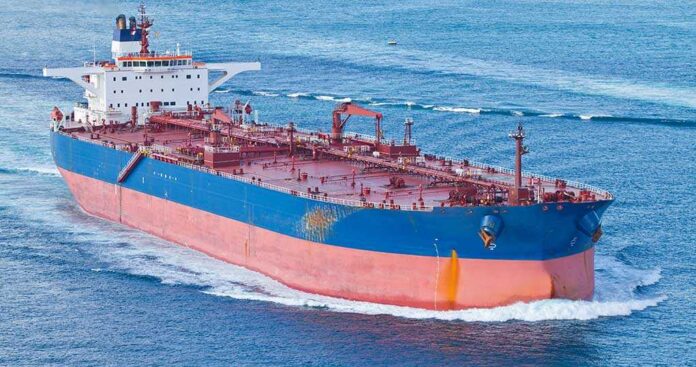
When fighting flared between Iran, the United States, and Israel earlier this year, Tehran moved to threaten ships trying to pass through the Strait of Hormuz, the narrow waterway that carries roughly one‑fifth to one‑quarter of global seaborne oil flows.[5][18] Attacks, drone strikes, and sky‑high insurance costs drove tanker traffic toward a standstill, leaving more than 100 ships effectively trapped in and around the Gulf.[5][12] For nearly four months, oil from key Middle East producers barely reached world markets, and some vessels only moved if they paid “tolls” to Iran’s Revolutionary Guard.[2]
Energy analysts have described this episode as the largest single disruption in the history of the oil market, bigger than the 1970s embargo or the 1979 Iranian Revolution.[1][20] With up to about 20 million barrels per day of crude and fuel exports affected at points in the crisis, refineries worldwide scrambled to find alternate barrels at higher prices.[14] The International Energy Agency coordinated the biggest emergency reserve release ever, adding around 2.5 to 3 million barrels per day to cushion the blow, but warned those stocks could be exhausted within months.[2][12]
The Billion‑Barrel Hole No One Can Quickly Refill
Now that the United States and Iran have signed a memorandum of understanding and the strait is formally open again, many headlines focus on short‑term price relief and “peace dividend” hopes. But under the surface, the math is ugly. Market tracker Kpler estimates that the world lost about 1.15 billion barrels of supply during the conflict, as disrupted flows, shut‑in wells, and blocked ships piled up day after day.[1][6] Analysts at other firms describe the shock as a “billion‑barrel‑scale event” that is reshaping how traders think about risk and price floors.[2][11]
Even if the global oil industry suddenly produced almost 5 million barrels per day more than customers need, which is roughly what the International Energy Agency projects as a possible surplus, it would still take about a year to rebuild what was drained during the war.[1][6] That assumes no new crisis, no hurricane shutting down Gulf Coast refineries, and no fresh conflict on another pipeline or shipping route. At the same time, official strategic petroleum reserves held by Western countries have fallen to their lowest levels since about 1990, and the United States emergency stockpile is at a 43‑year low, after repeated drawdowns in earlier price spikes.[1]
What This Means for Gas Prices, Inflation, and American Families
For now, the reopening of the Strait of Hormuz and news of a ceasefire have pulled oil prices off their peak. Some former officials and market voices argue that as more barrels move through the strait again, prices could fall sharply from wartime highs. But many detailed studies of shipping, refinery damage, and inventory data point the other way: they say any recovery in flows will be slow, and that tight supplies are likely to keep a higher floor under prices for months or even years.[3][8][9] Traders already warn that, in some scenarios, crude could still spike well above $150 a barrel if new trouble erupts before inventories recover.[2]
For ordinary Americans, that risk goes far beyond the cost of filling up a pickup. Higher oil and diesel prices raise shipping costs for food and goods, drive up airline fares, and hit farmers with more expensive fertilizer and fuel, since the Gulf region supplies a large share of traded fertilizer.[3][19] Research groups warn that when you combine energy shocks with fertilizer and food, the result can be a wave of price increases that lands hardest on working families and fixed‑income retirees, just as many are still digging out from the last inflation surge.[3][19] A world running on thin energy inventories, with weaker reserves, is a world where every new crisis hits the middle class first and hardest.
How We Got Here—and What Needs to Change
For years, globalist planners and green activists told Western nations to lean on unstable foreign suppliers while choking off investment in domestic oil and gas. They pushed Europe to depend on Russian pipelines and Middle East shipping lanes, and pushed the United States to rely more on imports rather than building the pipelines, refineries, and drilling needed for true energy independence. The Strait of Hormuz crisis exposed just how fragile that system is. Just a few attacks and threats were enough to halt traffic through a chokepoint that carries roughly a quarter of the world’s seaborne oil.[5][18][19]
Oil Tanker Traffic through Strait of Hormuz Rebounds after US-Iran Ceasefire, but Shipping Industry Faces New Uncertainty – Maritime Current News https://t.co/27gTf8viHh
— Maritime Current News (@CurrentMaritime) June 20, 2026
The lesson is simple but urgent: a free and strong America cannot be at the mercy of hostile regimes and narrow sea lanes for the fuel that runs our economy. That means defending vital trade routes from terror and blackmail. It also means unleashing responsible drilling, pipeline construction, and refining here at home, instead of letting bureaucrats and radical environmental lawsuits block projects that would lower prices and strengthen national security. As the world struggles to replace more than a billion missing barrels, American energy policy will decide whether families face years of needless pain—or a future where Washington can never again be blackmailed over oil.
Sources:
[1] Web – 1 billion barrels of oil missing…
[2] Web – Strait of Hormuz closure risks greatest global energy supply shock in …
[3] Web – From chokepoint to crisis: The Strait of Hormuz and global oil markets
[5] Web – How the Strait of Hormuz standoff flipped the energy security debate
[6] Web – The Strait of Hormuz in 8 Charts – CSIS
[8] Web – Iran US Deal: Strait of Hormuz Reopens | Oil Market Shock – Facebook
[9] Web – Severe supply disruption meets rising demand destruction …
[11] Web – Global Oil Disruption Nears 1 Billion Barrels as Strait of Hormuz …
[12] Web – Billion-barrel Hormuz oil shock threatens demand as supply losses …
[14] Web – Hormuz Closure Sparks Global Oil Supply Shock – LinkedIn
[18] Web – Disruptions in the Strait of Hormuz are hitting global oil and gas …
[19] Web – Strait of Hormuz disruptions: Implications for global trade and …
[20] Web – [PDF] The Cost of Closing the Strait of Hormuz: Energy Bottlenecks and …
© patriotwise.com 2026. All rights reserved.